

What is a System? (And How Engineers Think About Systems)
In the previous article, I talked about why this series is not going to focus on tools, frameworks, or languages.
Because tools change.
But the way you think about systems, that’s what actually makes you an engineer.
So before we talk about backend, frontend, APIs, or databases, we need to answer a very basic question:
What exactly is a system?
A System is Just Input → Processing → Output
At its core, every system in the world follows a very simple pattern:
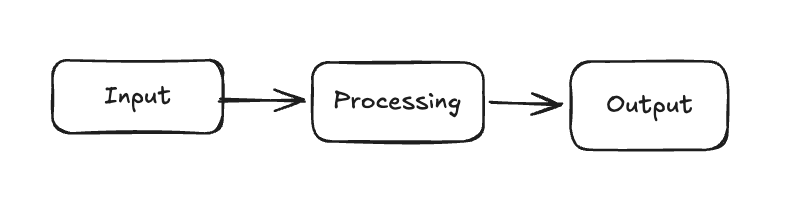
That’s it.
No complexity. No buzzwords.
Let’s make this real.
Example 1: Food Delivery App
Input: User selects food and places an order
Processing:
Validate user
Check restaurant availability
Create order
Assign delivery partner
3. Output: Order confirmed + tracking details
Example 2: Payment System
Input: User clicks “Pay Now”
Processing:
Validate card
Check balance
Process transaction
3. Output: Success / Failure response
Example 3: Chat Application
Input: User sends a message
Processing:
Store message
Deliver to the receiver
3. Output: Message appears on the other user’s screen
If you look closely, all of these are the same thing.
Just:

Why This Matters
Most beginners jump directly into:
“I’ll use React”
“I’ll build a Node API”
“I’ll use MongoDB”
But engineers don’t start there.
They start with:
What is the input?
What needs to happen to that input?
What should be the output?
Tools come later.
Thinking comes first.
Breaking a System into Parts
Now let’s take this one step further.
In real-world software, this “processing” doesn’t happen in one place.
It’s divided into multiple parts.
A typical system looks like this:
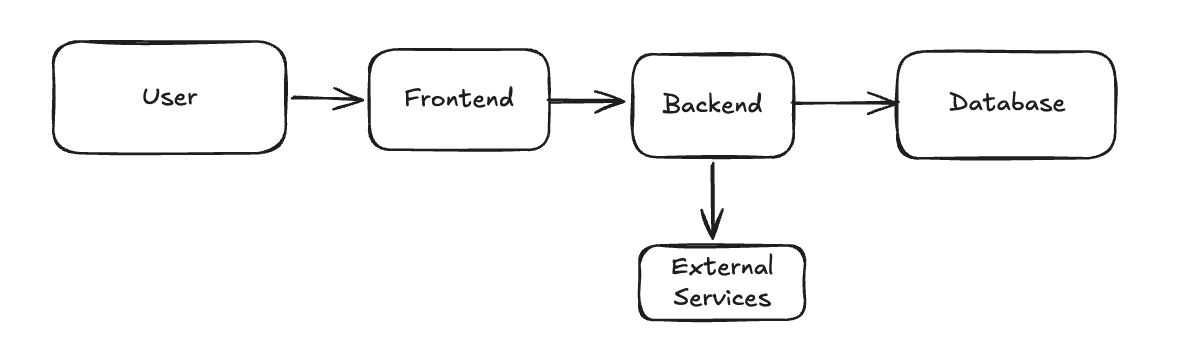
Let’s understand each part.
1. Frontend (Client)
This is what the user interacts with.
Mobile app
Web app
Dashboard
Its job is simple:
Take input from the user
Show output to the user
It does not handle heavy processing or business logic.
2. Backend (Server)
This is where actual processing happens.
Validates data
Applies business logic
Makes decisions
Example:
Can the user place this order?
Is this payment valid?
3. Database
This is where data is stored.
Users
Orders
Transactions
Messages
Think of it as the system’s memory.
4. External Services
Sometimes your system depends on other systems.
For example:
Payment gateways
Email services
SMS providers
You don’t build everything yourself—you integrate.
Understanding Data Flow (This is the Most Important Part)
Now let’s connect everything.
Let’s say a user clicks “Book Ticket”.
Here’s what actually happens:
User clicks button on frontend
Frontend sends request to backend
Backend:
Validates request
Saves data in database
4. Backend sends response
5. Frontend shows confirmation
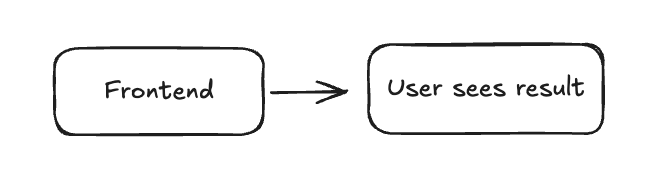
This flow is everything.
If you understand this, you can build any system.
How Engineers Think (This is the Shift)
Beginners think like this:
“I need to build a React app with a Node backend.”
Engineers think like this:
What is the input?
Where does it go?
Who processes it?
Where is it stored?
What is returned?
This shift is what separates:
Someone who uses tools vs
Someone who builds systems
Don’t Think in Tools, Think in Flow
Instead of saying:
“I’ll use React + Express + MongoDB”
Train yourself to say:
“User sends data”
“Server processes it”
“Database stores it”
“Response is returned”
Once this is clear, you can implement it using any technology.
A Simple Mental Model You Should Remember
Whenever you see any product, break it like this:
What is the input?
What processing is happening?
What is the output?
Where is data stored?
How does data flow?
If you can answer these 5 questions, you understand the system.
Wrapping Up
A system is not complicated.
We just make it complicated by jumping into tools too early.
At its core, every system is:
Input → Processing → Output
And every real-world application is just a combination of:
Frontend
Backend
Database
External services
connected through data flow.
What’s Next
Now that you understand what a system is, the next question becomes:
How do these parts actually communicate with each other?
In the next article, we’ll break this down and understand:
Client-Server Architecture (How the Web Actually Works)
That’s where things start getting real.

Join Ayush on Peerlist!
Join amazing folks like Ayush and thousands of other builders on Peerlist.
0
10
0