

Fresh evidence shows Apple will launch its first ever foldable iPhone and MacBook with touchscreen
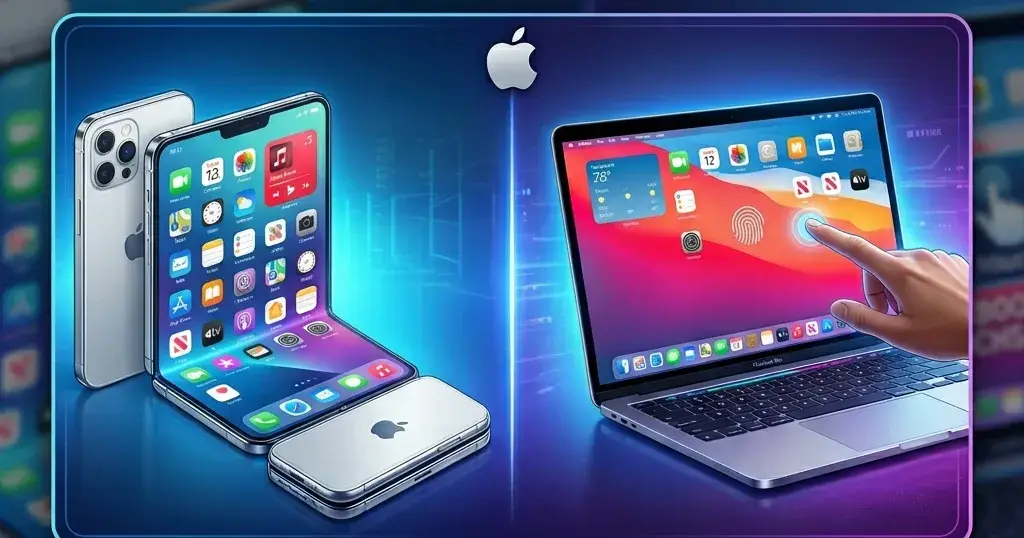
The tech world is on the precipice of the biggest shift in Apple’s hardware philosophy in over a decade. For years, the Cupertino giant fiercely defended the boundary between the iPad and the Mac, famously dismissing the idea of a touch-based laptop interface as ergonomically flawed. Simultaneously, the company watched from the sidelines as competitors iterated through multiple generations of flexible displays. However, fresh, undeniable evidence hidden directly within Apple's own ecosystem reveals that the company is preparing a massive dual launch: its first-ever foldable iPhone and a revolutionary touchscreen MacBook.
The definitive breadcrumbs were discovered by developers digging into the first betas of iOS 27 and macOS 27. Inside the code, tech researchers uncovered direct system references to hardware parameters like "foldState," "mechanicalAngleDegrees," and "angleDegrees". These are not mere speculative lines of text; they are functional software frameworks designed to calculate exactly how wide a dual-screen or flexible device is open. Furthermore, the updated iPhone Mirroring app on macOS 27 can now dynamically stretch into wider, tablet-like layouts—a feature that makes zero sense for current smartphones but is perfectly tailored to accommodate a square-shaped inner folding display.
The incoming flexible handset, heavily rumored to debut as the premium "iPhone Ultra" or "iPhone Fold," promises to shake up the premium smartphone tier. Leaked details from supply chain sources and highly detailed physical dummy units point to a book-style folding chassis engineered from an ultra-thin, 4.5mm titanium and aluminum alloy frame. When closed, users will interact with a compact 5.5-inch outer cover screen. When unfolded, it unfurls into a gorgeous 7.8-inch flexible OLED display utilizing a advanced dual-layer ultra-thin glass structure to deliver a nearly unnoticeable, smooth crease. Due to its extreme thinness, Apple is reportedly swapping out Face ID for a sleek, power-button-integrated Touch ID sensor.
Concurrently, the macOS 27 beta has shattered Apple's historic resistance to touch-enabled laptops. Subtle interface upgrades tell the full story: Apple has quietly introduced "pull-to-refresh" mechanisms directly to the Mac operating system and expanded Sidecar to support full touch input access across macOS from an iPad. Additionally, developers spotted a redesigned, pill-shaped Siri interface on Mac that mirrors a Dynamic Island layout. This perfectly aligns with supply chain leaks indicating that a ultra-premium laptop—likely dubbed the "MacBook Ultra"—is currently entering panel production equipped with a massive OLED touchscreen and an integrated Dynamic Island notch.
This massive double-reveal represents a calculated paradigm shift for Apple's developer ecosystem. During the WWDC 2026 keynote, Apple's software engineering executives heavily emphasized "app adaptability," aggressively pushing developers to build user interfaces that seamlessly transition across vastly different screen sizes, aspect ratios, and input methods. By introducing a new simulation tool called Device Hub, Apple is effectively giving the developer community a head start to ensure that their third-party software works flawlessly the exact moment these novel touch and folding form factors hit retail shelves.
Under the hood, both devices will showcase the sheer processing muscle of Apple’s next-generation silicon. The folding iPhone is expected to run on the trailblazing A20 chip, while the touchscreen MacBook Ultra will be powered by the powerhouse M6 processor. Both chipsets are built using TSMC's cutting-edge 2-nanometer architecture, offering massive leaps in thermal efficiency, raw performance, and battery optimization—crucial factors when driving multi-display configurations and complex touch-sampling rates. The MacBook Ultra is also tipped to introduce standalone cellular 5G connectivity for the first time in Mac history.
The wait for this next generation of Apple hardware won't be long. Current timeline indicators point to a spectacular fall or winter 2026 release cycle. While the touchscreen MacBook Pro or Ultra could arrive in late 2026 powered by the M6 chip, the foldable iPhone is highly anticipated to debut alongside the iPhone 18 Pro lineup. Rumored to start at a premium entry point exceeding $2,000, and initially launching in a limited, stark white color variant, Apple is poised to entirely redefine consumer expectations for mobile and desktop productivity before the year draws to a close.

Join Abdul on Peerlist!
Join amazing folks like Abdul and thousands of other builders on Peerlist.
0
2
0