

From Wireframe to Shipped Product in 31 Days: A Lesson in Building MVPs That Actually Matter
There's a stark difference between founders who build products and founders who ship products.
The first group spends months perfecting features. The second group spends weeks validating assumptions.
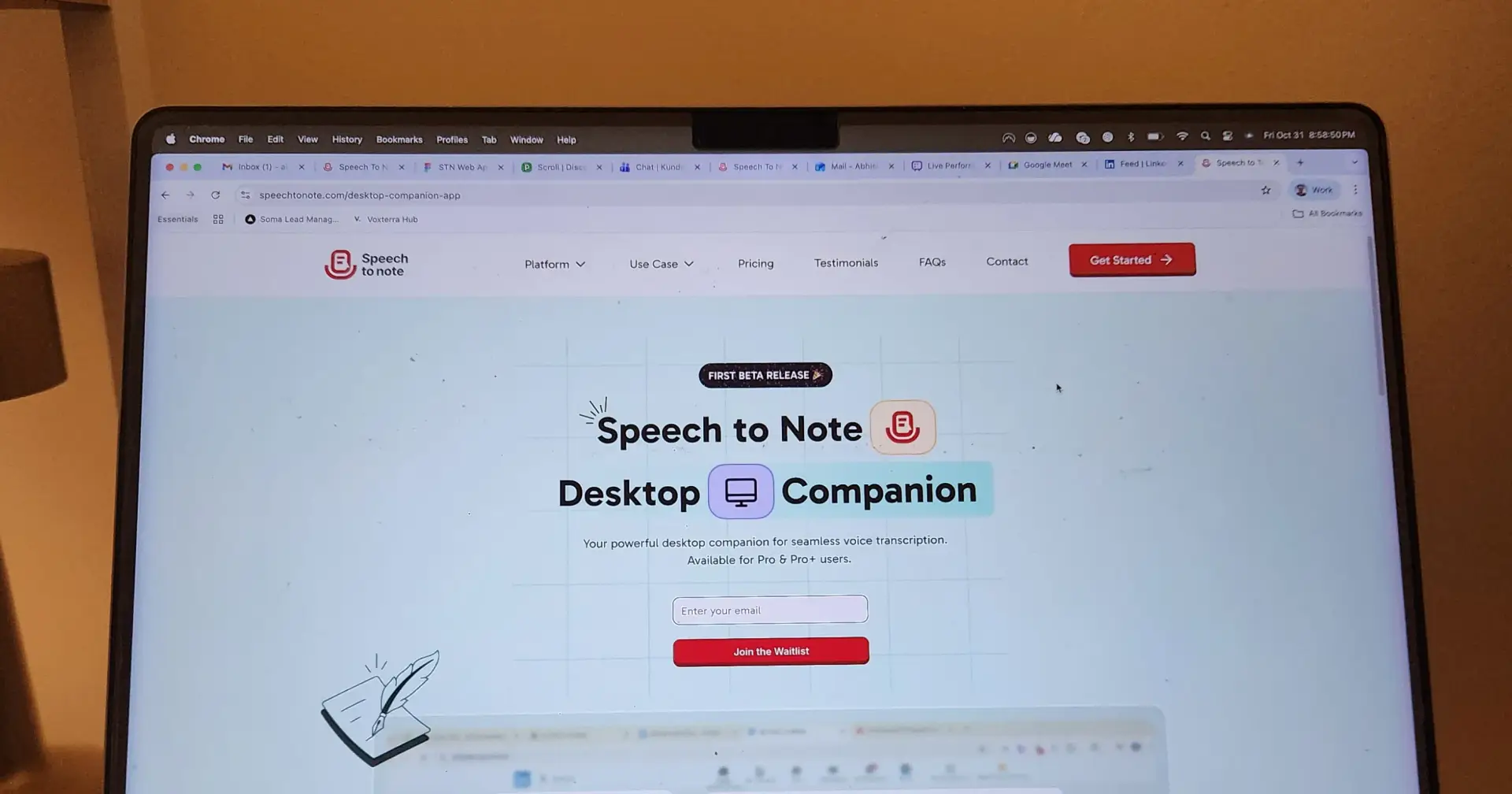
I just experienced this difference firsthand with Desktop Companion, our new feature for Speech to Note. Here's the timeline:
October 7th: Shared wireframes in our community.
October 30th: MVP ready with full functionality.
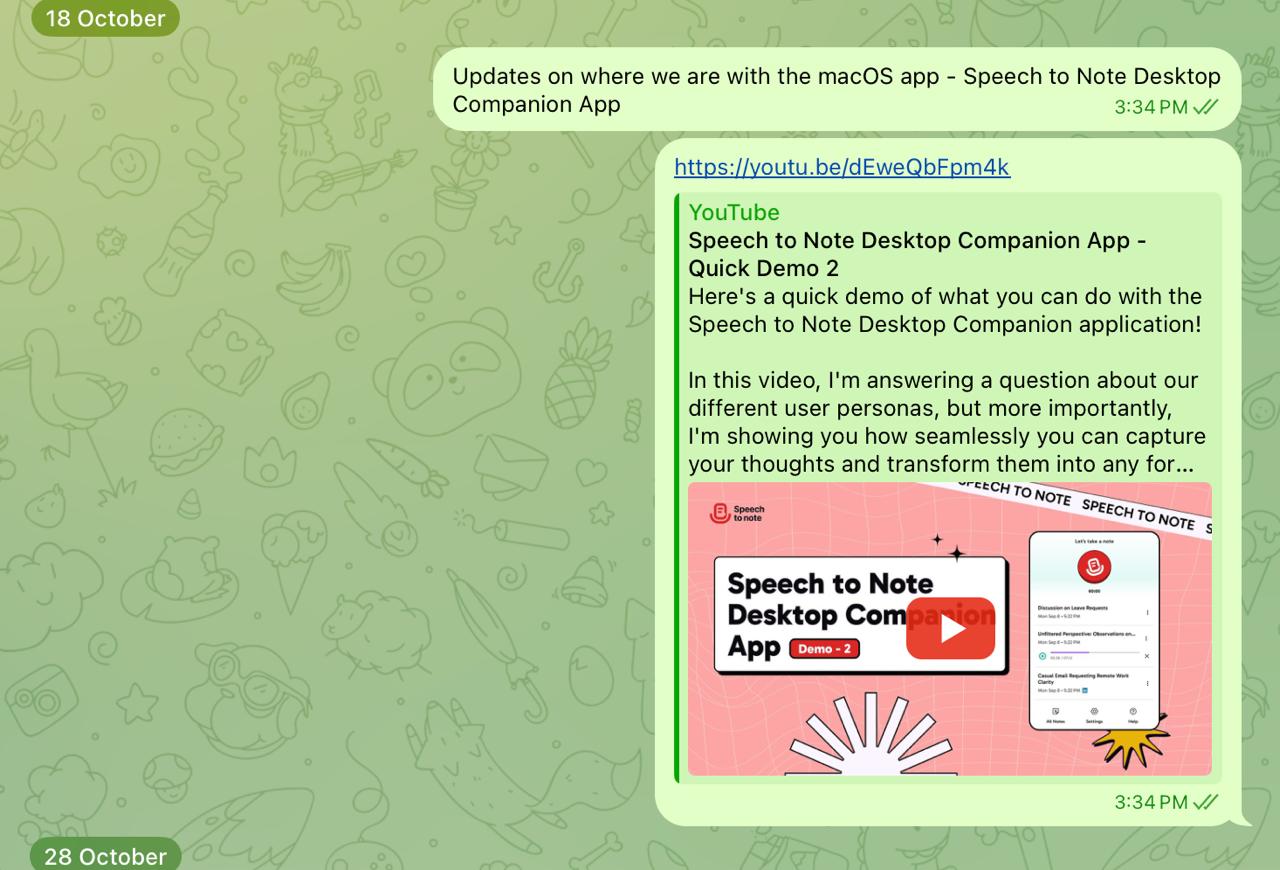
November 7th: Shipping to all Speech to Note users.
31 days from concept to customer hands.
Most founders would spend 31 days just debating which features to include in version 1. Some would still be arguing about the color scheme or crafting the perfect onboarding flow.
What Actually Happened During Those 31 Days
The process wasn't magical. It was ruthlessly focused.
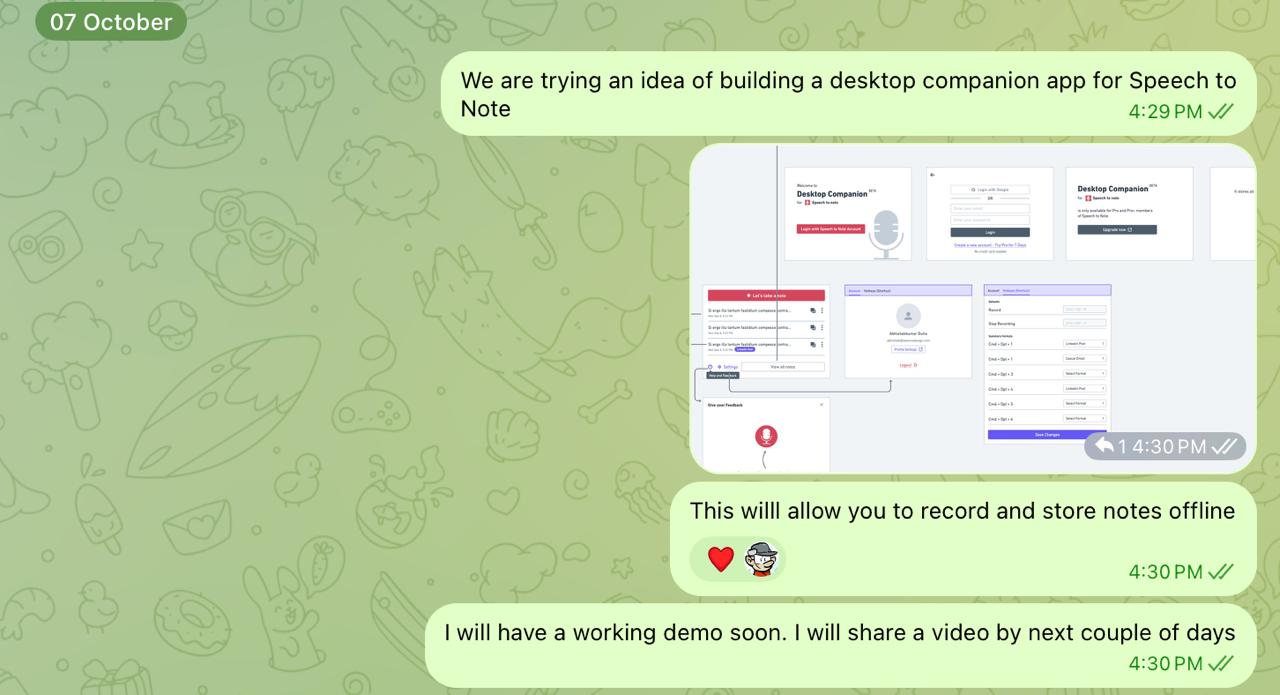
On October 7th, we showed rough wireframes to our community. Not polished mockups. Not pixel-perfect designs. Rough wireframes that communicated the core concept: hotkey-triggered voice recording with instant formatting.
The goal wasn't to impress anyone. It was to validate whether the problem we were solving actually mattered to people who would use it.
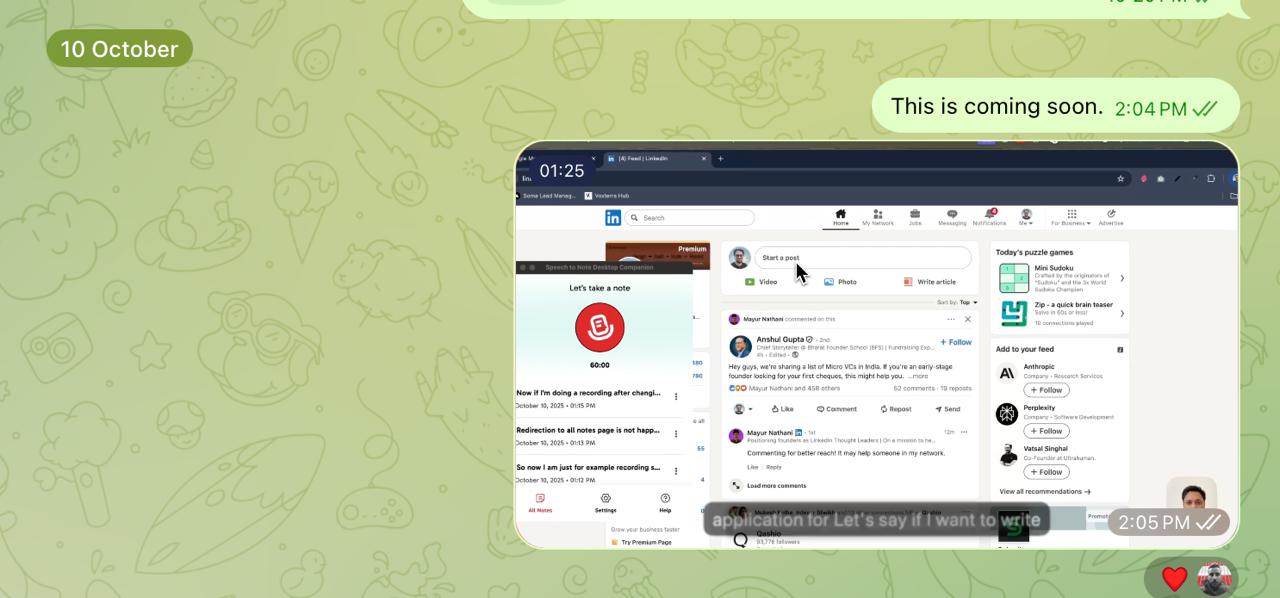
We built the MVP around one core workflow: Press a hotkey, speak, get formatted text. Nothing else.
We recorded demos. We tested with real users. We fixed the breaking bugs. We shipped on November 7th.
No feature bloat. No "let's add this cool thing." No waiting until it was perfect.
Just ship, learn, iterate.
The Brutal Truth About MVPs
If your MVP takes longer than 6 weeks to build, it's not minimum and probably not viable either.
That's not a motivational quote. It's a forcing function that separates what users need from what you think they want.
Here's what we didn't build for Desktop Companion:
Team collaboration features that users were actively asking for
Cloud sync between desktop and mobile (this is coming based on actual feedback post-launch)
Advanced formatting options that looked impressive in demos but added complexity to the core workflow
Integrations with other tools that would've consumed 2-3 weeks just to support a handful of platforms
Here's what we actually built:
Hotkey access (⌘ + ⌥ + number key)
Voice recording that works reliably
Instant formatting
Offline storage on device
That's it. Four things.
And users are already using it hundreds of times per day.
Why? Because the core workflow is frictionless, which matters infinitely more than having a feature list that looks impressive on a landing page.
The Discomfort of Shipping Minimum
The efficiency here isn't about working faster or cutting corners.
It's about ruthlessly cutting everything that doesn't directly serve the core value proposition until you're left with something so simple it almost feels embarrassing to ship.
That discomfort is exactly the signal you need. It means you actually stopped at minimum instead of building your dream version.
When we were ready to ship Desktop Companion, part of me wanted to add "just one more feature" to make it feel more complete. The team wanted to polish certain interactions. We had a list of "nice-to-haves" that would've made the launch feel more substantial.
We shipped anyway.
Because real usage data beats internal debates every single time.
What's Stopping You From Shipping?
If you're building something right now and it's taking months instead of weeks, ask yourself: What am I building that users don't actually need in version 1?
Cut it. Ship without it. Let real usage tell you what to build next.
The features you think are essential? Many of them aren't. The workflows you think users will love? Some of them won't get used at all. The integrations you're convinced will drive adoption? They might not matter until much later.
You can't know any of this until you ship.
31 days of shipping and learning beats 6 months of building and guessing every single time.
The Real Question
Desktop Companion goes live in 3 days for Mac users on Speech to Note's Pro and Pro+ plans. But this isn't about promoting a feature.
It's about challenging the default assumption that building products requires months of development before you can get feedback from real users.
So here's my question for you: What's one feature you're holding onto right now that's preventing you from shipping, even though you know deep down it's not critical for version 1?
What would happen if you cut it today and shipped this week instead of next quarter?
The answer might surprise you.
What are you waiting to ship? What's the one thing stopping you from putting your MVP in front of real users this week? I'd love to hear your story in the comments.

Join Abhishek on Peerlist!
Join amazing folks like Abhishek and thousands of other builders on Peerlist.
6
4
0