

Why Every Harsh Customer Feedback is Actually a Gift: My Speech to Note Story
Why Your Biggest Critics Are Your Best Allies

As designers and builders, we've all been there. A customer leaves feedback that feels like a punch to the gut. Your first instinct? "Do they even understand design? Do they know the nuances? The countless hours of effort we put in to make things look perfect?"
That designer's ego kicks in, and suddenly we're defending our work instead of listening to our users. But here's what I learned the hard way while building Speech to Note: sometimes the harshest critics become your most valuable teachers.
Meet Fabian: The Customer Who Changed My Perspective
Let me tell you about Fabian. He was always in "writing mode" - constantly pointing out issues, always critical, never satisfied despite getting our product at a great price. Initially, his communication style frustrated me as a designer building the product from scratch.
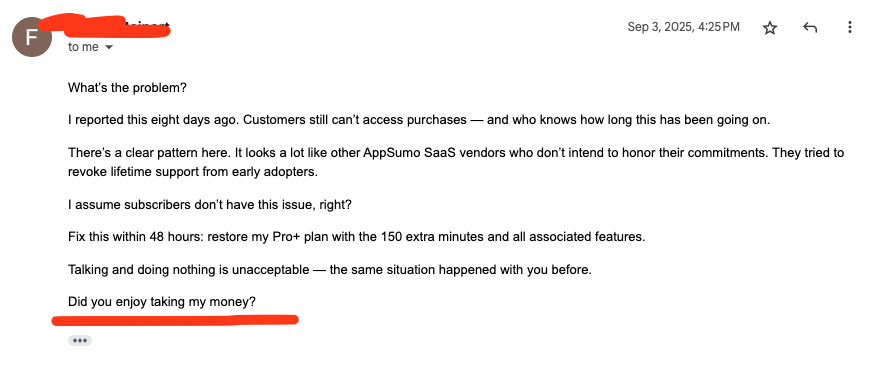
But when I zoomed out and looked at the bigger picture, I realized something crucial: he wasn't wrong about many things. He was giving me genuine feedback, even if his delivery wasn't wrapped in sugar-coated pleasantries.
Why Customers Sound Harsh (And Why It Doesn't Matter)
Here's the reality check I needed: people won't always be nice when giving feedback. There are multiple reasons for this:
Language barriers: English might not be their first language, making their communication seem blunt or rude
Past disappointments: They've supported other builders who shut down projects, leaving them burned and skeptical
Personality differences: Some people are just more direct in their communication style
The key insight? None of these reasons invalidate their feedback.
The Golden Rule: Your Harshest Critics Are Your Most Engaged Users
Think about it this way: if someone keeps coming back to tell you about problems and friction points, what does that really mean?
They're still using your product.
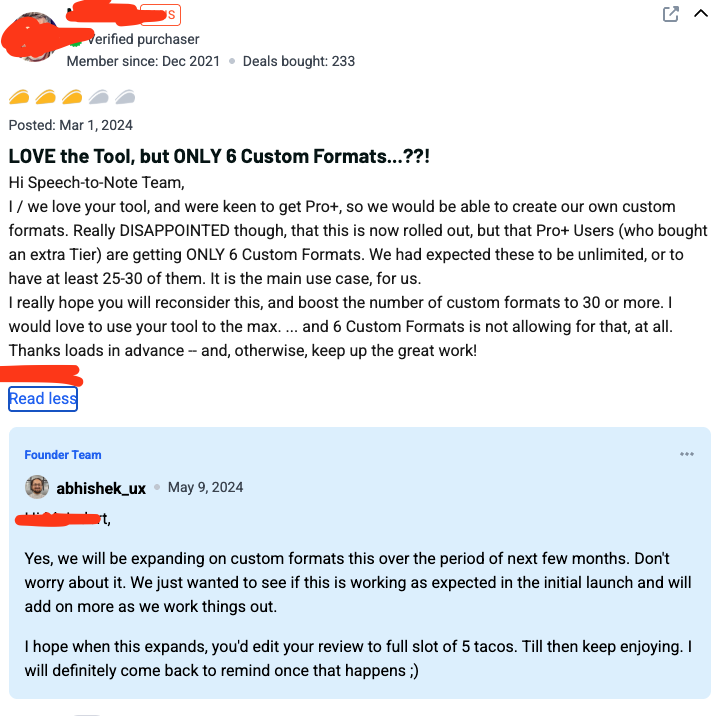
They're giving you free user research. They're pointing out pain points you need to solve. Most importantly, they care enough to invest their time in helping you improve.
How I Transformed Frustration into Growth
Instead of letting my designer's ego take control, I shifted my approach:
1. Radical Transparency
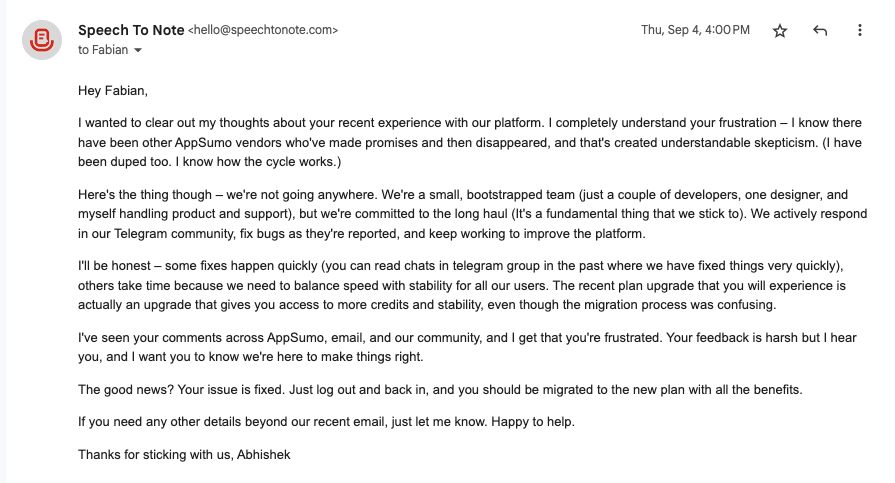
I started being completely honest about our limitations. I told Fabian: "Look, sometimes things get resolved quickly, sometimes it takes time. We're a small team, not a big enterprise. But we always stay on top of situations and provide solutions that work for everyone."
2. Consistent Communication
Even when feedback felt harsh, I maintained regular communication. I acknowledged concerns, explained our process, and kept him updated on progress.
3. Ego-Free Listening
I put aside my defensive instincts and focused purely on extracting valuable insights from every interaction.
The Transformation
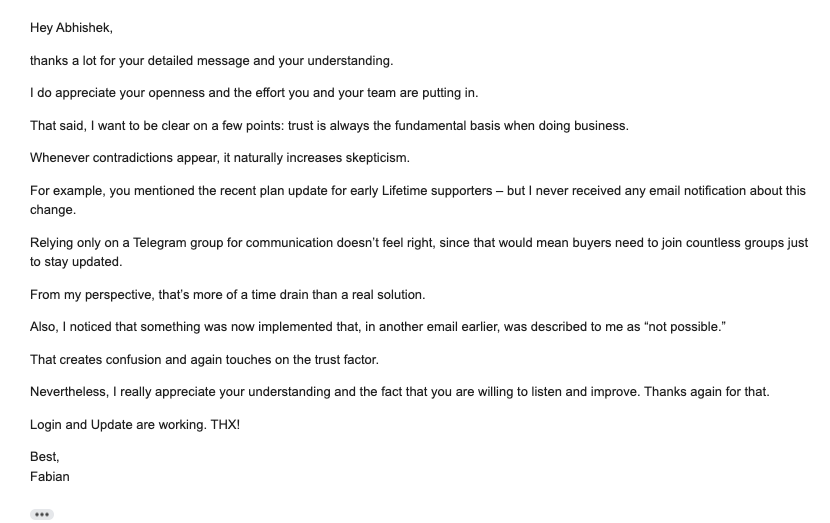
This approach didn't just improve our product - it transformed our relationship with difficult customers. Fabian went from being a source of frustration to becoming one of our most valuable feedback providers.
Key Takeaways for Fellow Builders
Your harshest critics are often your most engaged users - they wouldn't keep using your product if they didn't see potential
Communication style doesn't invalidate feedback quality - focus on the message, not the delivery
Transparency builds trust - be honest about your limitations and processes
Small teams can compete with enterprises - through superior communication and genuine care for user experience
Every piece of feedback is free user research - treat it as the valuable data it is
The Bottom Line
No matter how critical or frustrated your customers seem, remember this: they're choosing to spend their time helping you improve. That's not criticism - that's investment in your success.
Keep your designer's ego in check, maintain open communication, and always remember that the customers who care enough to complain are the ones who care enough to help you succeed.
Have you had a similar experience with difficult customer feedback? I'd love to hear your stories in the comments below.

Join Abhishek on Peerlist!
Join amazing folks like Abhishek and thousands of other builders on Peerlist.
0
11
1