

AI Ethnicity Detection: How Does AI Detect Ethnicity from a Face?
AI Ethnicity Detection
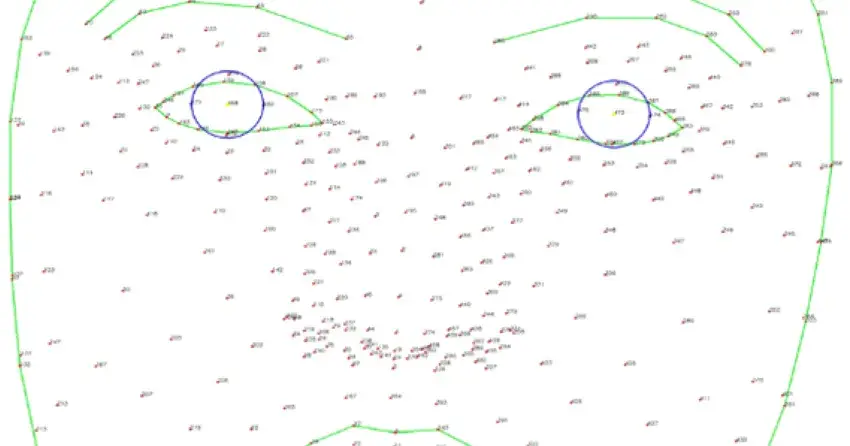
AI Ethnicity Detection is one of the most controversial and frequently searched topics in facial recognition technology. Many users ask: Can AI detect ethnicity from a face? How accurate is AI ethnicity analysis? Is AI race detection reliable?
In this comprehensive, SEO-optimized guide, we explain:
What AI ethnicity detection means
How AI analyzes facial features
The machine learning technology behind it
Accuracy and limitations
Ethical concerns and bias issues
Real-world applications and risks
What Is AI Ethnicity Detection?
AI ethnicity detection refers to the use of computer vision and deep learning algorithms to classify a person’s likely ethnic background based on facial features.
These systems analyze:
Facial structure
Skin tone patterns
Eye shape and spacing
Nose and lip proportions
Bone structure
Hair texture (sometimes)
The AI compares extracted features against large labeled datasets to predict a probability-based ethnicity category.
⚠️ Important: Ethnicity is complex, cultural, and self-identified. AI systems can only estimate patterns from visual data — not define identity.
How Does AI Ethnicity Detection Work?
AI ethnicity detection systems typically follow a structured pipeline using advanced frameworks such as:
OpenCV
Google MediaPipe
Dlib
Let’s break it down step by step.
1️⃣ Face Detection
The AI first identifies the face in an image using computer vision models. It isolates facial boundaries and removes background noise.
2️⃣ Facial Landmark Mapping
AI detects key landmark points such as:
Jawline
Cheekbones
Nose bridge
Eye corners
Lip edges
Chin
Using models like Dlib’s 68-point system or MediaPipe’s 468-point face mesh, the AI extracts geometric measurements.
3️⃣ Feature Extraction & Skin Analysis
The AI analyzes:
Facial ratios
Skin tone distribution
Feature spacing
Symmetry
Bone structure patterns
It converts these measurements into numerical data vectors.
4️⃣ Deep Learning Classification
A Convolutional Neural Network (CNN) trained on labeled facial datasets predicts ethnicity probabilities.
For example, output may look like:
60% East Asian
25% European
10% Middle Eastern
5% Other
This is a statistical estimation — not a definitive classification.
Technologies Behind AI Ethnicity Analysis
Modern AI ethnicity detection tools rely on:
Deep learning frameworks like TensorFlow & PyTorch
Neural networks
Biometric facial modeling
Cloud infrastructure such as:
Microsoft Azure
Amazon Web Services
Some large-scale facial recognition research has been conducted by organizations such as:
IBM
Microsoft
However, many companies have scaled back public facial recognition ethnicity tools due to ethical concerns.
Is AI Ethnicity Detection Accurate?
Accuracy depends on:
Dataset diversity
Lighting conditions
Image resolution
Mixed heritage complexity
Model bias
Challenges include:
Mixed ethnicity individuals
Similar facial traits across populations
Cultural identity vs biological ancestry
Dataset imbalance
AI ethnicity detection systems are probabilistic and prone to bias if trained on non-diverse datasets.
Ethical Concerns & Bias in AI Ethnicity Detection
AI ethnicity classification raises serious concerns:
🔹 Algorithmic Bias
If training data lacks diversity, predictions may be skewed.
🔹 Privacy Risks
Facial recognition combined with ethnicity prediction may enable surveillance misuse.
🔹 Cultural Sensitivity
Ethnicity is self-identified and deeply personal.
🔹 Regulatory Restrictions
Some countries have introduced restrictions on facial recognition technologies.
Because of these concerns, many tech companies limit or avoid offering ethnicity classification publicly.
Common Use Cases (Where Allowed)
In regulated environments, AI ethnicity estimation may be used for:
Academic research
Dataset bias analysis
Demographic studies
Algorithm fairness evaluation
It should not be used for discrimination or profiling.
The Future of AI & Demographic Analysis
The AI industry is moving toward:
Bias mitigation techniques
Fairness-aware machine learning
Diverse training datasets
Ethical AI governance
Leading cloud platforms like:
Microsoft Azure
Amazon Web Services
now emphasize responsible AI frameworks rather than demographic classification tools.
Final Thoughts
AI ethnicity detection uses facial landmark detection, geometric feature extraction, and deep learning classification to estimate demographic probabilities based on facial patterns.
However:
Ethnicity is complex and self-identified
AI predictions are statistical, not definitive
Bias and ethical concerns are significant
Regulation is increasing globally
AI can analyze facial patterns — but it cannot define identity, culture, or personal heritage.

Join Adil on Peerlist!
Join amazing folks like Adil and thousands of other builders on Peerlist.
0
8
0