

AI Face Shape Detection Overview
Accuracy and Reliability of AI Face Shape Detectors
Enhanced Subordinate Text (with Missing Related Entities Added)
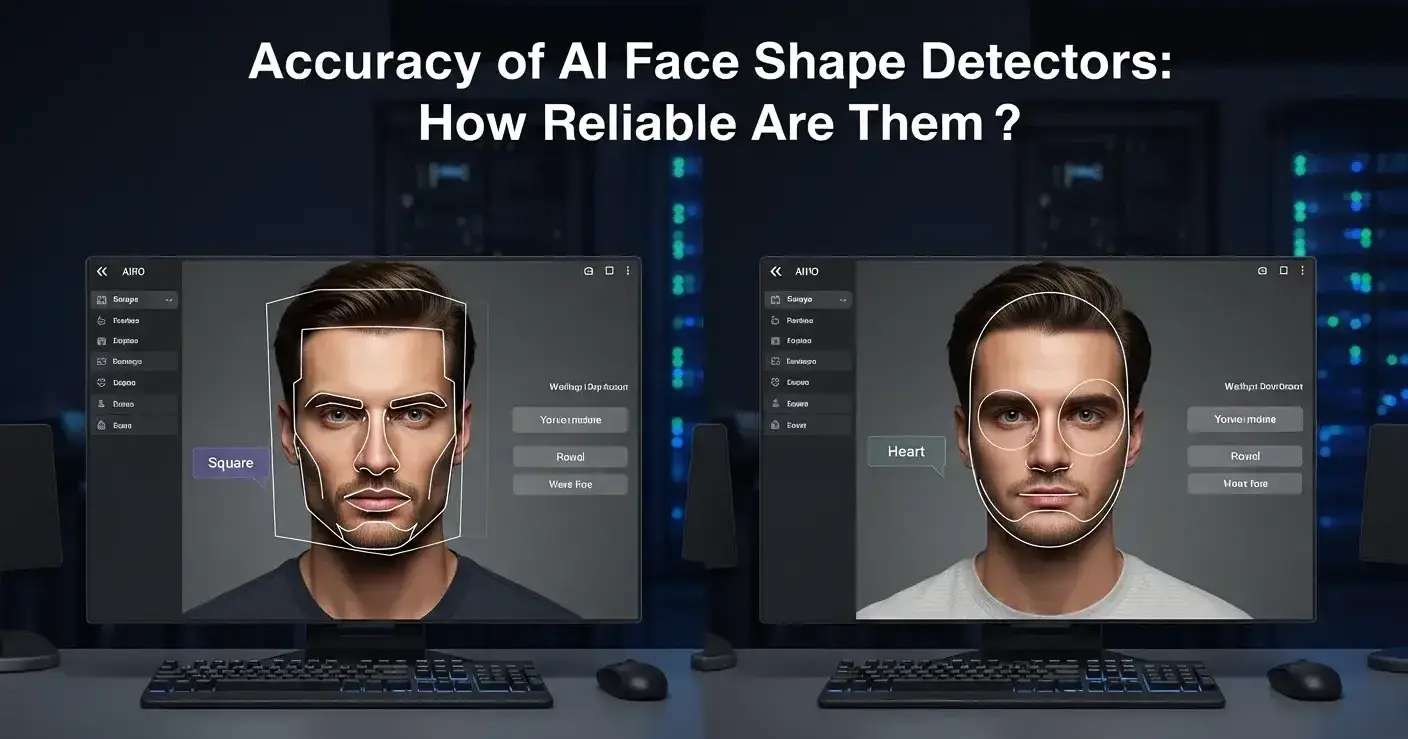
In the era of artificial intelligence and machine learning, AI face shape detectors have emerged as popular tools for analyzing facial structures to determine shapes like oval, round, square, heart, diamond, oblong, or triangle. These detectors leverage computer vision algorithms to map key facial landmarks, including the forehead, cheekbones, jawline, and chin, often using convolutional neural networks (CNNs) and deep learning based facial recognition models trained on large-scale annotated facial datasets such as CelebA and FFHQ.
By relying on biometric data processing and facial geometry analysis, these systems provide users with personalized styling recommendations for hairstyles, makeup, glasses, and beauty enhancements, and are increasingly integrated into augmented reality (AR) beauty apps, virtual try-on platforms, and e-commerce personalization engines.
Understanding the accuracy of AI face shape detectors is crucial for consumers, beauty brands, and developers alike, as it influences trust in these technologies and their practical applications in daily life. Factors such as dataset bias, ethnic and age diversity, lighting conditions, camera resolution, and head pose variation significantly affect prediction reliability. While many vendors report high precision through benchmark testing and model validation metrics, real-world performance often differs from laboratory conditions, making a detailed examination essential for anyone curious about how reliable these AI-powered facial analysis tools truly are.

Join Adil on Peerlist!
Join amazing folks like Adil and thousands of other builders on Peerlist.
0
3
0