

How to Detect Eye Shape Using AI? (Complete Guide for 2026)
AI Eye Shape Detection
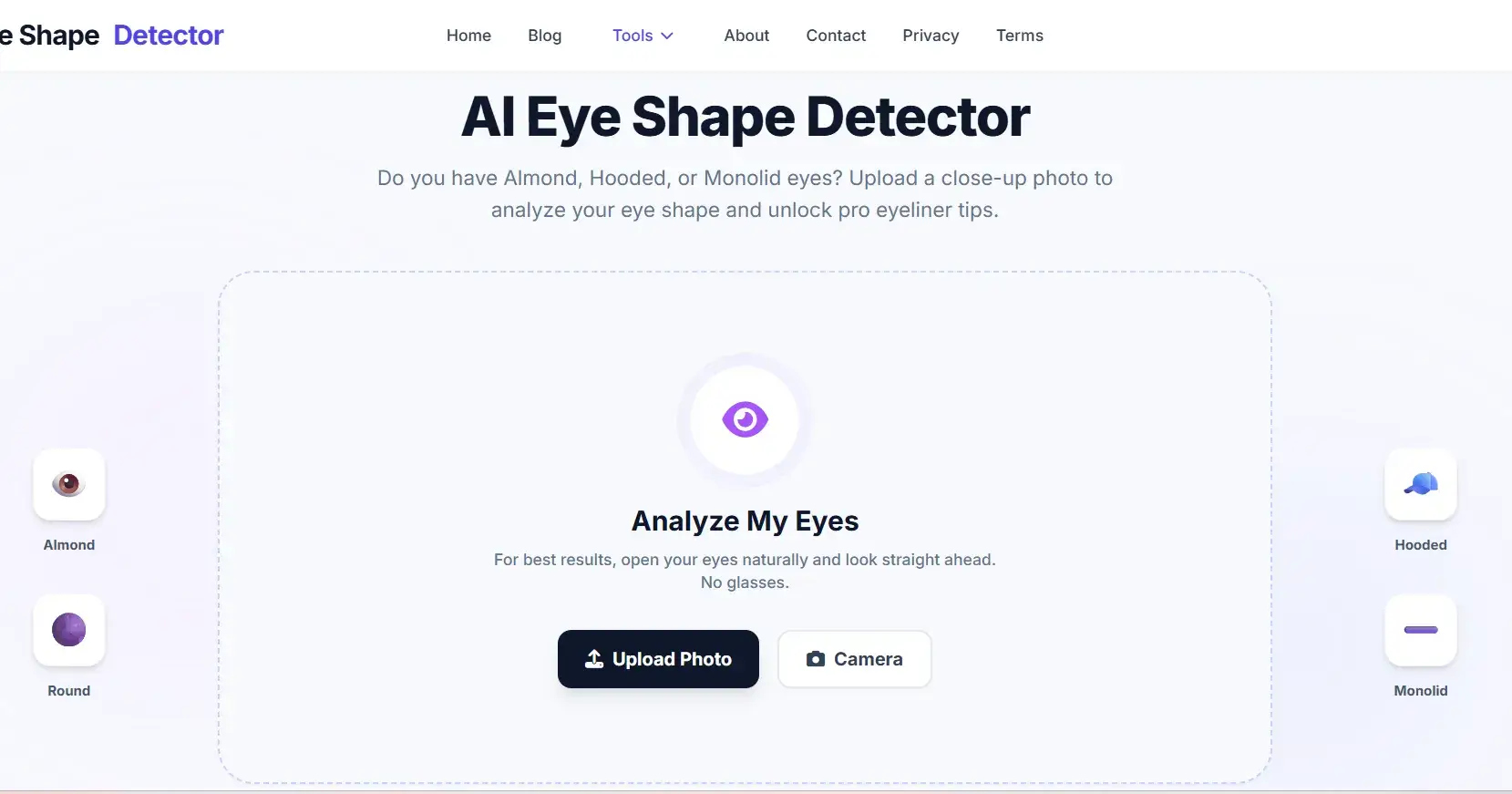
Artificial Intelligence (AI) is revolutionizing facial analysis, and one of the most searched beauty-tech queries today is “how to detect eye shape using AI?” From makeup personalization and glasses selection to cosmetic consultations and AR filters, AI-powered eye shape detection provides fast, accurate, and data-driven insights.
In this detailed SEO-optimized guide, you’ll learn:
What AI eye shape detection is
How machine learning analyzes eye structure
Step-by-step detection process
Technologies behind AI eye analyzers
Common eye shapes identified by AI
Accuracy factors and limitations
What Is AI Eye Shape Detection?
AI eye shape detection is the process of using computer vision, facial landmark detection, and deep learning algorithms to analyze the structure and contour of the eyes from an image or live camera feed.
The system evaluates:
Eye width-to-height ratio
Eyelid crease visibility
Eye tilt angle
Outer corner positioning
Brow-to-eye distance
Iris exposure
Then it classifies the eyes into predefined eye shape categories using trained neural networks.
How Does AI Detect Eye Shape?
AI-powered eye shape analyzers follow a structured pipeline:
Face detection
Landmark mapping
Feature extraction
Proportional analysis
Deep learning classification
Let’s break it down step by step.
1️⃣ Face Detection & Eye Localization
The AI first detects the face and isolates the eye region using computer vision frameworks such as:
OpenCV
Google MediaPipe
Dlib
These libraries identify facial boundaries and locate the exact coordinates of both eyes.
2️⃣ Facial Landmark Mapping Around the Eyes
AI models detect precise landmark points around:
Upper eyelid
Lower eyelid
Inner and outer corners
Brow ridge
Iris center
For example:
Dlib’s 68-point facial landmark model
MediaPipe’s 468-point face mesh
These points allow the AI system to measure curvature, tilt, and symmetry.
3️⃣ Geometric & Proportional Analysis
The AI calculates advanced facial metrics such as:
Eye aspect ratio (EAR)
Width-to-height ratio
Canthal tilt angle
Interpupillary distance
Lid fold depth
These measurements are compared against trained datasets representing various eye shapes.
4️⃣ AI Classification Using Deep Learning
A trained Convolutional Neural Network (CNN) processes extracted features to classify the eye shape.
The model evaluates:
Lid exposure
Outer corner elevation
Symmetry
Roundness
Horizontal elongation
Then it predicts the most probable eye shape with a confidence score.
Common Eye Shapes Identified by AI
🔹 Almond Eyes
Elongated shape with slightly tapered corners.
🔹 Round Eyes
Large, circular appearance with visible white around the iris.
🔹 Hooded Eyes
Upper lid partially covers the crease.
🔹 Monolid Eyes
No visible crease above the eyelid.
🔹 Upturned Eyes
Outer corners tilt upward.
🔹 Downturned Eyes
Outer corners tilt downward.
Step-by-Step: How to Detect Your Eye Shape Using AI
Step 1: Upload a Clear Photo
Front-facing image
Neutral expression
Good lighting
No heavy eye makeup
Step 2: AI Processes the Image
The system:
Detects facial landmarks
Isolates the eye region
Measures angles and ratios
Applies deep learning classification
Step 3: Receive Your Eye Shape Result
You’ll get:
Predicted eye shape
Confidence percentage
Optional styling or makeup suggestions
Technologies Behind AI Eye Shape Detection
Modern AI eye analyzers use:
Deep learning frameworks like TensorFlow & PyTorch
Real-time face mesh tracking
Neural networks
2D and 3D facial modeling
Cloud infrastructures such as:
Microsoft Azure
Amazon Web Services
These technologies enable fast, scalable, and accurate analysis.
Accuracy of AI Eye Shape Detection
AI eye shape detection tools can be highly accurate when:
The image is high resolution
Lighting is even
The face is straight
Eyes are fully visible
However, results may vary due to:
Makeup distortion
Eyelash extensions
Head tilt
Camera lens distortion
Dataset bias
AI predictions are statistical classifications not medical assessments.
Use Cases of AI Eye Shape Analysis
AI eye detection systems are used for:
Personalized makeup recommendations
Eyeliner & eyeshadow simulation
Glasses frame suggestions
Cosmetic surgery planning
AR beauty filters
Facial symmetry evaluation
Future of AI in Eye Analysis
With advancements in:
3D face scanning
Augmented Reality (AR)
Real-time facial morphing
Biometric modeling
AI eye shape detection will become even more precise and integrated into:
Beauty e-commerce
Smart mirrors
Virtual try-on platforms
Dermatology and cosmetic apps
Final Thoughts
Detecting eye shape using AI combines facial landmark detection, geometric ratio analysis, and deep learning classification to deliver fast and reliable results. By analyzing eyelid curvature, tilt angles, and proportional metrics, AI tools can accurately categorize different eye shapes.
If you’re exploring personalized beauty recommendations, eyewear selection, or cosmetic consultations, AI-powered eye shape detection offers a smart and efficient solution.
AI Eye Shape Detection Website: https://faceshapedetector.tools/eye-shape-detector.html

Join Adil on Peerlist!
Join amazing folks like Adil and thousands of other builders on Peerlist.
0
1
0