

How to Detect Face Shape Using AI? (Complete Guide for 2026)
AI Face Shape Detector Tools Online
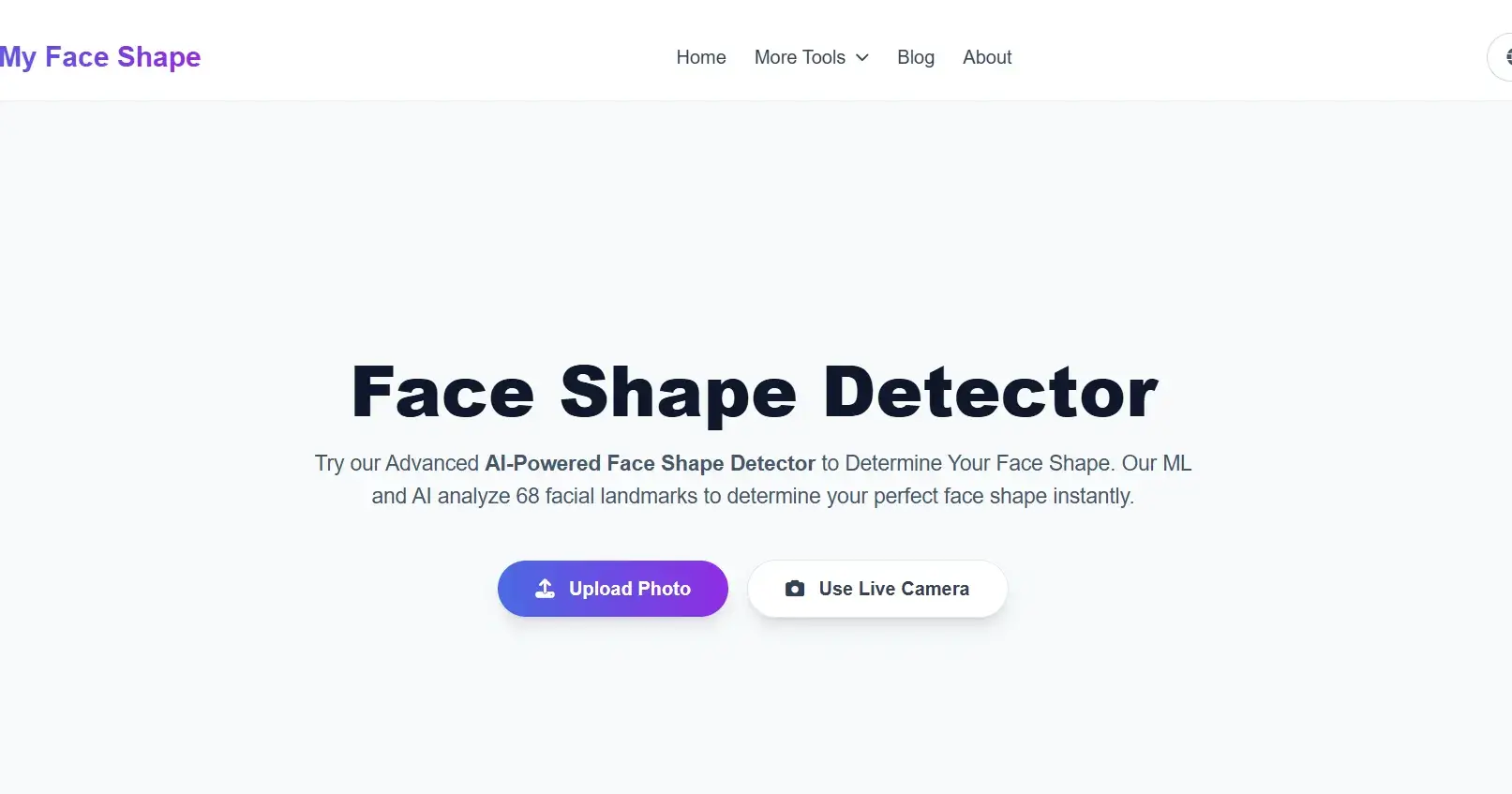
Understanding your face shape is essential for choosing the right hairstyle, glasses, beard style, makeup techniques, and even cosmetic procedures. Thanks to Artificial Intelligence (AI) and modern computer vision, you can now detect your face shape instantly using an online AI face shape detector.
In this comprehensive guide, you’ll learn:
What face shape detection using AI means
How AI identifies facial landmarks
Step-by-step process to detect face shape
Accuracy factors & limitations
Best practices for better results
What Is AI Face Shape Detection?
AI face shape detection is the process of using machine learning algorithms and facial landmark detection to analyze facial structure and categorize it into predefined face shape types, such as:
Oval
Round
Square
Heart
Diamond
Rectangle (Oblong)
Unlike manual measurement methods, AI systems analyze facial proportions, jawline width, cheekbone structure, forehead width, and face length ratio automatically in seconds.
How Does AI Detect Face Shape?
AI face shape analyzers use a combination of:
Computer Vision
Deep Learning
Facial Landmark Detection
Neural Networks
Image Processing Algorithms
Let’s break it down step by step.
1️⃣ Face Detection
The AI first detects a face in the image using models like:
OpenCV
Google MediaPipe
Dlib
These frameworks locate the face region inside the image.
2️⃣ Facial Landmark Extraction
After detecting the face, AI identifies key facial points such as:
Chin
Jawline
Cheekbones
Forehead edges
Nose bridge
Hairline (if visible)
For example:
Dlib 68-point model
MediaPipe 468 face mesh landmarks
These landmarks help measure distances and angles between facial features.
3️⃣ Facial Proportion Analysis
The system calculates ratios such as:
Face length ÷ face width
Forehead width ÷ jaw width
Cheekbone width ÷ jawline width
These proportions are compared against predefined datasets of face shape categories.
4️⃣ AI Classification Model
A trained Convolutional Neural Network (CNN) analyzes:
Face contour
Jawline sharpness
Chin curvature
Symmetry
Then it predicts the most probable face shape.
Step-by-Step: How to Detect Face Shape Using AI
Here’s a practical guide you can follow:
Step 1: Upload a Clear Photo
Front-facing image
Neutral expression
Good lighting
Hair pulled back
Step 2: AI Processes the Image
The tool:
Detects facial landmarks
Measures proportions
Compares with trained datasets
Step 3: Face Shape Result
You receive:
Predicted face shape
Confidence score
Styling suggestions (optional)
Technologies Behind AI Face Shape Detection
Modern AI face analyzers rely on:
Deep Learning Models
Convolutional Neural Networks (CNN)
TensorFlow
PyTorch
Face Mesh Algorithms
Computer Vision APIs
Some commercial implementations may use APIs inspired by technologies like:
Microsoft Azure
Amazon Web Services
Common Face Shapes Identified by AI
🔹 Oval Face
Balanced proportions, slightly narrower chin.
🔹 Round Face
Equal width and length, soft jawline.
🔹 Square Face
Strong jawline, wide forehead.
🔹 Heart Face
Wider forehead, narrow chin.
🔹 Diamond Face
Wide cheekbones, narrow forehead and chin.
🔹 Rectangle (Oblong)
Longer than wide, straight sides.
Factors That Affect Accuracy
AI face shape detection accuracy depends on:
Image resolution
Lighting conditions
Head tilt angle
Facial hair
Hair covering forehead
Camera distortion
For best results:
Use natural lighting
Keep camera at eye level
Avoid heavy filters
Is AI Face Shape Detection Accurate?
Modern AI systems trained on large datasets can achieve high accuracy, but remember:
Human faces are not perfectly categorized
Many people fall between two shapes
Results are probabilistic, not absolute
AI provides a data-driven estimate, not a medical or biometric certification.
Benefits of Using AI to Detect Face Shape
Instant results
No manual measurements
Helpful for hairstyle selection
Useful for glasses frame recommendations
Supports makeup contouring decisions
Assists in beard styling
Future of AI Face Analysis
With advancements in:
Real-time face mesh mapping
3D facial scanning
Augmented Reality (AR)
Biometric modeling
AI face shape detection will become more precise and integrated into:
Virtual try-on apps
Online eyewear stores
Hairstyle simulation platforms
Beauty and cosmetic applications
Final Thoughts
Detecting your face shape using AI is fast, convenient, and highly effective. By leveraging facial landmark detection, deep learning models, and computer vision technologies, AI systems can analyze facial proportions in seconds and provide reliable face shape predictions.
Whether you're choosing a new haircut, selecting glasses, or improving your personal style, AI face shape detection tools make the process simple and data-driven.
Top 5 AI-Powered Face Shape Detector Websites To Try:

Join Adil on Peerlist!
Join amazing folks like Adil and thousands of other builders on Peerlist.
0
3
0