

Vibe Coding Is a Concept Car & Production Software Is the Vehicle That Actually Goes on the Road
Vibe Coding : The Influencer Lens VS. The Builder Lens
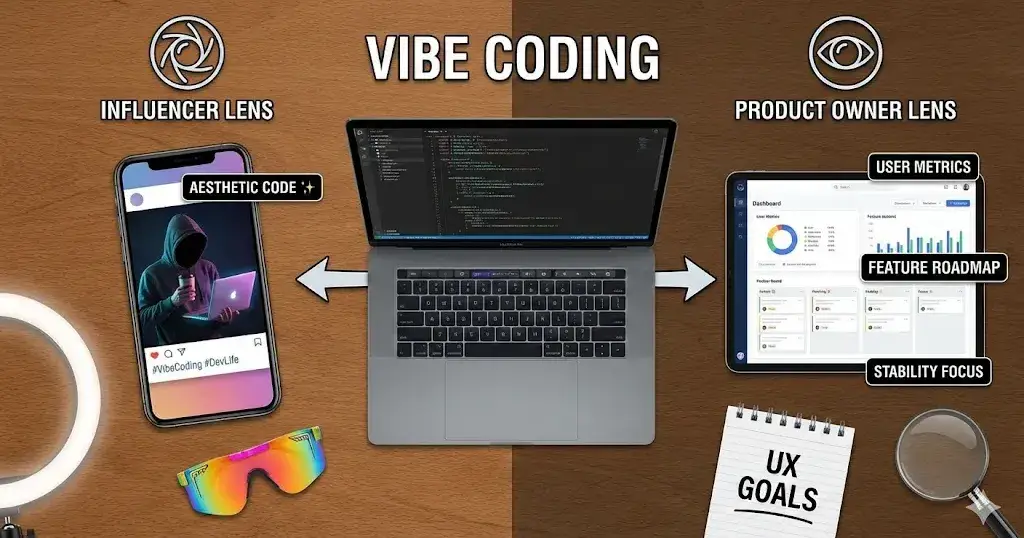
Vibe Coding : The Influencer Lens VS. The Builder Lens
Lately, tech and design circles are celebrating vibe coding : prompt-driven, AI-assisted coding that feels fast and fluid. And honestly after spending hours exploring different flows? I get the appeal.
Vibe coding is great for momentum. It lowers the barrier to entry, accelerates prototyping, and helps ideas move from concept to screen faster than ever. For designers and founders, it feels like creative freedom:
ideas move fast, prototypes come alive, and the distance between thinking and making almost disappears.
That’s not trivial.
That’s empowering.
But in all the coolness what mustn’t be lost is scalability.
These days I have read so many post about people creating and launching apps using Vibe code. But the realist in me couldn’t stop wondering the obvious what about production and scalability ?
Press enter or click to view image in full size
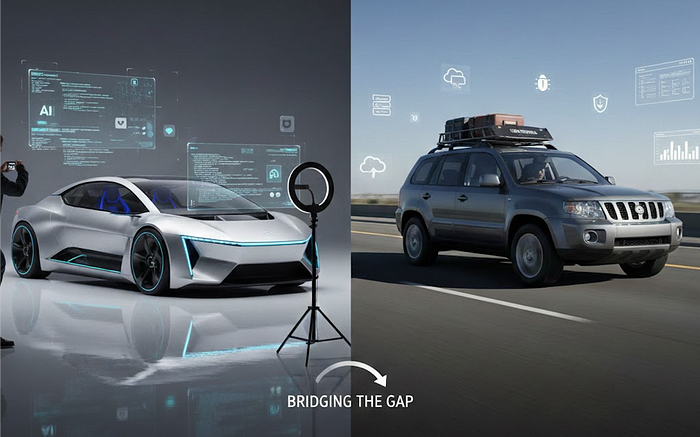
Vibe coding is a concept car.
Concept cars exist to: Showcase vision, push boundaries without constraints and to start a conversations about the future
They are not built for highways.
Prototype vs. Production Gap
Vibe coding works beautifuly when it comes to do rapid prototyping or create demo screens to showcase your ideas to potential customers or use it internally for the team to explore and visualise edge cases.
It aligns beautifully with how designers think:
explore → test → iterate → learn.
At this stage, speed is the advantage.
But productions asks very different questions :
What happens when this scales?
Who owns failures?
How do we secure this?
How do we monitor, debug, and maintain it six months from now?
No automaker says: “It drove fine on stage — let’s mass-produce it.”
As designers, product leaders we need to distinct creativity can vibe but Production systems don’t run on vibes.
Things get blurry when prototype quietly becomes product without production system in place. What vibe code don’t cover
Security, permissions, and data responsibility
Scalability beyond early users
Error handling and failure recovery
Long-term maintainability and ownership
What felt “good enough” early on can become:
Hard to reason about
Expensive to fix
Risky to scale
And by the time users depend on it, the cost of mistakes multiplies.
However it doesn’t make them wrong but it does make the narrative incomplete.
The Responsible Take
Vibe coding is not a replacement for engineering discipline.
It’s an accelerator, not a foundation.
The healthiest model I’ve seen:
Use vibe coding for exploration and rapid prototyping
Then intentionally transition to structured architecture, reviews, and hardening
Keep humans accountable for decisions, trade-offs, and failures
Speed matters. So does sustainability.
Final Thought
If your product is meant to be used, not just demoed, then at some point you have to move beyond vibes. Great design isn’t just about how fast something comes together. It’s about how well it holds up when people start relying on it.
And that’s not a limitation of AI rather it’s a reminder of what real product ownership actually means.
What’s you take on vibe code ?

Join Aishwarya on Peerlist!
Join amazing folks like Aishwarya and thousands of other builders on Peerlist.
0
5
0