

What Is a No-Code App Builder? The Fastest Way to Launch a Dating App
Building a dating app used to be a serious technical undertaking. You needed a backend developer, a frontend team, a product manager to keep everything on track, and a budget to match. For a lot of founders especially first-timers that process alone was enough to shelve the idea entirely.
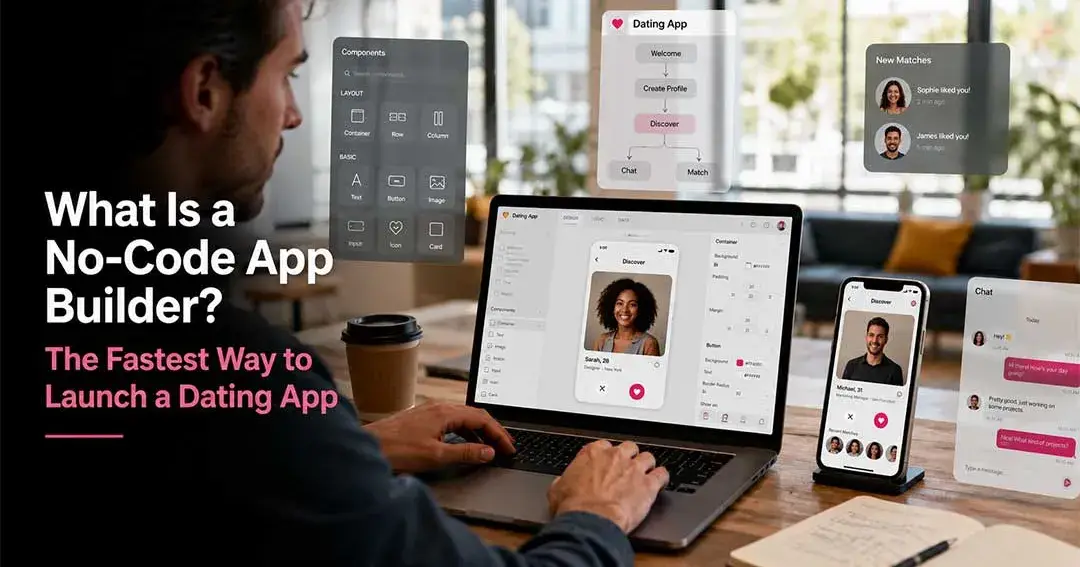
That's changed quite a bit. A no-code dating app builder gives you a working, brandable dating platform without the custom development process. You get the core features user profiles, matching, messaging, and monetization tools already built. Your job is to configure, brand, and launch it.
If you've been sitting on a dating app idea but the technical side felt like a wall, this approach is worth understanding properly. Here's how it works, what you should expect, and where the trade-offs are.
What a No-Code Dating App Builder Actually Does
The term "no-code" can get used loosely, so it's worth being clear about what it means in the context of dating apps. A no-code dating app builder is a pre-built software platform designed specifically for launching a dating service. The underlying code is already written, you're not assembling it from scratch.
What you control is the setup: your app's name and logo, the matching logic, the profile fields, the subscription tiers, the notification settings. Most platforms provide an admin dashboard where you manage all of this without touching a single file.
Think of it like running a website on WordPress. You didn't build WordPress, but you can build a professional site on top of it. A dating app builder works the same way, the platform is the engine, you provide the direction.
Why Startups Are Moving Away from Custom Builds
Custom development has real advantages if you're building something genuinely novel or if you have the resources to do it properly. But for most dating app startups, the case for going custom gets harder to justify when you look at the numbers.
According to Groovy Web's 2025 development cost breakdown, a mid-level custom dating app typically runs between $80,000 and $200,000 to build and that assumes the project goes smoothly. Development timelines for custom apps usually land between six and twelve months before you have anything ready to show users.
A ready-made dating app builder typically costs a fraction of that, and launch timelines shrink from months to weeks. For a founder who wants to test the market before committing to a full build, that difference matters enormously.
There's also the ongoing maintenance angle. With a custom build, any update, bug fix, or new feature requires developer time, which means ongoing cost. With a managed dating app script, much of that is handled at the platform level.
What Features Come Standard with a Dating App Builder?
This varies by platform, but most solid dating app builders come with a predictable core set of features. User registration and profile creation, photo upload, swipe-based or filter-based matching, private messaging, and push notifications are table stakes at this point.
Beyond the basics, many platforms include built-in monetization tools like subscription plans, in-app purchases, and premium profile boosts. Some also support video calls, live streaming, and geolocation-based matching, features that used to require significant additional development.
According to Business of Apps, the global dating app market generated just over $6 billion in revenue in 2025. A large portion of that came from platforms that had layered subscription and freemium models into their core product. Having those monetization options built into your dating app software from day one puts you in a better position to generate revenue early.
How Does It Compare to Building a Dating App Without Coding from Scratch?
Founders considering how to build a dating app without coding usually end up comparing three paths: a no-code builder, a white-label app, and a custom build. Each has a different profile of cost, speed, and control.
A custom build gives you the most flexibility. You can design every flow exactly as you want it. But as noted above, the upfront cost and timeline make it impractical for most early-stage startups, especially when the product concept hasn't been validated with real users yet.
A white-label dating app sits between the two. You get a brandable, pre-built product, but it's usually tied to a licensing agreement with less customization freedom than a script you own outright. White-label can work, but you're often building on top of someone else's ongoing platform rather than owning your stack.
A ready-made dating app builder, particularly one where you own the script, gives you a fast launch path with room to customize and scale. You're not locked into a third party's roadmap, and you're not paying a monthly licensing fee indefinitely. For startups that want speed now and optionality later, this tends to be the most practical starting point.
What to Look For in Dating App Software for Startups
Not all dating app builders are built the same. Some are genuinely flexible; others are rigid templates that look fine in a demo but become a headache when you try to adapt them.
A few things worth checking before you commit. First, look at what you actually own. Do you get access to the source code, or are you renting the platform? Source code ownership matters if you want to hire a developer down the line to extend the product. Second, check the mobile experience. A lot of dating app usage happens on mobile, so if the platform doesn't have a polished iOS and Android app not just a mobile-responsive web version that's a real limitation.
Third, look at niche customization. The dating app market has shifted toward more specific communities over the past few years. Apps for specific age groups, religions, interests, and lifestyles have carved out real audiences. A platform that lets you tailor the matching logic, profile fields, and onboarding experience to a specific community gives you a better foundation for differentiation.
Is a No-Code Dating App Builder Right for You?
If your goal is to validate a dating app concept, launch a niche community platform, or get a product in front of users without a large upfront investment, then a no-code approach makes a lot of sense. You're not committing to a six-figure development project on an untested idea.
If you already have strong technical resources and you're building something that genuinely requires custom logic from the ground up a novel matching algorithm, a complex social graph, or deep integrations with external platforms then a custom build might be the right call eventually. But even in that case, launching a no-code version first to test user behavior and retention is often the smarter move.
The dating app market is competitive, but it's not closed. There's still room for well-executed niche platforms, and the barrier to entry has dropped significantly. According to Statista, the number of online dating users globally is expected to surpass 440 million by 2027. That's a lot of potential users who haven't found the right app yet.
Final Thoughts
A no-code dating app builder isn't a shortcut for people who can't be bothered to build properly. It's a practical tool for founders who want to move fast, test assumptions, and get real feedback before investing in a full custom product.
The core takeaways are straightforward. Custom builds are expensive and slow. Ready-made dating app software cuts launch time and upfront cost significantly. Owning your script gives you more long-term flexibility than white-label licensing. And the tools available today are good enough that technical limitations are no longer the main obstacle between you and a live product.
The harder question for most founders isn't how to build the app it's who it's for and why they'd choose it over what's already out there. A no-code builder handles the first part. The second part is up to you.

Join Alan on Peerlist!
Join amazing folks like Alan and thousands of other builders on Peerlist.