

Multi-Agent Systems: Building Scalable Solutions for Complex Problems
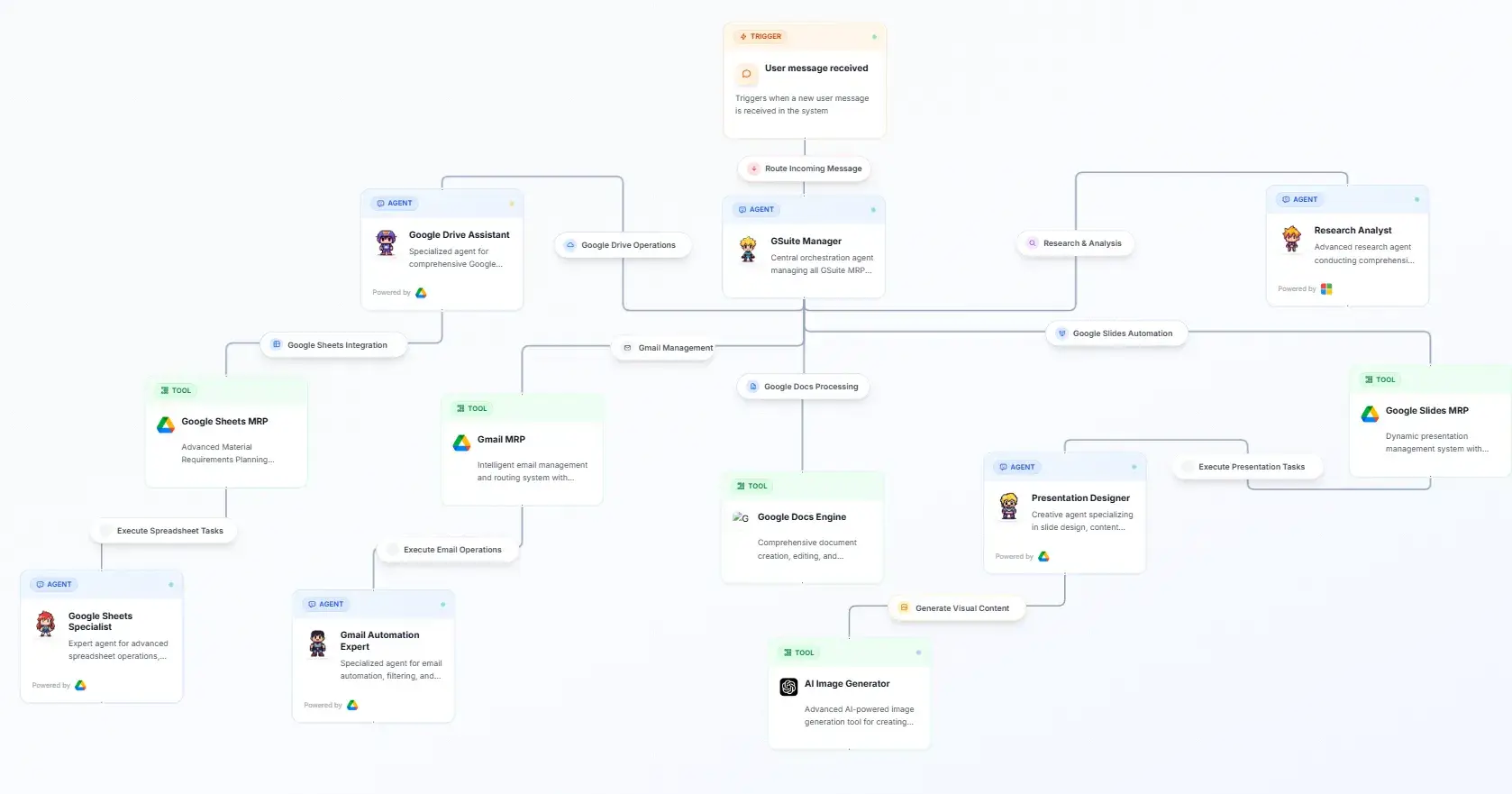
The notion of AI systems working together like specialized teams was once relegated to science fiction narratives, but multi-agent systems now represent one of the most practical approaches to tackling problems that would overwhelm individual agents or monolithic architectures. This collaborative intelligence forms the backbone of AI's most promising solutions for handling complexity at scale.
So what exactly are multi-agent systems? These sophisticated AI architectures consist of multiple autonomous decision-making agents operating within shared environments to pursue common objectives—or sometimes competing ones. The beauty lies in their distributed nature: each agent maintains independent control while contributing to collective behaviors that emerge naturally from their interactions. Even when individual agent strategies remain relatively straightforward, the system as a whole can exhibit remarkably sophisticated self-organization.
The scalability potential is impressive. Multi-agent architectures can coordinate hundreds, if not thousands, of agents working simultaneously on complex, large-scale challenges. More importantly, these systems typically feature agents designed for highly specialized tasks, creating efficiency levels that generalist approaches simply cannot match.
This specialization drives their greatest strength: collective behavior that enhances accuracy, adaptability, and scalability far beyond what single-agent systems achieve. The applications span diverse domains—from online trading platforms and disaster response coordination to surveillance networks and social structure analysis. Unlike rigid single-agent architectures, multi-agent systems can be reconfigured and fine-tuned as requirements evolve, offering the flexibility that modern applications demand.
To put this technological evolution into perspective, we'll explore the fundamental concepts driving multi-agent systems, their architectural approaches, and coordination mechanisms. We'll examine real-world applications across industries and investigate the challenges involved in scaling these solutions. Additionally, we'll look at how platforms like Arahi AI are advancing this technology to tackle increasingly complex problems.
Understanding these collaborative AI systems reveals their potential to reshape how we approach problem-solving across industries—demonstrating that sometimes, many specialized minds working together truly are better than one.
Understanding Multi-Agent Systems in AI
"Imagine a problem so complex that no single individual or large, monolithic program could solve it efficiently. Now, imagine a team of highly specialized experts, each with unique skills, collaborating fluidly, communicating intent, and collectively tackling that challenge. This is the essence of a multi-agent system (MAS) in artificial intelligence." — Google Cloud Editorial Team, Official Google Cloud documentation team, authoritative source on cloud AI systems
Traditional centralized AI architectures approach problems through single-point control, but multi-agent systems represent a fundamental departure from this paradigm. These distributed approaches offer distinct advantages that make them particularly valuable for real-world challenges requiring sophisticated coordination and adaptive responses.
What are multi-agent systems and how do they differ from single-agent systems?
Multi-agent systems (MAS) are computerized systems composed of multiple interacting intelligent agents. Rather than relying on centralized control, these systems create decentralized problem-solving environments where autonomous entities collaborate within shared spaces to achieve individual or collective objectives. The power lies in their distributed nature—no single agent dominates the entire system, yet sophisticated behaviors emerge naturally from their collective interactions.
The distinctions between single-agent and multi-agent approaches are crucial for selecting the right architecture:
Context Management: Single-agent systems maintain continuous context without information loss, while multi-agent systems must manage complex information sharing between multiple entities.
Execution Speed: Single agents operate sequentially, whereas multi-agent systems execute tasks in parallel, dramatically reducing processing time.
Reliability: Single agents typically demonstrate higher predictability, while multi-agent systems may exhibit emergent behaviors that are less deterministic.
Problem Scope: Single agents excel at sequential, state-dependent tasks, while multi-agent systems handle parallelizable, exploratory challenges more effectively.
The advantages become apparent when confronting problems too complex for individual agents. Arahi AI's complex problem-solving solutions demonstrate how multiple specialized agents can divide workloads, reducing error likelihood while enhancing adaptability for increasingly complex tasks.
Types of agents: passive, active, and cognitive
Agent classification within multi-agent systems depends on their complexity and decision-making capabilities:
Passive Agents: These fundamental agents lack independent goals and respond only when summoned by other agents or controllers. They function primarily as environmental objects or resources that maintain state without demonstrating proactive behavior. Examples include obstacles, resources, or environmental elements within simulations.
Active Agents: These agents possess individual goals and take initiative to achieve them. They range from simple reactive agents responding directly to environmental stimuli (like birds in flocking simulations) to more deliberative agents planning sequential actions. Active agents with straightforward goals might include predator-prey models or basic autonomous vehicles coordinating traffic flow.
Cognitive Agents: Representing the most sophisticated category, cognitive agents maintain complex internal environmental models and potentially models of other agents. They can reason, learn from experience, and formulate sophisticated strategic plans. Modern large language model integration into agent architectures exemplifies cognitive agents, utilizing advanced reasoning capabilities for complex tasks.
Agent environments: discrete, continuous, and virtual
The operational environment fundamentally shapes agent behavior and capabilities. Multi-agent environments fall into several distinct categories:
Virtual Environments: These digital spaces serve as operational domains for software agents. They span simulated marketplaces for trading agents to digital platforms for service-oriented agents. Virtual environments enable controlled agent interaction and are commonly used for testing before physical deployment.
Discrete Environments: These environments offer agents finite, countable action possibilities. Board games represent classic examples, where moves are clearly defined and limited. Discrete environments typically feature well-defined state transitions, making them more predictable for agent navigation.
Continuous Environments: These spaces feature infinite possible states and actions along continuous dimensions. Autonomous vehicles operating in physical space exemplify agents in continuous environments, where positions, velocities, and actions exist along continuous spectra rather than discrete steps.
Agent environments can also be organized according to key properties such as accessibility (whether complete information gathering is possible), determinism (whether actions cause definite effects), and dynamics (how many entities influence the environment simultaneously). These properties significantly impact agent design and decision-making strategies.
Core Characteristics of Multi-Agent Architectures
"Each agent operates independently within its own scope. It gathers and processes data, and then acts without needing to check in with a central authority." — Salesforce AI Editorial Team, Salesforce AI research and product team, leaders in enterprise AI
The fundamental characteristics that make multi-agent systems effective aren't just technical specifications—they represent a complete rethinking of how AI systems should operate. These architectural principles enable distributed problem-solving approaches that outperform traditional centralized control mechanisms across diverse applications.
Autonomy and decentralized control
Autonomous operation stands as the cornerstone of multi-agent architecture, where individual agents function like independent specialists within a collaborative team. Each agent maintains complete control over its internal state and decision-making processes, operating without constant human oversight or interference from other agents. This independence allows them to pursue objectives proactively while remaining responsive to environmental changes.
Decentralized control represents a fundamental departure from conventional centralized architectures. Rather than relying on a single controlling entity, multi-agent systems distribute both control and data processing across multiple agents. The advantages are compelling:
Computational burden reduction and enhanced efficiency
Stronger privacy protection for sensitive operations
Superior scalability for large-scale implementations
Optimized communication efficiency in distributed environments
This shift toward autonomous decentralized control has gained particular momentum in domains like distributed generation networks, where centralized approaches hit hard limits. Arahi AI's autonomous systems solutions showcase how decentralized architectures enable agents to move collectively in desired patterns without predetermined leaders, relying solely on local information for coordination.
Local views and partial observability
Real-world multi-agent environments rarely offer agents complete visibility into their surroundings. Instead, they operate with local perspectives—partial observations of the environment and other agents' actions. This partial observability creates one of the most significant design challenges in multi-agent systems.
Partial observability emerges when agents cannot directly observe the true environmental state, either because complete access is impossible or because representing the full state would be computationally prohibitive. This constraint demands specialized approaches to ensure effective operation despite incomplete information.
Innovative solutions have emerged to address these limitations. The Multi-Agent Masked Auto-Encoder (MA²E) represents a breakthrough approach, enabling agents to infer global information using only local observations. This technique allows agents to develop more complete situational awareness without requiring direct communication, significantly improving their decision-making capabilities in partially observable environments.
Partial observability remains challenging for several reasons:
It significantly complicates the modeling process
It requires accounting for potentially incorrect or missing information
It demands sophisticated coordination mechanisms between agents
Fault tolerance and self-recovery mechanisms
Multi-agent systems possess an inherent resilience that sets them apart from centralized architectures. While centralized systems can suffer complete failure from a single point of breakdown, multi-agent architectures continue operating even when individual agents malfunction. This robustness makes them invaluable for mission-critical applications where system reliability cannot be compromised.
Self-healing capabilities amplify this resilience considerably. Modern multi-agent systems incorporate sophisticated self-recovery mechanisms that continuously monitor system health and implement adaptive responses. When faults occur, these systems can autonomously transition from unhealthy to healthy states without external intervention.
Case-based fault recovery mechanisms offer a particularly elegant approach to self-recovery. These systems maintain detailed records of previously encountered failures, enabling them to identify similar issues through similarity calculations. Upon detecting a fault, the system evaluates it against recorded cases and implements the most appropriate recovery strategy based on maximum similarity matching.
Practical recovery strategies encompass:
Component replacement procedures
System restart protocols
Alternative resource allocation methods
This combination of decentralized control, partial observability management, and self-recovery capabilities creates multi-agent systems that adapt remarkably well to complex, dynamic environments. Arahi AI's blog on system design explores further how these architectural characteristics enable robust solutions for today's most demanding computational challenges.
Coordination and Communication Mechanisms
The most sophisticated multi-agent architectures mean nothing without effective ways for agents to communicate and coordinate their efforts. Even brilliantly designed individual agents operating in isolation create chaos rather than the cohesive intelligence these systems promise.
Agent Communication Languages: FIPA ACL and KQML
Much like human teams need shared languages to collaborate effectively, agents require standardized communication protocols to exchange information meaningfully. Agent Communication Languages (ACLs) provide these critical frameworks, enabling agents to not just share data but truly understand each other's intentions and capabilities.
Two protocols have emerged as the dominant standards in this space, each with distinct approaches to solving the communication challenge.
FIPA-ACL (Foundation for Intelligent Physical Agents - Agent Communication Language) represents the more recent evolution in agent communication standards. Developed in 1996 as an IEEE standard, it defines both message structure and the pragmatic effects on communicating agents. Building upon earlier work, FIPA-ACL added stronger semantic clarity and standardization. The protocol employs a formal framework using feasibility preconditions and rational effects based on modal logic, making it theoretically rigorous—though sometimes challenging to implement.
KQML (Knowledge Query and Manipulation Language) established the foundational concepts that influenced all subsequent agent communication languages when DARPA pioneered it in the 1990s. Its critical innovation was a three-layer architecture consisting of content, communication, and message layers. KQML cleverly divides messages into content messages for core knowledge exchange and declaration messages for administrative tasks like agent registration.
Both languages share similar syntactic structures using a LISP-like format, yet differ primarily in their approach to message semantics. As Arahi AI's agent communication blog explains, these standardized languages ensure agents can exchange data and genuinely understand each other's intentions and capabilities.
Contract Net Protocol and task allocation
When agents need to divide complex work among themselves, the Contract Net Protocol (CNP) provides one of the most effective coordination mechanisms. Originally proposed as a classical negotiation strategy, CNP creates a framework for cooperative distributed problem-solving agents to allocate tasks through mutual selection.
The protocol operates through a structured negotiation process that mirrors real-world contracting:
An initiator agent announces a task
Interested agents evaluate and submit bids
The initiator selects the most suitable contractor
The task is executed and results are reported
This straightforward approach has proven effective across applications ranging from manufacturing control to multi-robot systems. However, CNP faces significant challenges with message congestion as system scale increases. Researchers have proposed various improvements, particularly audience restriction (AR), which limits announcement broadcasts to reduce message traffic under heavy load conditions.
Recent extensions adapt CNP for specialized applications like multi-robot vacuum cleaning, where robots must cooperate to clean areas beyond individual capabilities. Arahi AI's coordination solutions incorporate similar principles for efficient task distribution across agent networks.
Stigmergy and indirect coordination through environment
Nature offers a fascinating alternative to direct agent communication through stigmergy—defined as a "mechanism of indirect coordination in which the trace left by an action in a medium stimulates subsequent actions". This approach draws inspiration from insect colonies like ants and termites that achieve remarkable coordination without any centralized control.
The process works through environmental modifications that serve as communication signals. Ants release pheromones that guide other ants to food sources or help them cooperatively transport large items. Artificial systems adapt this concept by enabling robots to modify their environment for indirect communication with other agents.
Stigmergy's power lies in its elegant simplicity and natural scalability. It requires no direct agent-to-agent communication yet enables complex collective behaviors to emerge organically. Engineers have successfully adapted this concept for robotic swarms that gather objects, sort them, navigate unknown environments, and track moving targets. The approach shows particular promise for collective construction tasks, where the structure itself serves as the stigmergic signal.
Recent mathematical frameworks have made stigmergy more practical by modeling swarms as continuous fluids and describing their spatio-temporal evolution, similar to thermodynamic approaches for large-scale systems. This "continuification" view represents an original contribution that allows explicit computation of trace distribution necessary to achieve desired swarm configurations.
System Architectures and Organizational Models
The structural design of multi-agent systems shapes everything from response times to failure recovery, making architectural decisions critical for real-world deployment success. These organizational frameworks determine whether systems can scale gracefully or crumble under pressure.
Centralized vs decentralized MAS architecture
The architectural choice between centralized and decentralized control fundamentally shapes how multi-agent systems perform under various conditions. Centralized architectures operate through a single controlling entity that coordinates all agents, consolidating resources and processing power. This approach delivers clear benefits: simplified administration, enhanced data security through centralized protection measures, and typically lower equipment costs.
Yet centralized systems carry inherent vulnerabilities. The single point of failure represents their most critical weakness—when the central controller fails, the entire system becomes compromised. Scalability presents another challenge, as expanding capacity often demands substantial infrastructure investment.
Decentralized architectures distribute both resources and decision-making across multiple nodes. This design philosophy creates inherent resilience since no single failure point can compromise the entire system. Performance comparisons consistently favor decentralized approaches across multiple criteria:
Faster computation times for complex problem-solving
Superior resilience when communication failures occur
More effective handling of simultaneous fault conditions
Reduced communication overhead for information discovery
Arahi AI's scalable agent solutions demonstrate how decentralized principles create robust multi-agent systems that adapt to changing conditions without centralized oversight.
Hierarchical and holonic agent structures
Hierarchical organization creates natural divisions of responsibility within multi-agent systems. Higher-level agents focus on strategic planning and goal setting, while lower-level agents handle tactical implementation and direct execution. This layered approach enables efficient task decomposition across different abstraction levels—from broad strategic objectives down to specific operational actions.
Holonic structures offer an intriguing alternative based on the concept of "holons"—autonomous units that function both independently and as components of larger systems. This dual nature provides exceptional adaptability. When individual agents fail or new capabilities are added, holonic systems can reconfigure themselves dynamically without disrupting overall operations.
Coalitions and team-based agent models
Some challenges require agents to pool their capabilities temporarily. Coalition formation addresses scenarios where individual agents lack sufficient resources or expertise to handle complex tasks independently. These partnerships typically begin with independent agents who form collaborative relationships based on acquired knowledge and mutual consultation. Coalition members then cooperate fully, combining their specialized abilities to achieve outcomes impossible individually.
Team-based models take collaboration further through permanent integration among agents pursuing shared objectives. The hierarchical structure within teams enables deeper cooperation and more sophisticated handling of interdependent tasks.
Measuring coalition effectiveness typically focuses on two key metrics: throughput (the volume of work completed within specific timeframes) and stability (how frequently coalition membership changes). Formation decisions often involve agents evaluating potential partnerships based on past interactions, current coalition commitments, and projected collaboration benefits.
The choice between these organizational models depends heavily on the specific problem domain and operational requirements. Each offers distinct advantages for different types of challenges.
Real-World Applications of Multi-Agent Systems
Multi-agent systems have moved beyond academic research into practical solutions across industries worldwide. These implementations demonstrate how distributed intelligence addresses complex challenges that would overwhelm centralized approaches.
Traffic and transportation optimization
Urban traffic management represents one of the most visible successes of multi-agent technology. These systems create responsive control mechanisms that adapt to changing conditions in real-time. Public transportation networks use multi-agent approaches to reduce intersection delays for both private vehicles and buses through intelligent traffic light optimization.
The systems extend beyond basic flow management. Multi-agent networks monitor intervals between buses on specific routes, ensuring more consistent service delivery. Drivers receive autonomous decision-making support through real-time information that modifies their travel behavior based on dynamic traffic conditions.
Warehouse operations showcase another powerful application. Automated guided vehicles employ multi-agent systems for optimized path planning, creating significant improvements in logistics efficiency. Arahi AI's transportation solutions apply these principles to develop more efficient urban mobility systems that adapt to complex, changing conditions.
Healthcare simulations and epidemic modeling
Healthcare applications reveal the predictive power of multi-agent architectures. The MAS collision model has successfully forecast seasonal influenza epidemics across five seasons in Tokyo, demonstrating remarkable accuracy in disease spread prediction.
COVID-19 pandemic response highlighted these systems' strategic value. Multi-agent simulations enabled researchers to evaluate intervention strategies including contact tracing, mask wearing, and testing protocols. The technology excels at modeling fine-grained interactions in megacities with populations exceeding ten million.
Advanced implementations combine multi-agent systems with fuzzy logic to assess risk factors such as age and obesity in predicting COVID-19 severity levels. This integration shows how multi-agent approaches can handle complex, multi-variable health assessments that would challenge traditional modeling approaches.
Supply chain and logistics coordination
Supply chain applications showcase the adaptability advantages of multi-agent architectures. Autonomous supply chains using multi-agent approaches demonstrate both predictive capabilities and self-decision-making functions.
Retail environments benefit significantly from these implementations. Inventory management agents maintain optimal stock levels through real-time data analysis, automatically adjusting purchasing decisions to maximize profitability. Transportation fleet optimization agents continuously analyze traffic conditions, vehicle loads, and delivery deadlines to suggest optimal routing strategies.
Defense and cybersecurity systems
Cybersecurity represents a rapidly growing application domain for multi-agent technology. At Google, AI agents handle critical security tasks including alert triage and malware analysis. These systems independently identify threats, reason through complex scenarios, and take appropriate actions, allowing human analysts to focus on challenges requiring specialized expertise.
Multi-agent AI approaches for cybersecurity frame defense as a competitive, zero-sum game between AI-powered agents. This strategy enables defensive AI agents to model and learn adversarial behaviors, creating more robust protection systems against evolving threats. Arahi AI's security solutions utilize these principles to develop comprehensive defensive systems that adapt to increasingly sophisticated attack patterns.
Challenges in Designing Scalable MAS
While multi-agent systems offer compelling advantages, scaling these architectures introduces formidable challenges that can determine success or failure in real-world deployments. The complexities extend far beyond theoretical considerations into practical implementation hurdles that demand careful attention.
Coordination complexity in dynamic environments
Building multi-agent systems that maintain effectiveness amid changing conditions requires delicate balancing acts between proactive and reactive behaviors. Coordination complexity emerges as one of the most stubborn obstacles when agents must negotiate with one another continuously. Environmental shifts force agents to constantly reevaluate their interaction relationships to sustain successful collaborative operations. This adaptive challenge intensifies when agent objectives and decision-making contexts evolve unpredictably.
The computational overhead grows exponentially as system scale increases. What works smoothly with a dozen agents can become unmanageable with hundreds operating simultaneously. Arahi AI's dynamic coordination tools tackle these challenges through adaptive negotiation protocols that adjust coordination strategies based on environmental conditions.
Agent malfunction and system-wide vulnerabilities
Multi-agent systems built on identical foundation models create dangerous single points of failure, where shared weaknesses can cascade into system-wide breakdowns. This vulnerability highlights the critical importance of rigorous data governance and comprehensive testing protocols across all system components.
Security challenges multiply beyond those of individual agents. Communication channels become attack vectors where adversaries can intercept sensitive information or inject manipulated data to disrupt operations. Central orchestrators present particularly attractive targets—compromising these components can undermine entire operational workflows. The distributed nature that provides resilience can simultaneously create more attack surfaces for sophisticated threats.
Communication overhead and emergent behavior unpredictability
Emergent behavior—collective patterns that cannot be attributed to individual agents—arises from complex spatial and temporal coupling that generates nonlinear feedback loops. While emergence can produce beneficial outcomes, it becomes increasingly unpredictable as systems scale, creating management nightmares.
Communication bottlenecks compound these difficulties. Message volume often grows exponentially with system size, potentially overwhelming network resources and creating performance degradation. The fundamental challenge lies in emergence itself: these collective behaviors cannot be predicted through any analysis simpler than examining the complete system in operation.
These scaling challenges represent the price of distributed intelligence. Each solution creates new complexities, demanding sophisticated approaches to maintain system reliability as agent populations grow.
Conclusion
Multi-agent systems have evolved from theoretical concepts into practical solutions that address some of our most complex challenges through collaborative intelligence. These distributed architectures represent more than just a technological advancement—they signal a fundamental shift in how we approach problem-solving across industries.
The evidence speaks clearly. Whether coordinating traffic flows in bustling cities, predicting disease patterns across populations, or defending against sophisticated cyber threats, multi-agent systems consistently outperform traditional centralized approaches. Their strength lies not in individual agent sophistication but in the emergent intelligence that arises when specialized agents collaborate autonomously.
What makes these systems particularly compelling is their adaptability. The same architectural principles that enable warehouse robots to optimize logistics paths also power healthcare simulations that model pandemic interventions across millions of individuals. This versatility stems from the foundational characteristics we explored—autonomous operation, distributed control, and self-recovery capabilities that create resilience at scale.
The coordination mechanisms we examined reveal another key insight: effective collaboration doesn't always require direct communication. From the structured negotiations of Contract Net Protocol to the elegant simplicity of stigmergy-inspired coordination, these systems demonstrate that collective intelligence can emerge through multiple pathways.
Challenges certainly persist. Coordination complexity grows exponentially in dynamic environments, while communication overhead and emergent behavior unpredictability create design hurdles that require careful consideration. Yet these obstacles haven't prevented rapid advancement in the field.
Platforms like Arahi AI continue pushing boundaries with comprehensive tools for agent coordination, scalable architectures, and dynamic coordination. These developments suggest we're approaching a future where multi-agent systems will tackle challenges that seem intractable today.
The trajectory is clear: artificial intelligence continues moving toward more distributed, collaborative models. Multi-agent systems will undoubtedly play a central role in this evolution, offering capabilities that no single system—no matter how sophisticated—could achieve independently.
This collaborative approach to AI mirrors something fundamental about complex problem-solving itself. The most challenging issues facing our world rarely yield to single solutions or individual expertise. They require diverse perspectives, specialized knowledge, and coordinated action. Multi-agent systems embody this principle in their very architecture, proving that sometimes, many specialized minds working together truly are better than one.
Key Takeaways
Multi-agent systems revolutionize AI by distributing intelligence across specialized agents that work together autonomously, offering superior scalability and fault tolerance compared to traditional centralized approaches.
• Decentralized autonomy beats centralization: Multi-agent systems outperform centralized architectures through distributed control, eliminating single points of failure while enabling parallel processing and improved resilience.
• Specialized agents deliver superior results: Each agent handles specific tasks within their expertise, creating more efficient solutions than monolithic systems attempting to solve everything at once.
• Communication protocols enable seamless coordination: Standardized languages like FIPA ACL and mechanisms like Contract Net Protocol allow agents to negotiate, allocate tasks, and share information effectively without human intervention.
• Real-world applications span critical industries: From traffic optimization and healthcare modeling to supply chain management and cybersecurity, multi-agent systems already solve complex problems across diverse sectors.
• Scalability challenges require careful design: While powerful, these systems face coordination complexity, communication overhead, and unpredictable emergent behaviors that must be addressed through robust architectural planning.
The future of AI lies in collaborative intelligence where multiple specialized agents work together to tackle problems too complex for any single system to handle alone.

Join Nitish on Peerlist!
Join amazing folks like Nitish and thousands of other builders on Peerlist.
0
6
0