

Cars24 Clone - Tips to Buy Readymade App Like Car24
Looking for a Cars24 Clone App? Learn development cost, features, revenue model, tech stack, and tips to buy a scalable readymade Cars24-like automotive marketplace platform.
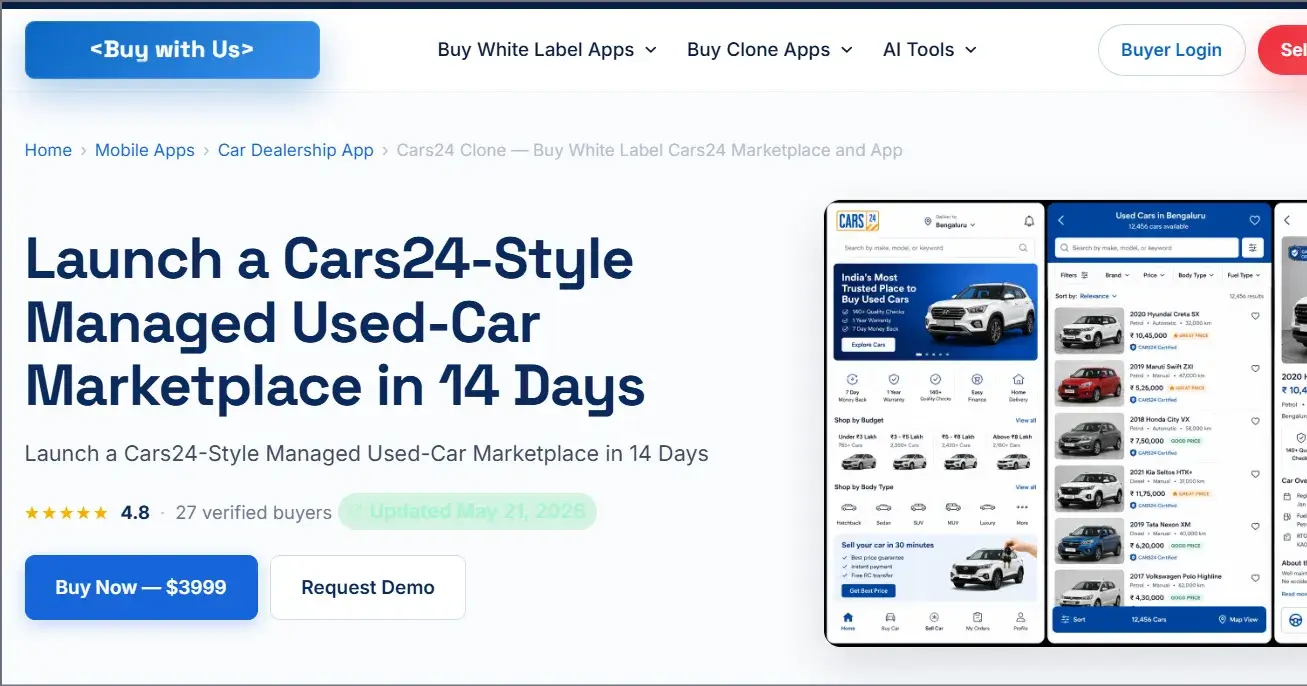
The online used car market is growing aggressively across countries like India, UAE, USA, Australia, and the UK. Platforms CARS24 Clone changed how people buy and sell used vehicles by simplifying inspections, financing, ownership transfer, and instant resale processes.
Because of this growing demand, many startups are now searching for a ready-made Cars24 Clone App instead of building the entire platform from scratch.
At Triple Minds, we have already developed a complete Cars24 Clone, AutoTrader Clone platform that includes:
Buyer mobile app
Seller app
Dealer dashboard
Admin panel
Vehicle inspection management
Loan and EMI modules
Lead management systems
Real-time analytics
Businesses can schedule a free demo call to review the complete platform before launch.
The biggest reason founders prefer clone solutions is simple:
they reduce development time, lower initial investment, and help startups enter the market faster before competitors dominate their region.
Modern car marketplace platforms are no longer simple listing websites. Today’s users expect:
Instant car valuation
Loan eligibility checks
Vehicle history reports
Inspection scheduling
Doorstep pickup
Financing options
Fast ownership transfer
That is why businesses entering this industry now require scalable automotive marketplace ecosystems instead of basic classified apps.
What Should a Cars24 Clone App Include?
Many founders make the mistake of buying simple car listing scripts and later realize they cannot scale like real automotive marketplaces.
A proper Cars24 Clone App should include multiple interconnected systems designed for buyers, sellers, dealers, admins, inspectors, and finance teams.
The buyer application should allow users to:
Browse verified cars
Apply advanced filters
Compare vehicles
Check EMI plans
Schedule test drives
Reserve vehicles
Chat with dealers
Complete payments
The seller side should focus on:
Instant car valuation
Vehicle upload
Inspection booking
Offer management
Documentation tracking
Ownership transfer updates
Dealer modules become extremely important because many marketplaces earn through dealer partnerships. Dealers usually need:
Inventory management
Lead tracking
Pricing controls
Analytics dashboards
Auction participation
Featured listings
The admin panel is the backbone of the platform. It should manage:
Vehicle approvals
User management
Payment systems
Commission structures
Loan integrations
Inspection workflows
Revenue analytics
Fraud detection
Advanced automotive platforms additionally integrate:
AI-based car price prediction
RC verification APIs
Insurance integrations
GPS tracking
Inspection image uploads
Dynamic pricing engines
Regional pricing systems
The stronger the operational workflow, the more scalable the marketplace becomes.
Tips to Buy the Right Readymade Cars24 Clone App
Many startups waste money buying low-quality clone scripts that only look attractive in demos but fail under real traffic and operational requirements.
Before purchasing a Cars24 Clone App, founders should carefully verify whether the platform is production-ready or simply a frontend template.
The first thing to check is the backend architecture. A real automotive marketplace requires:
High-speed APIs
Scalable databases
Cloud infrastructure
CDN optimization
Search filtering systems
Lead distribution systems
Without scalable architecture, the platform becomes slow once inventory and users grow.
The second important factor is mobile experience. Most vehicle buyers now browse cars through smartphones, so the app must support:
Fast image loading
Smooth search experience
Easy financing workflows
One-click inquiries
Real-time notifications
Another major mistake startups make is ignoring operational workflows. A real used car marketplace requires:
Vehicle inspection handling
Seller verification
Financing approvals
Ownership transfer systems
CRM integrations
Without these systems, operations become manual and difficult to scale.
Businesses should also check:
Source code ownership
Customization flexibility
Technology stack
App scalability
API support
Cloud deployment readiness
Security standards
A good readymade solution should save at least 6–12 months of development time while still allowing complete business customization later.
How Much Does It Cost to Build a Cars24 Clone App?
The cost of developing a Cars24 Clone App depends on the number of modules, automation systems, third-party integrations, and marketplace complexity.
A simple used car listing platform with basic buyer and seller functionality can start from around 15,000 USD to 30,000 USD. However, a fully scalable automotive marketplace similar to CARS24 with dealer management, AI pricing, inspections, financing, CRM systems, and analytics can easily cost between 50,000 USD to 200,000 USD or more.
The development budget usually increases based on:
Android and iOS apps
Dealer dashboard
Admin portal
AI pricing systems
Loan integrations
Inspection workflows
Real-time analytics
Cloud infrastructure
High-resolution image optimization
API integrations
One of the biggest hidden costs in automotive marketplaces is operational infrastructure. Most founders only think about app development while ignoring:
Server scaling
Vehicle image storage
CDN usage
Push notification systems
CRM infrastructure
Lead management operations
This is why many startups now prefer ready-made or white-label Cars24 Clone solutions. Instead of spending 8–14 months building from scratch, businesses can launch much faster with an already tested platform and customize it according to their market requirements.
Revenue Models Used by Cars24-Like Platforms
Most people think used car marketplaces only earn through car sales commissions, but the actual business model is much bigger.
Successful automotive marketplaces generate revenue through multiple channels simultaneously.
The first major revenue source is dealer commissions. Marketplaces charge dealers for:
Premium listings
Lead access
Featured placements
Subscription plans
Inventory promotions
Another strong revenue stream comes from financing partnerships. Automotive platforms earn commissions through:
Car loans
EMI processing
Insurance partnerships
Extended warranties
Documentation services
Many large marketplaces also generate revenue from vehicle inspections and certification systems. Sellers often pay for:
Car inspection reports
Vehicle verification
Fast resale processing
Ownership transfer assistance
Some platforms additionally monetize:
In-app advertising
Sponsored dealers
Priority search rankings
Auction participation fees
Vehicle subscription models
Advanced automotive marketplaces also use AI pricing engines to help dealers optimize vehicle pricing based on:
Regional demand
Vehicle condition
Seasonal trends
Mileage
Brand popularity
The more operational services integrated into the platform, the stronger the revenue ecosystem becomes.
Key Challenges in Building a Used Car Marketplace Like Cars24
Building a used car marketplace is far more complex than creating a normal ecommerce app.
The biggest challenge is trust.
Users are spending thousands of dollars on vehicles, so the platform must create confidence through:
Vehicle inspections
Verification systems
Ownership validation
Transparent pricing
High-quality vehicle images
Detailed reports
Without trust mechanisms, conversion rates remain low.
Another major challenge is inventory management. Unlike ecommerce products, every used car is unique. The platform must handle:
Dynamic inventory
Real-time availability
Price fluctuations
Multiple sellers
Dealer synchronization
Search optimization also becomes difficult because users apply highly detailed filters such as:
Fuel type
Brand
Transmission
Ownership history
Mileage
Registration year
Regional availability
Financing workflows create another layer of complexity. Automotive marketplaces usually integrate:
Loan providers
Insurance companies
KYC verification
Credit scoring systems
Operational scaling is also difficult because vehicle marketplaces often involve offline workflows including:
Physical inspections
Doorstep pickup
RC transfer
Test drives
Vehicle delivery logistics
Another challenge is user acquisition. Automotive keywords are highly competitive and expensive in paid advertising campaigns. That is why successful platforms focus heavily on:
SEO
Influencer marketing
YouTube automotive content
Social media reels
Referral systems
Dealer partnerships
Without strong acquisition and retention strategies, scaling becomes extremely expensive.
Why Ready-Made Automotive Marketplace Solutions Are Growing Fast
The biggest reason startups prefer readymade Cars24 Clone Apps today is speed.
Building a complete automotive marketplace from scratch can take nearly a year or more because the platform is not limited to just car listings. Founders also need:
Mobile apps
Dealer systems
CRM workflows
Financing integrations
Inspection management
Analytics dashboards
Cloud infrastructure
For early-stage startups, this becomes expensive and risky.
Ready-made automotive marketplace solutions reduce this risk significantly because the core architecture is already developed and tested. Businesses mainly focus on:
Branding
UI customization
Regional workflows
Payment setup
Dealer onboarding
Vehicle inventory upload
This helps startups validate their business model quickly before investing heavily into custom development.
Another major advantage is operational learning. Teams that have already built automotive marketplaces understand:
Buyer behavior
Dealer operations
Lead distribution
Vehicle approval workflows
Financing processes
Marketplace scaling
That experience often saves months of trial-and-error for new founders.
Many businesses now also prefer white-label solutions because they allow:
Faster app launch
Lower initial investment
Easier maintenance
Future scalability
Complete source code control
For regional automotive startups, speed-to-market is becoming more important than building everything from zero.
Technology Stack Required for a Cars24-Like Platform
A used car marketplace requires much stronger infrastructure compared to standard ecommerce platforms because vehicle listings include large image libraries, real-time search systems, financing APIs, and dealer workflows.
Most modern automotive platforms use React Native or Flutter for mobile app development because cross-platform apps reduce development cost while supporting both Android and iOS users.
The backend is commonly developed using:
Node.js
Python
Java
Microservices architecture
The platform database usually handles:
Vehicle inventory
Dealer information
Financing data
Lead management
Search indexing
User activity tracking
Cloud infrastructure becomes extremely important because automotive marketplaces process:
Large image uploads
High search traffic
Real-time inquiries
Notification systems
Dealer synchronization
Most scalable platforms rely on:
AWS
Google Cloud
CDN optimization
Elastic server scaling
Cloud storage systems
Search functionality is another critical component. Users expect fast filtering based on:
Brand
Price
Transmission
Fuel type
Ownership history
Registration year
City
Vehicle condition
Advanced marketplaces additionally integrate:
AI-based recommendations
Vehicle price prediction
OCR document scanning
Fraud detection systems
RC verification APIs
Insurance integrations
The stronger the architecture, the easier it becomes to scale inventory and users later.
Final Thoughts
The online used car industry is becoming one of the fastest-growing digital commerce sectors globally. Platforms like CARS24 proved that users are comfortable buying and selling vehicles digitally when trust, financing, and convenience are handled properly.
However, building a successful automotive marketplace requires much more than attractive UI design. The real success depends on:
Operational workflows
Dealer management
Financing systems
Vehicle verification
Lead handling
Marketplace scalability
Many startups fail because they focus only on listings while ignoring the backend operations required to scale a real automotive ecosystem.
For businesses entering this market, launching with a production-ready architecture can save significant time, investment, and operational complexity.
At Triple Minds, we have already developed a complete Cars24 Clone platform with buyer apps, seller modules, dealer systems, financing workflows, admin dashboards, and scalable marketplace infrastructure for businesses planning to launch quickly in the automotive industry.

Join Ashish on Peerlist!
Join amazing folks like Ashish and thousands of other builders on Peerlist.
0
0
0