

How to Make Car Dealership Website or CRM? Full Demo
Learn how to make a car dealership website with listings, CRM, test drive booking, and lead generation features. Step-by-step guide by Ashish Pandey.
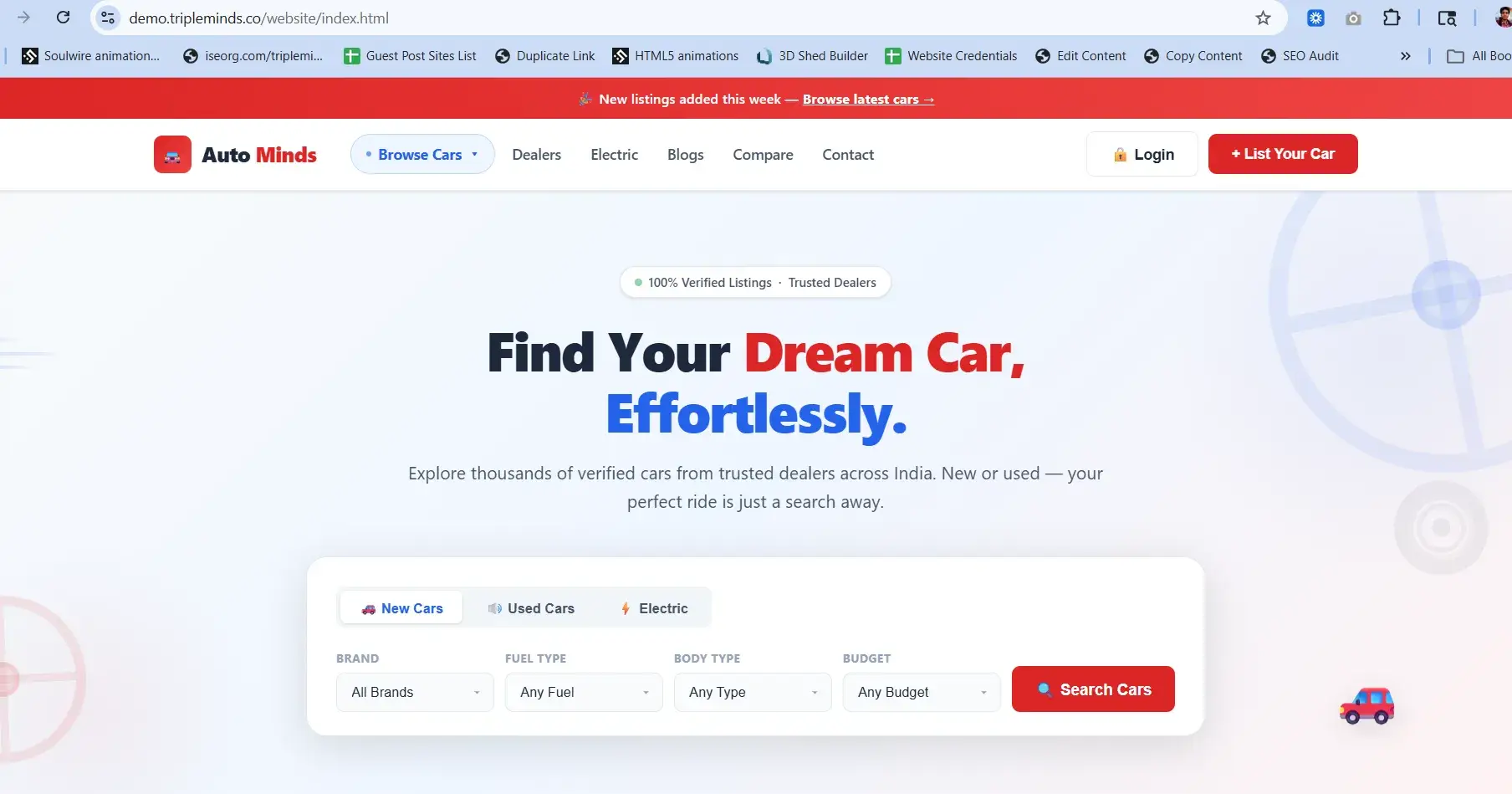
I’m Ashish Pandey, and over the years of working closely with startups, auto dealers, and marketplace founders, I’ve seen one common mistake — people think building a car dealership website is just about listing cars online. In reality, it’s about building a complete digital sales system that attracts buyers, manages leads, and converts interest into actual bookings. As per my experience, a well-structured car dealership platform can increase dealership inquiries by 3x to 5x within the first few months if executed correctly. And before I go deeper, let me tell you — we have already created a car dealership website with Lead Management, Car Listing, Test Drive Booking, and 30+ advanced features. If you are serious about building one, I highly recommend you request a free end-to-end demo to understand how it actually works in real business scenarios.
From a business perspective, a car dealership website is not just a website — it’s a combination of marketplace logic, CRM system, inventory management, and marketing automation. When I consult clients through Triple Minds, I always start with one question: “Do you want just a website, or do you want a system that sells cars for you?” Because both are completely different things. A simple website may cost less, but it won’t generate consistent revenue. A proper dealership platform, on the other hand, is designed to handle listings, buyer intent, follow-ups, and analytics in one place.
If you look at successful platforms like CarGurus or AutoTrader, they are not just showing cars — they are solving buyer problems, building trust, and guiding users step by step until they make a decision. That’s exactly the mindset you need while building your own car dealership website.
Now let me break this down in a practical way — how I usually guide businesses when they come to me for building a car dealership platform.
👉 Explore a live demo of our car dealership platform with listing management, lead management, dealership panel, master admin, test drive booking, and many more features — no signup, completely free.
Step 1: Define Your Business Model Before Writing a Single Line of Code
When I work with clients on building a car dealership website, I never start with design or development. I start with clarity. Because honestly, most people fail here — they jump into development without knowing what kind of platform they are actually building.
From my experience as a business consultant, there are mainly three types of car dealership website models, and your entire platform structure depends on which one you choose.
1. Single Dealer Website (Inventory-Based Model)


7
This is the simplest model.
Here, you are selling your own cars only. No third-party sellers, no marketplace complexity.
In this case, your focus should be:
Inventory management (add, edit, remove cars)
Lead capture (forms, calls, WhatsApp)
Test drive booking
EMI calculator integration
Trust-building (reviews, certifications)
As per my observation, local dealerships using this model see 40–60% more inquiries compared to traditional offline-only businesses, simply because customers now prefer browsing online before visiting physically.
👉 Best for:
Local car dealers
Showroom owners
Used car resellers
2. Multi-Vendor Marketplace (Like AutoTrader)


4
This is where things become powerful — and also more complex.
Here, multiple sellers (dealers or individuals) can:
List their cars
Manage pricing
Receive leads
And you, as the platform owner, earn via:
Listing fees
Featured ads
Commission on sales
Platforms like AutoTrader and OLX follow similar models.
But here’s something most people don’t understand:
👉 This is not a website. This is a business ecosystem.
You need:
Seller dashboard
Buyer dashboard
Admin control panel
Fraud detection
Lead routing system
As per data I’ve seen across multiple projects, marketplace models take longer to grow, but once they pick up, they scale 10x faster than single dealer websites.
👉 Best for:
Startups
Founders building scalable platforms
Investors
3. Lead Generation Platform (High-Profit, Less Complexity)


This is my personal favorite for many clients — especially those who want fast ROI.
Here, you don’t sell cars directly.
Instead, you:
Capture user interest (car search, budget, location)
Generate leads
Sell those leads to dealers
This model is heavily used in the USA market.
And trust me, if done correctly, each qualified lead can sell for $10 to $50, depending on the segment.
Your focus here should be:
SEO pages (cars by city, price, brand)
Landing pages
Lead forms
Call tracking
Dealer partnerships
👉 Best for:
SEO-focused founders
Marketing agencies
Low-investment startups
My Honest Recommendation (From Real Experience)
If you ask me what I suggest to most people:
Start with Lead Generation Model
Then move to Marketplace Model
Eventually build Full Ecosystem
Because building everything at once usually leads to:
High cost
Delays
Confusion
Instead, build step by step — like a real business.
At Triple Minds, we always follow this phased approach — combining consultation, development, and marketing together so the platform actually grows, not just launches.
Step 2: Must-Have Features That Actually Generate Leads & Sales
Now this is where most people go wrong.
They think adding filters, images, and a contact form is enough. But as per my experience, those are just basic features — they don’t make money. A real car dealership website is designed to capture intent, track users, and convert them into buyers.
When we build platforms at Triple Minds, we focus on features that directly impact revenue, not just design.
Let me break down the actual features that matter.
1. Smart Car Listing System (Not Just Upload & Show)


4
A normal listing shows cars.
A smart listing helps users find the right car quickly.
You need:
Advanced filters (price, brand, fuel, mileage, location)
Sorting (low to high, newest, best match)
AI-based recommendations (similar cars)
Highlighted “Best Deals”
👉 Why it matters:
Users who find relevant cars faster are 2–3x more likely to convert.
2. Lead Capture Engine (This is Your Money Machine)


This is the most important part of your entire platform.
Instead of just “Contact Us”, you should have:
Test drive booking forms
“Get Best Price” CTA
Instant callback request
WhatsApp chat integration
Exit intent popups
👉 Real insight:
In one of my projects, just adding a “Get Best Price” button increased leads by 37%.
3. Dealer / Seller Dashboard (If You’re Building Marketplace)


If you are going with a multi-vendor model, this is non-negotiable.
Dealers should be able to:
Add and manage listings
Track leads
See performance analytics
Upgrade listings (featured ads)
👉 Why it matters:
Your platform grows only when sellers see value and stay active.
4. CRM & Lead Management System (Hidden Growth Engine)


4
This is where most platforms lose money.
If you don’t track leads properly:
👉 You lose 50% of potential buyers.
You need:
Lead status tracking (new, contacted, converted)
Auto follow-ups (email/SMS)
Notes & call tracking
Lead assignment to sales team
👉 My experience:
Businesses using proper CRM systems close 25–40% more deals.
5. Test Drive Booking System (High-Intent Conversion Feature)

A user booking a test drive is not just browsing —
👉 He is ready to buy.
You should allow:
Date & time selection
Location preference
Confirmation via SMS/Email
Dealer notification
👉 Insight:
Test drive bookings have the highest conversion rate among all leads.
6. Pricing Tools (EMI Calculator & Loan Options)


4
Many users don’t buy cars because they don’t understand affordability.
Add:
EMI calculator
Down payment options
Loan eligibility check
👉 Result:
You reduce hesitation and increase decision-making speed.
7. Trust-Building Features (Most Underrated)


Buying a car is a big decision.
Users need trust.
Add:
Verified dealer badges
Customer reviews
Car inspection reports
Warranty details
👉 Fact:
Websites with trust elements see up to 2x higher conversion rates.
What Most Developers Won’t Tell You
A car dealership website is not about:
❌ Just frontend design
❌ Just backend logic
It’s about:
✔ User psychology
✔ Buying intent
✔ Conversion flow
That’s why at Triple Minds, we don’t just build features — we design complete business systems combining consultation, development, and marketing together.
Step 3: What Tech Stack Should You Use for a Car Dealership Website?
This is the part where many businesses waste money without even realizing it.
I have seen founders spend thousands of dollars on the wrong development setup just because someone told them a certain technology was “modern” or “trending.” But as per my experience, the best tech stack for a car dealership website is not the one with the biggest name. It is the one that fits your business model, traffic goals, future scaling plans, and budget. That is exactly how I guide businesses at Triple Minds — first through business clarity, then through development planning.
When someone asks me how to make a car dealership website, I usually explain the tech stack in four simple layers: frontend, backend, database, and integrations. If these four are chosen correctly, your website stays fast, scalable, and easier to improve later. If they are chosen badly, even a good-looking platform starts breaking when listings increase, users grow, or multiple dealers begin using the system.
Frontend: What Users See and Click
The frontend is the part your buyers and dealers directly interact with. This includes your homepage, car listing pages, filters, detail pages, forms, dashboards, and booking flows. For modern car dealership platforms, I usually prefer frameworks like React or Next.js because they help create a fast and smooth experience. If your goal is SEO, then Next.js becomes even more useful because it can render pages in a search-friendly way.
This matters a lot for dealership websites because you may eventually create hundreds or thousands of pages such as:
Cars by brand
Cars by city
Cars by body type
Cars by price range
Cars by fuel type
If your frontend is not SEO-friendly, Google may not rank those pages properly. That means you lose free traffic, and in this business, free traffic can become one of your biggest lead sources.
So in easy words, if you want a modern and scalable website with strong SEO potential, I usually recommend:
React / Next.js for frontend
Clean mobile-first UI
Fast-loading image optimization
SEO-friendly page rendering
Backend: The Real Engine Behind the Platform
Now let me say this clearly: the backend is where your business logic lives. This is the part that manages car listings, user accounts, dealer dashboards, leads, bookings, CRM activity, and admin controls.
For car dealership websites, I normally suggest one of these options depending on the complexity:
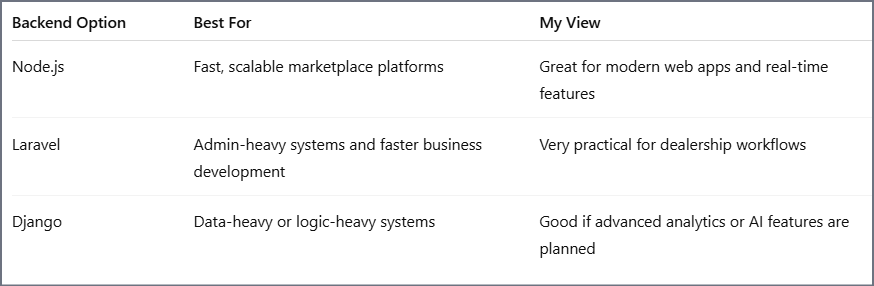
As per my experience, Node.js and Laravel are usually the most practical choices for car dealership platforms.
If the website is more like a startup marketplace with many future features, Node.js is a strong option. If the platform needs clean admin workflows, CRM panels, forms, reports, and faster business-side development, Laravel is also an excellent choice.
I do not believe in forcing one stack on every project. I believe in matching the stack to the real business use case. That is the smarter way to build.
Database: Where All Your Listings and Leads Live
Your database stores everything — car details, images, user profiles, inquiries, dealer information, test drive bookings, saved searches, reviews, and more.
For most dealership websites, I recommend:
PostgreSQL for scalable and structured applications
MySQL for stable, widely supported systems
Both can work well. But if you plan to create a marketplace with many filters, dynamic search pages, analytics, and high growth, PostgreSQL often gives better flexibility in the long run.
This is very important because a dealership website is not like a normal company website. Your inventory keeps changing. Cars get sold, new cars get added, prices change, users search by different combinations, and dealers need updates in real time. So your database should be built for movement, not just storage.
Admin Panel: The Most Ignored Yet Most Important Part
Many founders focus too much on the website and forget the admin side. But I can tell you from real project experience — if the admin panel is weak, the whole business starts feeling difficult to manage.
A proper admin panel should let you:
Approve or reject listings
Manage dealers
Track leads
Monitor test drive requests
See traffic and inquiry performance
Control featured listings
Update homepage sections
Manage blog and SEO pages
In many projects, this admin side becomes more valuable than the public website because this is where the business owner actually controls growth.
Integrations You Should Plan from Day One
A car dealership website becomes much more powerful when it connects with the right tools. I always tell business owners not to think of integrations as “extra.” These are growth enablers.
Some of the most useful integrations include:
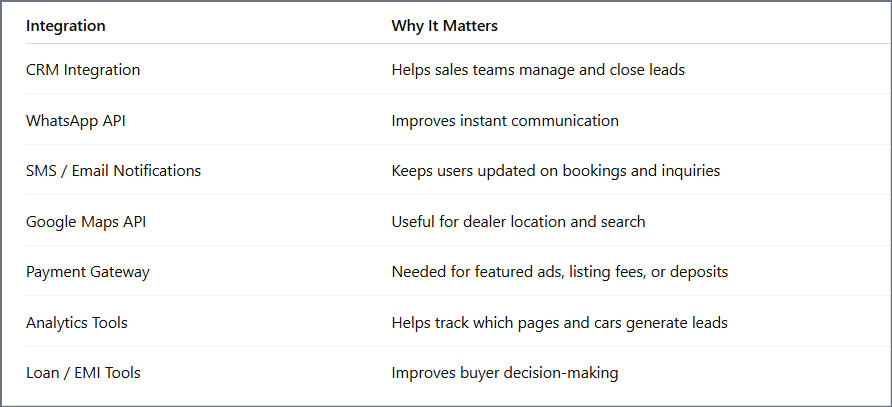
If your website will eventually support multiple sellers, I also recommend planning for role-based access from the beginning. That means admin, dealer, and customer should all have different permissions and different dashboards.
Should You Build a Website, Web App, or Full Marketplace Platform?
This is another place where people get confused.
A basic dealership website may work if you only want to show your inventory and capture a few local leads. But if your goal is serious growth, better lead management, multiple dealers, or future app expansion, then I strongly recommend building it like a web application, not just a static website.
Why?
Because a web app gives you room to add:
Advanced dashboards
Saved searches
Lead tracking
Real-time updates
Seller systems
Notification engines
AI recommendations later
That future flexibility saves a lot of redevelopment cost.
My Practical Recommendation
If I had to suggest a practical stack for most modern car dealership projects today, I would recommend something like this:
Frontend Next.js
Backend Node.js or Laravel
Database Postgre SQL
This setup is practical, scalable, and business-friendly. More importantly, it supports both lead generation and future marketplace growth.
At Triple Minds, we do not just advise businesses on development. We help them connect business planning, feature prioritization, and technology selection in one direction so the product does not become a technical burden later. That combined thinking is a big part of how we work.
Car Dealership Website Development Roadmap — What to Build First, What to Build Later
Now let me talk about the part that saves the most money.
Many founders ask me, “Ashish, how to make a car dealership website that looks complete from day one?” My answer is usually simple: do not try to build everything in version one. That is one of the biggest mistakes I see in dealership platform projects. Businesses try to launch with every possible feature, the budget goes up, the timeline gets delayed, and the final product becomes harder to manage. As per my experience, the smartest way is to build your car dealership website in phases, where every phase has a business purpose, a revenue goal, and a clear user journey. That is also how we plan products at Triple Minds when we combine consultation, development, and growth thinking together.
A dealership website should not be treated like a one-time design project. It should be treated like a digital business asset that grows in layers. First, you launch the core engine. Then you add conversion tools. Then you add scale features. This phased approach reduces risk, helps you launch earlier, and lets real users guide your next improvements instead of assumptions.
Phase 1: Build the Core Buying Experience
In the first phase, your goal is simple. You need to make the website usable, searchable, and lead-ready. This is the minimum structure that allows users to browse cars, trust the platform, and contact you. I usually recommend that phase one should focus on buyer-facing functions first, because this is where your first leads and market feedback will come from.
Your phase one should normally include:
Homepage with strong search and category navigation
Car listing pages with filters and sorting
Car detail pages with images, specs, and inquiry CTAs
Lead forms such as “Get Best Price” or “Book Test Drive”
Basic admin panel to manage inventory and leads
Mobile-friendly design
Basic SEO structure with clean URLs and metadata
This phase is not about building the biggest platform. It is about building the first working sales machine. Once this goes live, you can already start getting organic traffic, ad traffic, and direct inquiries.
Phase 2: Add Lead Management and Sales Automation
Once the first version starts receiving users, the next layer should improve conversions. This is the point where many businesses realize that getting traffic is one thing, but handling leads properly is another. If your sales team misses inquiries, delays follow-ups, or loses track of interested users, the business starts leaking revenue quietly.
That is why I always suggest phase two should strengthen the sales process.
This phase often includes:
CRM and lead status tracking
Auto email and SMS notifications
Test drive booking workflow
Sales team assignment for leads
Reminder system for callbacks and follow-ups
Dealer inquiry reports
WhatsApp and click-to-call integrations
This is the phase where the website starts acting less like a catalog and more like an actual dealership operations tool. In simple words, phase one gets attention, but phase two helps you convert that attention into serious business.
Phase 3: Add Trust, Retention, and Buyer Decision Tools
After you have browsing and lead capture working well, the next job is to help users feel more confident while making a purchase decision. A person buying a car online does not just look at the model. They compare price, trust the seller, calculate affordability, and often need reassurance before taking action.
This is why the third phase should focus on buyer confidence and decision support.
You can add:
EMI calculator
Loan inquiry form
Dealer verification badges
Customer reviews and ratings
Car comparison tool
Saved searches and favorites
Price drop alerts
Car inspection or certification sections
This phase is very important because it reduces hesitation. It also increases user return visits. A buyer who saves cars, compares options, and receives alerts is much more valuable than a visitor who just lands once and disappears.
Phase 4: Scale Into Marketplace or Multi-Dealer Model
Now comes the growth phase.
If your long-term vision is bigger than a single dealership, then this is where the platform starts evolving into a marketplace. I usually recommend this stage only after the first three layers are working well. Once you already understand user behavior, lead flow, and dealer interest, then you can confidently open the platform for multiple sellers.
This phase may include:
Dealer registration and onboarding
Seller dashboard
Multi-dealer inventory management
Featured listing packages
Subscription or commission model
Seller-level lead reports
Listing approval system
Fraud prevention and moderation controls
This stage changes the nature of the business. You are no longer just selling cars. You are building an ecosystem where multiple sellers bring inventory and your platform becomes the lead and transaction engine.
Simple Development Priority Table
Here is the practical structure I usually suggest to businesses:
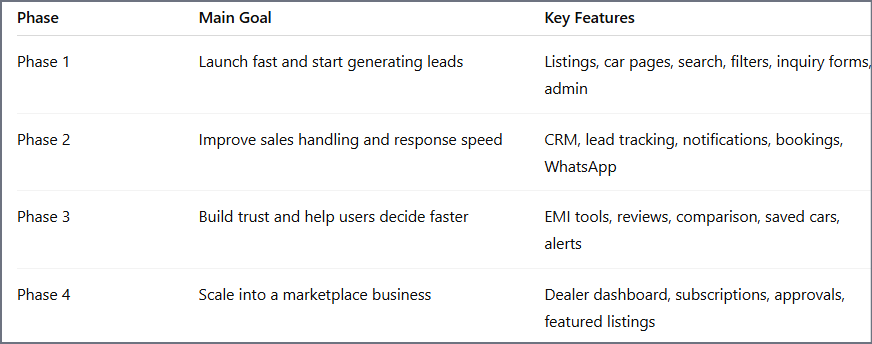
This type of roadmap keeps the project practical. It also helps you avoid a common startup problem where too much money is spent before the product even proves demand.
How I Normally Advise Businesses on Budget Control
As a business consultant, I always tell founders to separate “important now” from “important later.” That one decision can save thousands of dollars. For example, many people want mobile apps, AI recommendations, advanced dashboards, and seller monetization from the beginning. But if you do not even know which pages generate leads yet, those investments may come too early.
A better approach is this:
Build the platform that can start selling.
Then improve the platform that users already validated.
Then scale the platform that is already making sense.
That sequence is far more business-friendly than building a large product and hoping the market likes it.
My Honest View on MVP for a Car Dealership Website
I strongly believe every dealership project should begin with an MVP mindset, but not a weak MVP. I do not mean a half-finished product. I mean a focused product. Your MVP should still look professional, work smoothly on mobile, capture leads properly, and create trust. It should feel like a real business platform, even if some advanced modules are coming later.
That is exactly how strong digital businesses are built. Not by launching everything at once, but by launching the right things first.
At Triple Minds, this planning mindset is a big part of how we work because our role is not only development. We also help businesses prioritize product direction, feature rollout, and growth planning so the platform remains commercially useful from the beginning.
Step 5: Cost to Build a Car Dealership Website (Real Numbers, No Guesswork)
This is the question almost every founder asks me — “Ashish, how much does it actually cost to make a car dealership website?”
And honestly, the biggest mistake I see is people expecting a fixed price. A car dealership website is not a fixed product. It’s a business system. The cost depends on what you are building, how scalable you want it, and how serious you are about growth.
From my experience working with multiple businesses, here’s how the cost actually breaks down.
1. Basic Car Dealership Website (Single Dealer)


7
If you are just starting and only want to showcase your own cars, this is the entry-level option.
Typical cost structure:
UI/UX design: around $500 to $1,500
Frontend development: around $800 to $2,000
Backend setup (basic CMS): around $800 to $2,500
Admin panel: around $500 to $1,500
Testing and deployment: around $300 to $800
👉 Overall cost usually falls between $3,000 to $8,000
My honest opinion — this works for local dealers, but it won’t scale much. It’s more like a digital brochure than a real sales engine.
2. Mid-Level Platform (Lead Generation + CRM)


This is where things start getting serious.
You are not just listing cars — you are building a system that captures leads and helps convert them.
Typical cost structure:
UI/UX design: around $1,500 to $3,000
Frontend (React / Next.js): around $2,000 to $5,000
Backend (Node.js / Laravel): around $3,000 to $7,000
CRM and lead management: around $2,000 to $4,000
Integrations (WhatsApp, SMS, APIs): around $1,000 to $2,500
Testing and deployment: around $500 to $1,000
👉 Overall cost usually falls between $10,000 to $22,000
My recommendation — this is the best starting point for most businesses. You get a proper lead system, tracking, and real conversion capability.
3. Full Marketplace Platform (Like AutoTrader)

4
This is not just a website — this is a startup-level product.
You are building a platform where multiple sellers list cars, and you monetize the ecosystem.
Typical cost structure:
UI/UX design: around $3,000 to $6,000
Advanced frontend: around $5,000 to $10,000
Scalable backend architecture: around $8,000 to $15,000
Seller dashboard: around $3,000 to $6,000
Admin and moderation system: around $3,000 to $6,000
Payment and monetization setup: around $2,000 to $5,000
Testing, security, deployment: around $1,500 to $3,000
👉 Overall cost usually falls between $25,000 to $50,000+
My honest view — only go for this if you are building a long-term scalable business, not just testing an idea.
What Actually Increases Cost (Most People Ignore This)
From real project experience, these are the things that push your cost up:
Advanced filtering and search logic
Real-time notifications and chat systems
Multi-vendor architecture
AI-based recommendations
Mobile app development
Third-party integrations
High-end UI/UX design
One important insight — sometimes a “simple feature” like smart filtering takes more effort than building multiple pages.
How to Reduce Cost Smartly
Instead of cutting features blindly, I always suggest this approach:
Start with Phase 1 and Phase 2 only (as discussed earlier)
Avoid mobile apps in the beginning
Use scalable architecture from day one
Focus on lead generation, not unnecessary features
Build in phases instead of everything together
👉 This way, you save money and still build a strong foundation.
My Practical Recommendation
If you ask me what works best for most founders:
Start with a $10K to $20K platform
Focus on lead generation and CRM
Validate your business model
Then scale step by step
Because I’ve seen this clearly:
People who spend $40K early often struggle
People who spend $12K smartly build profitable systems
That difference comes from planning, not budget.
At Triple Minds, we always align development cost with business outcome, not just features. That’s why we combine consultation, development, and marketing together so the platform actually generates revenue, not just traffic.
Step 6: How to Generate Traffic & Leads for Your Car Dealership Website
Now let me be very direct here.
Most people think once the website is ready, customers will automatically come. That is completely wrong. A car dealership website without traffic is like a showroom in the middle of nowhere. No matter how good your platform is, if people don’t find it, it won’t generate business.
As per my experience, 70% of dealership website success depends on traffic and lead generation strategy, not just development. This is exactly why at Triple Minds, we combine marketing with development from day one instead of treating it as a separate step.
Let me break down the practical ways that actually work.
1. SEO (Your Long-Term Free Traffic Machine)


4
SEO is the most powerful channel for car dealership websites.
But not basic SEO — I’m talking about structured SEO pages.
You should create pages like:
Cars in New York
Used cars under $10,000
SUV cars in Los Angeles
Toyota cars for sale in Texas
👉 Why this works:
These are high intent keywords. People searching this are already planning to buy.
From my observation:
A well-optimized dealership site can generate 50%–70% traffic from SEO alone
2. Google Ads (Instant Leads)


4
If you want leads immediately, paid ads are the fastest way.
You can run ads on:
“Buy used cars near me”
“Second hand cars under $5000”
“Best SUV deals today”
👉 My experience:
Cost per lead ranges from $5 to $25
High intent campaigns convert very well
But here’s the key — your landing page must be strong. Otherwise, you waste money.
3. Social Media & Reels (Underrated Goldmine)


People love watching cars.
Short videos work extremely well:
Car walkaround videos
Before/after condition
Price reveal videos
“Best cars under $10K”
👉 Reality check:
Many dealers are getting 80% of inquiries from Instagram and Facebook without spending huge money.
4. Google My Business (Local Lead Magnet)


4
If you have a physical dealership, this is a must.
Optimize your:
Business profile
Photos
Reviews
Location details
👉 Impact:
Local searches like “car dealer near me” convert very fast.
5. Lead Retargeting (Most Ignored Strategy)


Let me tell you something important:
👉 90% of users don’t convert on the first visit.
That’s why retargeting is powerful.
You can:
Show ads again to visitors
Remind them about cars they viewed
Offer price drops or deals
👉 Result:
Conversion rate increases by 2x to 3x
6. WhatsApp & Direct Communication (High Conversion Channel)


4
In many projects I’ve seen, WhatsApp performs better than forms.
Why?
Because:
It’s instant
It feels personal
Users don’t like filling forms
👉 Insight:
Adding WhatsApp increases leads by 20%–40% in many cases.
The Real Growth Formula (Simple but Powerful)
If I simplify everything, this is what actually works:
SEO brings long-term traffic
Ads bring instant leads
Social media builds brand
Retargeting improves conversions
CRM converts leads into sales
👉 Missing even one of these reduces your growth speed.
What Most Businesses Do Wrong
Let me be honest here.
Most dealership websites fail because:
They build website → no SEO
Run ads → poor landing page
Get leads → no follow-up system
Post content → no strategy
That’s why results don’t come.
My Final Advice on Growth
Do not treat marketing as an extra step after development.
Treat it as part of your system.
That’s how real platforms grow.
At Triple Minds, we always connect development with marketing and lead systems so the platform is built for growth from day one, not fixed later.

Join Ashish on Peerlist!
Join amazing folks like Ashish and thousands of other builders on Peerlist.
0
5
0