

The Year Tech Stops Showing Off and Starts Doing the Heavy Lifting
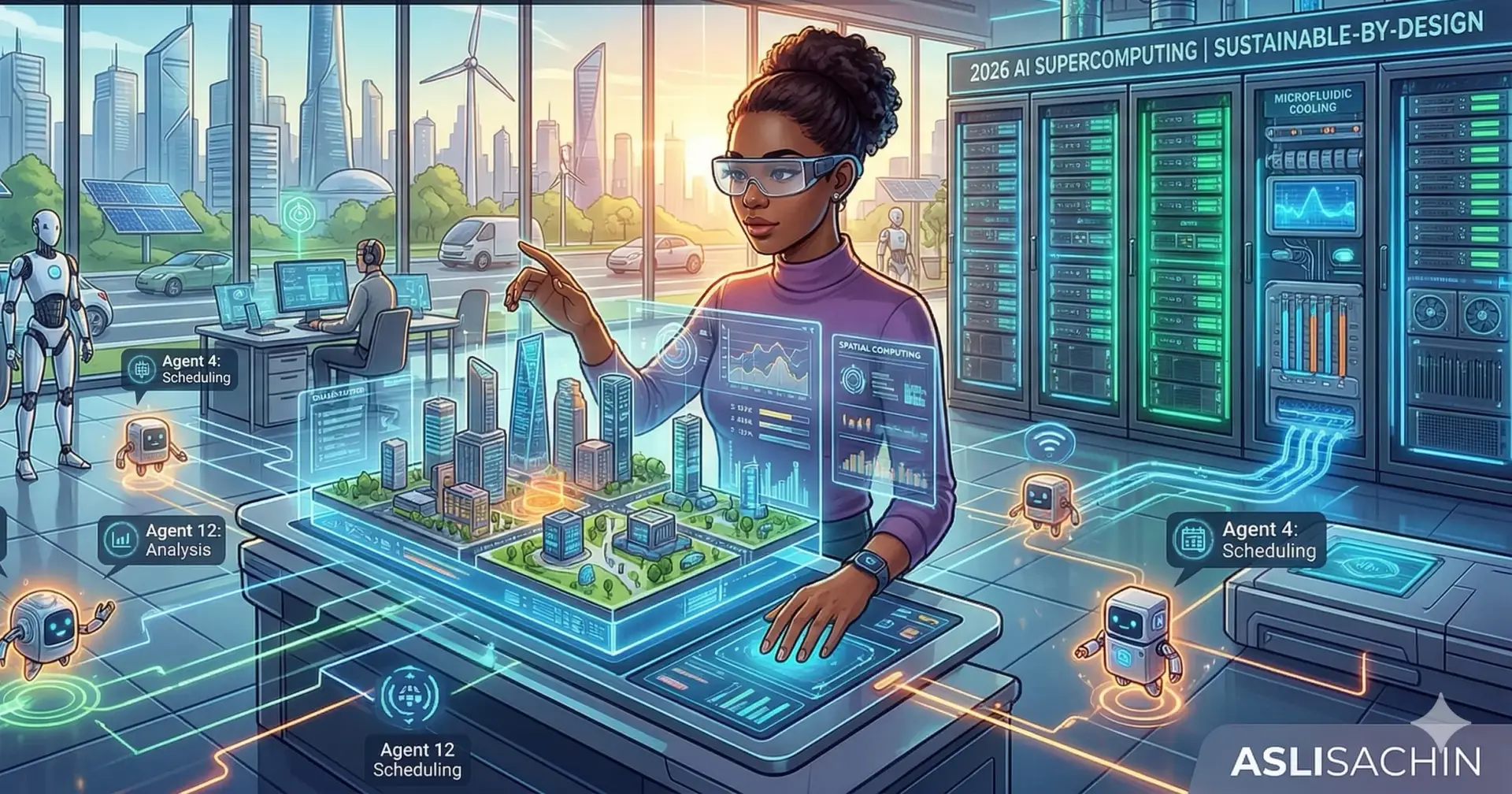
If the past few years felt like an endless hype cycle of "what technology could do," 2026 is officially the year of "what technology is actually doing." We've moved past the experimental phase where we just stared in awe at chatbots writing sonnets. Now, it's all about execution, scale, and tangible, real-world results.
Whether you're an entrepreneur, a professional looking to stay relevant, or just someone trying to keep up with the future, here is a casual look at the top tech trends shaping our world this year.
1. "Agentic" AI: From Chatting to Doing
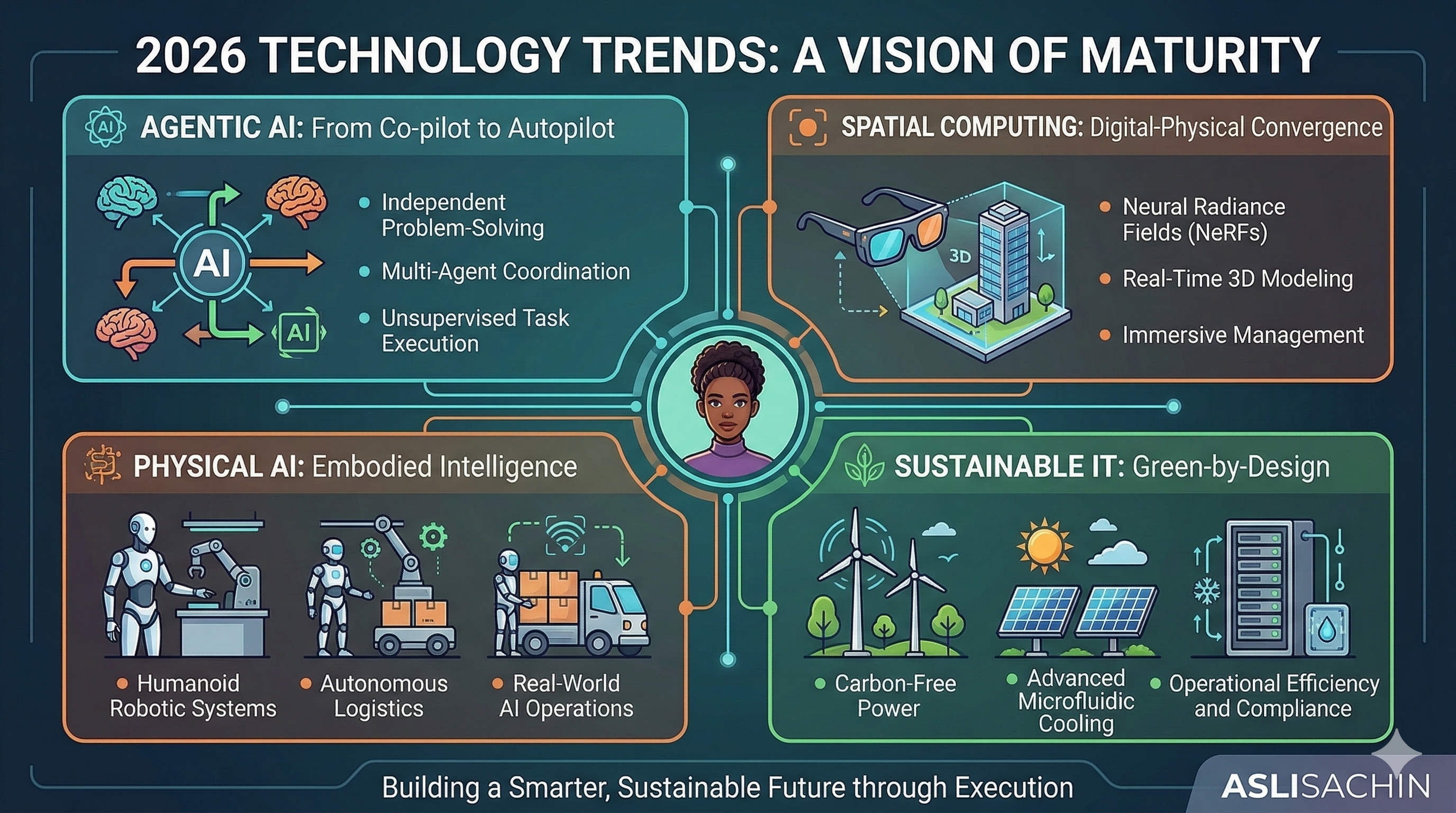
Remember when we used to have to prompt AI step-by-step to get anything done? That’s starting to feel very 2024. This year, the massive buzzword is Agentic AI and the rise of Multi-Agent Systems.
Instead of just generating text or answering questions, these AI systems act like autonomous digital employees. They can reason, plan, and execute complex, multi-step workflows across different applications without needing you to hold their hand. Enterprises are now deploying "swarms" of specialized AI agents—one might handle data extraction, another drafts a financial strategy, and a third executes the client communication—all collaborating seamlessly behind the scenes.
The Big Shift: We are transitioning from a "co-pilot" model (where AI assists you with tasks) to an "auto-pilot" model (where AI runs entire processes on your behalf, with you stepping in only for high-level oversight).
2. Physical AI and Spatial Computing
Intelligence is no longer confined to your screen—it has embodied the physical world. Physical AI is having a massive moment in 2026. Humanoid robots, autonomous logistics trucks, and intelligent machinery have moved out of R&D labs and onto factory floors, supply chains, and even hospital corridors.
Paired with this is the maturation of Spatial Computing. Using advanced rendering technologies like Neural Radiance Fields (NeRFs) and Gaussian Splatting, companies are creating photorealistic, living 3D digital twins of real-world environments from simple drone footage or photos. It’s no longer just about clunky VR headsets for gaming; it’s about using these spatial interfaces to actively manage and interact with physical infrastructure in real-time.
The Big Shift: The barrier between digital data and physical reality is dissolving, turning previously static environments into adaptive, intelligent ecosystems.
3. The Power Crunch: AI Supercomputing & Quantum Prep
All this advanced, autonomous AI requires a staggering amount of processing power. General-purpose cloud setups are struggling to keep up with the demands of modern inference. This has led to the rise of purpose-built AI Supercomputing Platforms. These platforms tightly orchestrate CPUs, GPUs, and specialized AI chips to handle massive workloads like complex climate simulations, molecular modeling for drug discovery, and running vast networks of AI agents.
At the same time, the tech world is preparing for a looming reality check: Quantum computing. We are inching closer to the day when quantum computers become powerful enough to break traditional encryption. Because of this, 2026 is seeing a massive, urgent push toward Post-Quantum Readiness, with organizations scrambling to upgrade their cybersecurity to cryptographic models that can withstand future quantum attacks.
4. Sustainable-by-Design IT
Here’s the elephant in the room: AI is incredibly power-hungry. As enterprise adoption scales up, the energy demands of data centers have absolutely skyrocketed. Consequently, Sustainable Tech is no longer just a "nice-to-have" corporate social responsibility talking point; it's a critical, bottom-line operational necessity.
In 2026, we are seeing major innovations in "Green Computing." Because traditional cooling methods are draining local water supplies, there's a huge shift toward advanced hardware solutions like microfluidics (cooling directly on the semiconductor chips) and smart grid integration. Furthermore, companies are pivoting to 24/7 carbon-free energy matching—meaning that if a data center is running at midnight, it must be powered by actual wind or battery storage, not just offset by solar credits bought at noon.
The Big Shift: Sustainability is now treated as a hard metric for IT efficiency, regulatory compliance, and competitive advantage.
(Full disclosure: This article was a team effort! I did about 40% of the heavy lifting, and my AI sidekick, Gemini, handled the rest.)

Join Sachin on Peerlist!
Join amazing folks like Sachin and thousands of other builders on Peerlist.
0
5
0