

How Does a White Label Crypto Exchange Handle High Trading Volumes
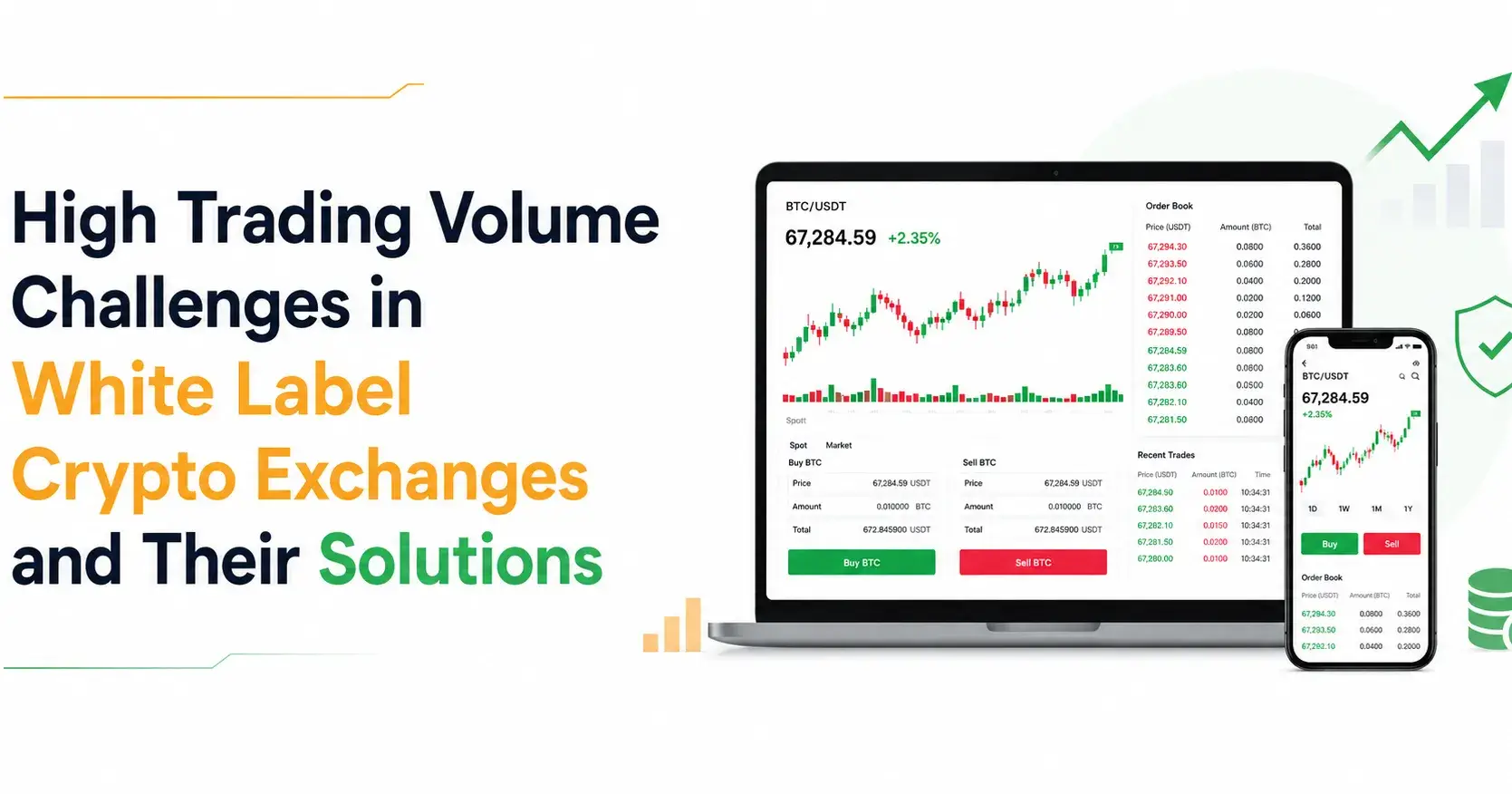
The crypto market never sleeps.
People buy and sell cryptocurrencies every minute of the day, no matter where they are in the world.
Most of the time, trading happens smoothly. But when prices suddenly go up or down, thousands of traders may place orders at the same time.
If an exchange is not built to handle that kind of traffic, users may experience slow order execution, delays, or even temporary downtime.
That's why performance is one of the most important things to consider when choosing a white label crypto exchange.
In this blog, we'll look at the technologies and features that help keep trading fast and stable even during busy market conditions.
Understanding High Trading Volumes
High trading volume refers to a large number of buy and sell orders being executed within a short period. This often occurs during:
Major cryptocurrency price movements
New token listings
Market news and global events
Bull and bear market cycles
Institutional trading activity
When trading volumes spike, exchanges must continue processing orders efficiently without compromising user experience.
How does a white label crypto exchange handle high trading volumes?
Microservices Architecture
Think of a crypto exchange as a team where everyone has a different job. Instead of one large system handling everything, modern white label crypto exchanges split tasks into smaller, independent services.
For example:
The matching engine handles buy and sell orders.
The wallet system manages deposits and withdrawals.
The user interface displays everything users see on the platform.
Since each service works independently, a problem in one area won't affect the others. So, even if thousands of users are checking their account balances at the same time, the trading engine can continue processing orders without slowing down.
Cloud Infrastructure
Trading activity can change in seconds. During major market events, thousands of users may join the platform at once.
To handle this, many white label crypto exchanges are built on cloud infrastructure. When traffic increases, the platform automatically adds more server resources to handle the extra load. Once trading activity returns to normal, those extra resources are reduced.
This helps the exchange stay fast, stable, and cost-efficient without requiring manual intervention.
Fast Matching Engine
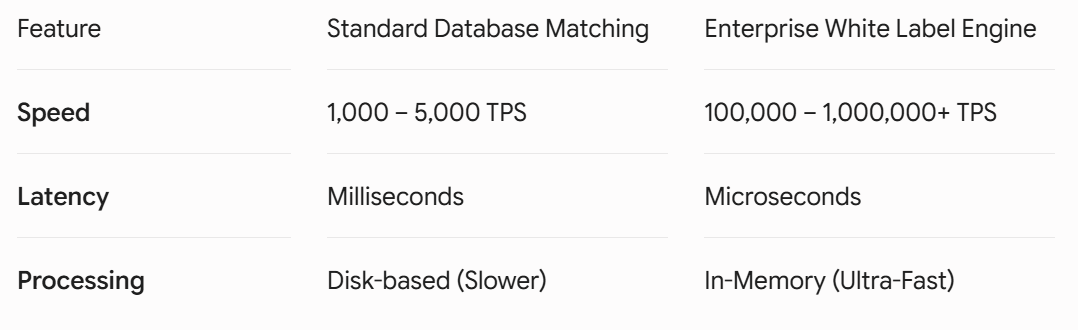
The matching engine is the beating heart of any crypto exchange. It is responsible for looking at the order book and instantly matching a buy order with a corresponding sell order.
To handle massive volumes, premium white label crypto exchange providers build their matching engines using high performance languages like C++, Rust, or Go and deploy advanced memory management techniques.
Smart Data Management
During peak trading hours, users constantly refresh prices, check charts, and monitor their portfolios. If the exchange processes every request from the main database, it can become overloaded.
To avoid this, white label exchanges use smart caching. Frequently used information, such as market prices and order books, is stored temporarily in fast memory, allowing users to access it instantly.
They also use rate limiting, which controls how many requests a user or trading bot can send within a certain time. This protects the platform from unnecessary traffic and helps prevent system overload.
Strong Liquidity Support
Even if an exchange has powerful technology, trading can slow down if there aren't enough buyers and sellers.
That's why many white label crypto exchanges connect with multiple liquidity providers. This gives the platform access to larger pools of buy and sell orders.
As a result, users can complete trades more quickly, experience lower price slippage, and enjoy a better trading experience, even during periods of high market activity.
Let’s Wrap Up
Handling high trading volumes is about more than having powerful servers.
A good white label crypto exchange combines modern architecture, cloud scalability, a high-speed matching engine, smart data management, and strong liquidity support to keep the platform running without fault.
For businesses planning to launch a crypto exchange, choosing a solution with these capabilities can make a big difference.
It helps deliver a fast, secure, and reliable trading experience while giving your platform the flexibility to grow as your user base expands.

Join Augustin on Peerlist!
Join amazing folks like Augustin and thousands of other builders on Peerlist.
0
0
0