

From AIOps → LLMOps → LMOps → and now: AgentOps
𝗔𝗜 𝗱𝗶𝗱𝗻’𝘁 𝘀𝘁𝗼𝗽 𝗮𝘁 𝗟𝗟𝗠𝗢𝗽𝘀. 𝗧𝗵𝗲 𝗻𝗲𝘅𝘁 𝗯𝗶𝗴 𝘀𝗵𝗶𝗳𝘁 𝗶𝘀 𝗮𝗹𝗿𝗲𝗮𝗱𝘆 𝗵𝗲𝗿𝗲: 𝗔𝗴𝗲𝗻𝘁𝗢𝗽𝘀.
We’ve seen AI operations evolve step by step:
AIOps → automated IT operations
LMOps → managed the ML lifecycle
LLMOps → focused on deploying and governing large language models
Now we’re stepping into a new era: multi-agent systems.
👉 Think of it like moving from testing one app to testing an entire team of apps working together. It’s not just one model running a task anymore — it’s multiple AI agents collaborating, negotiating, and making decisions together.
And that’s why we need a new discipline: 𝗔𝗴𝗲𝗻𝘁𝗢𝗽𝘀.
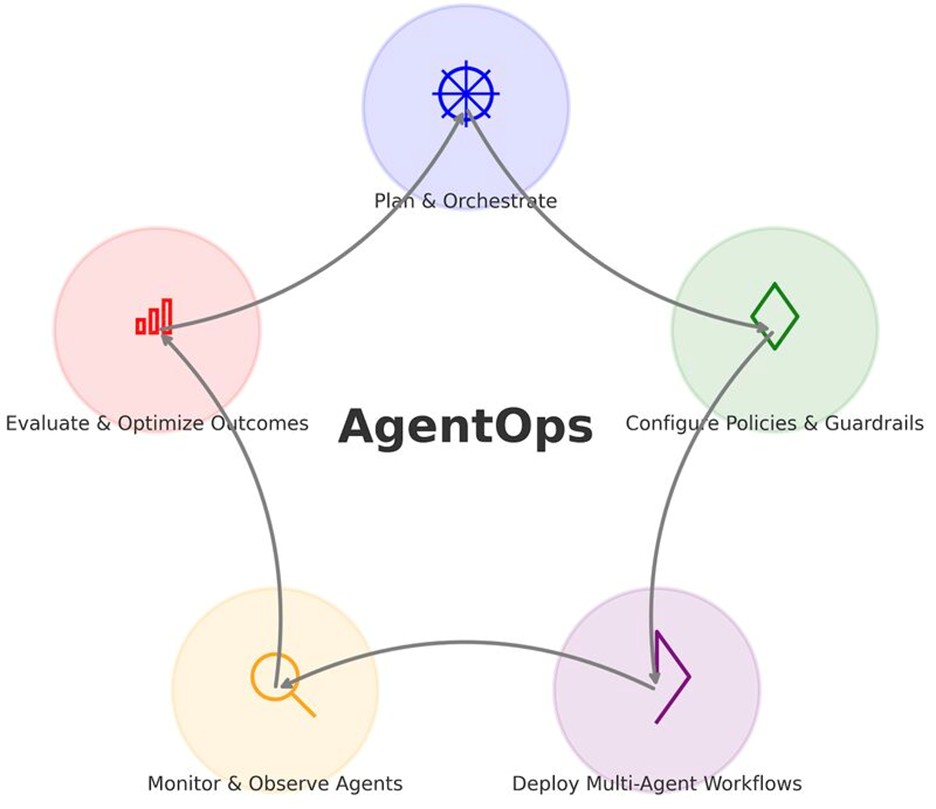
The AgentOps Lifecycle (like QA for an AI ecosystem)
1️⃣ Plan & Orchestrate – define roles, goals, and workflows for agents
2️⃣ Set Guardrails – build compliance, safety, and alignment rules
3️⃣ Deploy Multi-Agent Workflows – coordinate agents and humans
4️⃣ Monitor & Observe – track decisions, catch drift, ensure reliability
5️⃣ Evaluate & Optimize – measure ROI, refine strategies, keep improving
Why this matters
1️⃣ Coordination: Agents don’t just execute, they collaborate — which creates new testing and orchestration challenges.
2️⃣ Risk: Autonomy without guardrails can mean compliance gaps, bias, and security issues.
3️⃣ ROI: Done right, AgentOps unlocks productivity gains at scale.
What DevOps was for software, AgentOps will be for AI agents: the discipline that makes them scalable, testable, and trustworthy.
👉 Here’s the real question:
Would you trust a system where AI agents test, validate, and collaborate with each other?

Join Bharat on Peerlist!
Join amazing folks like Bharat and thousands of other builders on Peerlist.
0
9
0