

Understand Tokenization step by step
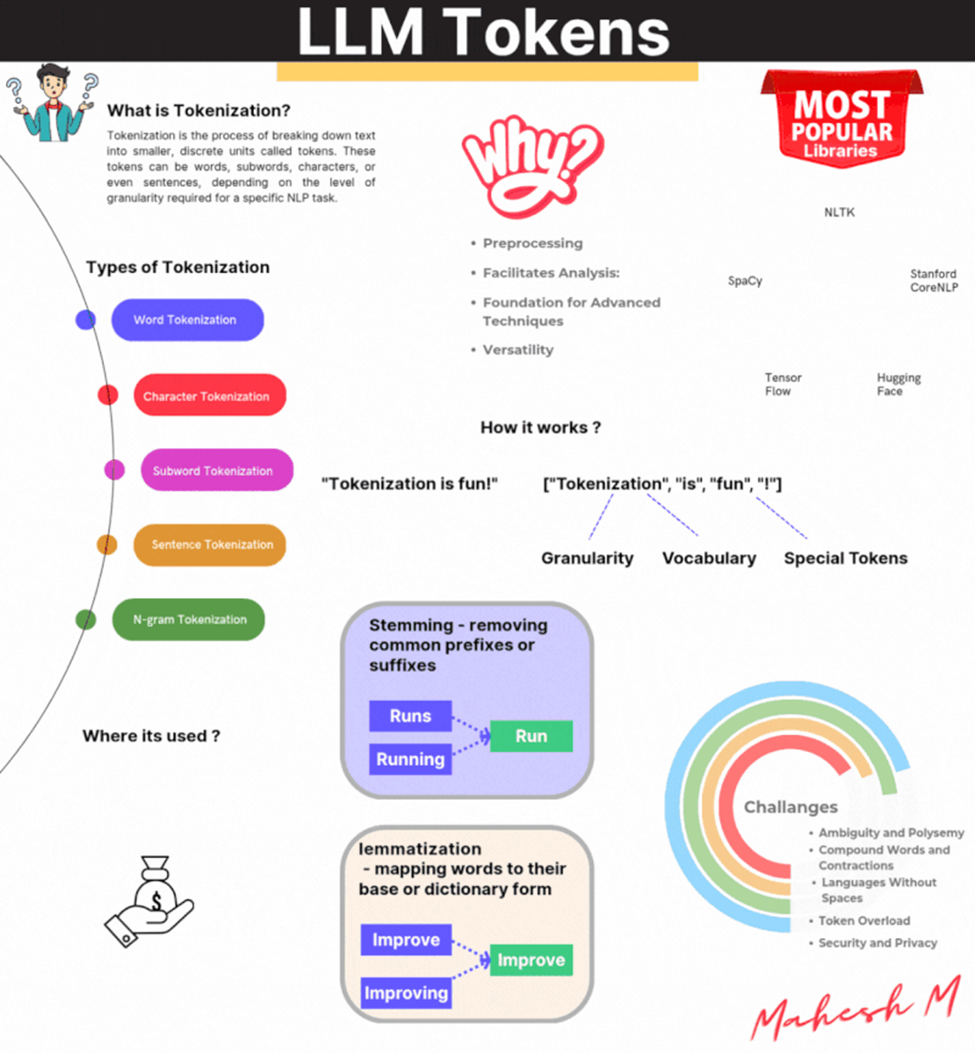
Tokenization is basically splitting text into smaller pieces, called tokens. Tokens can be words, parts of words, letters, or even whole sentences, it just depends on what the NLP task needs. Tokenization’s main job is to turn messy text into something machines can easily use and understand.
𝗪𝗵𝗮𝘁 𝗶𝘀 𝗮 𝗧𝗼𝗸𝗲𝗻?
Basically, a token is a chunk of text you get after tokenization. Tokens can be words, parts of words, letters, or even whole sentences, depending on the tokenizer.
A word (like “dog” or “happy”)
A punctuation mark (like “!” or “.”)
A subword or character (especially in languages or technologies where words are split further)
𝗪𝗵𝘆 𝗱𝗼 𝘄𝗲 𝘂𝘀𝗲 𝘁𝗼𝗸𝗲𝗻𝘀?
Computers don’t understand the meaning of language like humans do. By breaking text into tokens, we help the computer analyze, process, and understand the text, one piece at a time.
Tokens and tokenizers are crucial concepts in the world of Natural Language Processing (NLP), machine learning, and even blockchain. But in the context of text and language, they play a foundational role in how computers “understand” human language. If you’re new to this, don’t worry! Let’s break it down step by step in a way that’s easy to grasp.
𝗪𝗵𝗮𝘁 𝗶𝘀 𝗧𝗼𝗸𝗲𝗻𝗶𝘇𝗮𝘁𝗶𝗼𝗻?
Tokenization is the process of splitting text into its basic units—tokens. Imagine you have a paragraph; tokenization breaks it down into sentences, words, or even smaller parts, depending on requirements.
Example:Suppose we have the sentence:I love learning about AI!After tokenization, you might get:[“I”, “love”, “learning”, “about”,]

Join Bharat on Peerlist!
Join amazing folks like Bharat and thousands of other builders on Peerlist.
0
4
0