

Understanding Generative AI terms step by step
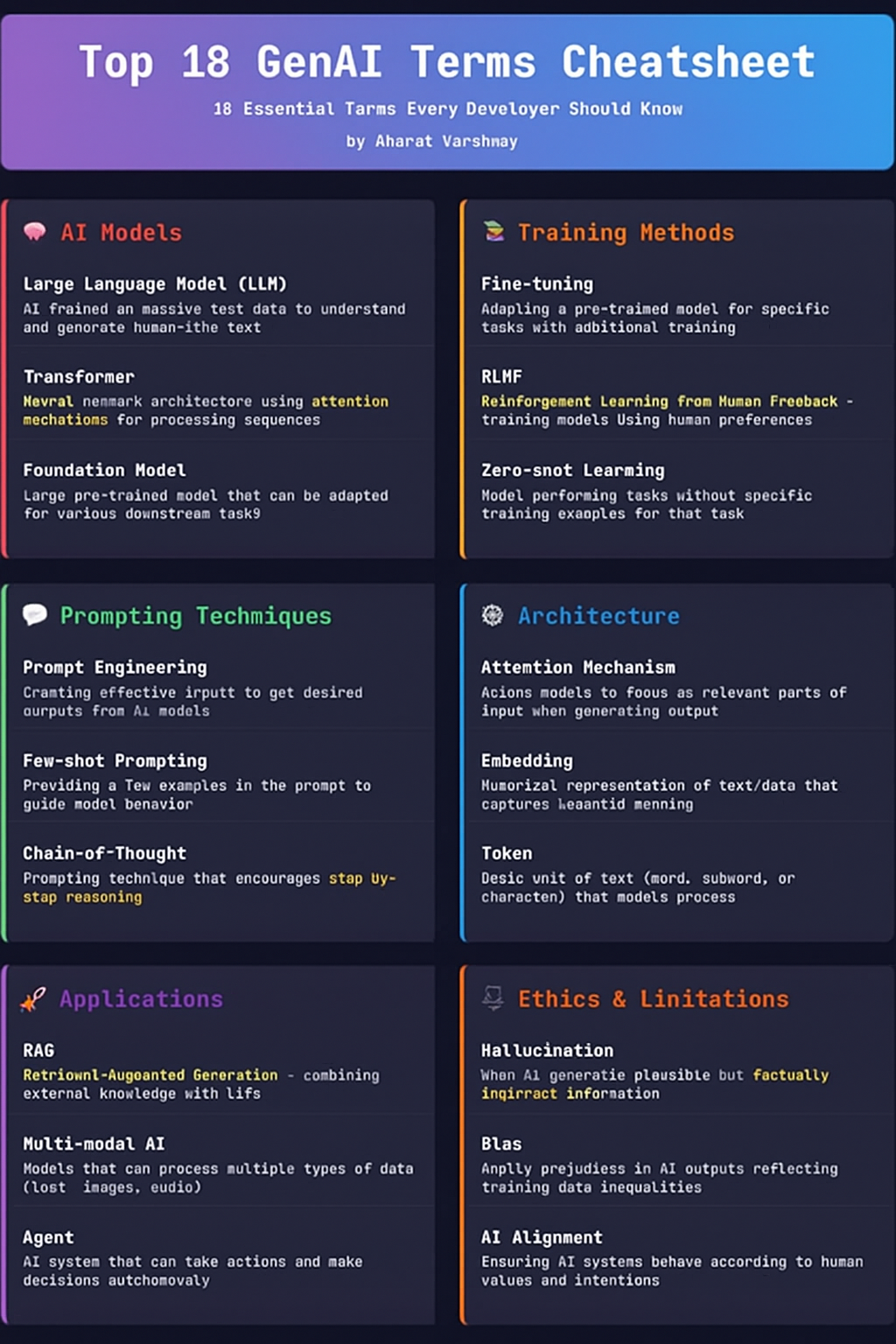
𝟭𝟴 𝗲𝘀𝘀𝗲𝗻𝘁𝗶𝗮𝗹 𝗚𝗲𝗻𝗔𝗜 𝘁𝗲𝗿𝗺𝘀
• 𝗔𝗜 𝗠𝗼𝗱𝗲𝗹𝘀 (LLMs, Transformers, Foundation Models)
• 𝗧𝗿𝗮𝗶𝗻𝗶𝗻𝗴 𝗠𝗲𝘁𝗵𝗼𝗱𝘀 (Fine-tuning, RLHF, Zero-shot Learning)
• 𝗣𝗿𝗼𝗺𝗽𝘁𝗶𝗻𝗴 𝗧𝗲𝗰𝗵𝗻𝗶𝗾𝘂𝗲𝘀 (Prompt Engineering, Few-shot, Chain-of-Thought)
• 𝗔𝗿𝗰𝗵𝗶𝘁𝗲𝗰𝘁𝘂𝗿𝗲 (Embeddings, Tokens, Attention Mechanism)
• 𝗔𝗽𝗽𝗹𝗶𝗰𝗮𝘁𝗶𝗼𝗻𝘀 (RAG, Multi-modal AI, Autonomous Agents)
• 𝗘𝘁𝗵𝗶𝗰𝘀 & 𝗟𝗶𝗺𝗶𝘁𝗮𝘁𝗶𝗼𝗻𝘀 (Bias, Hallucinations, AI Alignment)
AI Models:
LLMs, Transformers, Foundation Models are the powerhouse behind today's AI. These massive neural networks process and generate human-like text, forming the foundation of everything from chatbots to content creators.
Training Methods:
Fine-tuning customizes pre-trained models for specific tasks.
RLHF uses human feedback to improve AI responses.
Zero-shot learning enables AI to perform tasks without explicit training—truly remarkable flexibility!
Prompting Techniques:
Prompt engineering crafts effective inputs to guide AI.
Few-shot provides examples in prompts, while Chain-of-Thought encourages step-by-step reasoning for more accurate answers.
Architecture:
Embeddings capture meaning in numerical form.
Tokens are the basic units AI processes.
The Attention Mechanism helps models focus on relevant information, mimicking human concentration.
Applications:
RAG combines generation with information retrieval.
Multi-modal AI works with text, images, and audio.
Autonomous Agents can understand goals and act with minimal human intervention.
Ethics & Limitations:
Bias in AI reflects societal prejudices in training data.
Hallucinations are confident but incorrect outputs.
AI Alignment ensures AI systems match human values and intentions.
Understanding these terms empowers you to navigate the GenAI revolution with confidence!

Join Bharat on Peerlist!
Join amazing folks like Bharat and thousands of other builders on Peerlist.
1
11
0