

What is a Web Silo? 7 Powerful Benefits That Boost Your SEO Strategy
Introduction to Web Silo
Understanding what is a web silo is essential if you want to build a strong SEO foundation. A web silo is a method of organizing website content into clear, structured categories. Think of it like a library—books are grouped by topic so readers can easily find what they need.
In the same way, a silo structure groups related content together, making it easier for both users and search engines to navigate your site.
Definition of Web Silo
A web silo is a hierarchical website structure that organizes content into specific themes or topics. Each silo focuses on one subject and contains related pages that link to each other.
For example:
Main Topic: Digital Marketing
Subtopics: SEO, Social Media, Email Marketing
This creates a clear topical relationship, helping search engines understand your expertise.
Importance of Website Structure
Website structure plays a huge role in:
Search engine rankings
User experience
Content discoverability
A poorly structured site confuses search engines, while a well-organized silo boosts visibility and engagement.
Types of Web Silos
There are two main types of silo structures used in SEO:
Physical Silo Structure
This structure is based on your website’s URL hierarchy.
URL-Based Organization
Example:
website.com/seo/on-page-seo
website.com/seo/off-page-seo
Here, all SEO-related content is grouped under one directory, making it easy for search engines to identify relevance.
Virtual Silo Structure
This structure relies on internal linking rather than URLs.
Internal Linking Strategy
Pages are linked contextually within the same topic, even if URLs don’t reflect the hierarchy.
This approach is more flexible and widely used today.
How Web Silos Work
Web silos function by creating strong topical signals for search engines.
Content Grouping
Content is grouped into categories based on relevance. Each category becomes a silo.
Keyword Relevance
Each silo targets a specific set of keywords, increasing ranking potential.
Link Equity Flow
Internal links distribute authority across pages within the silo, strengthening SEO performance.
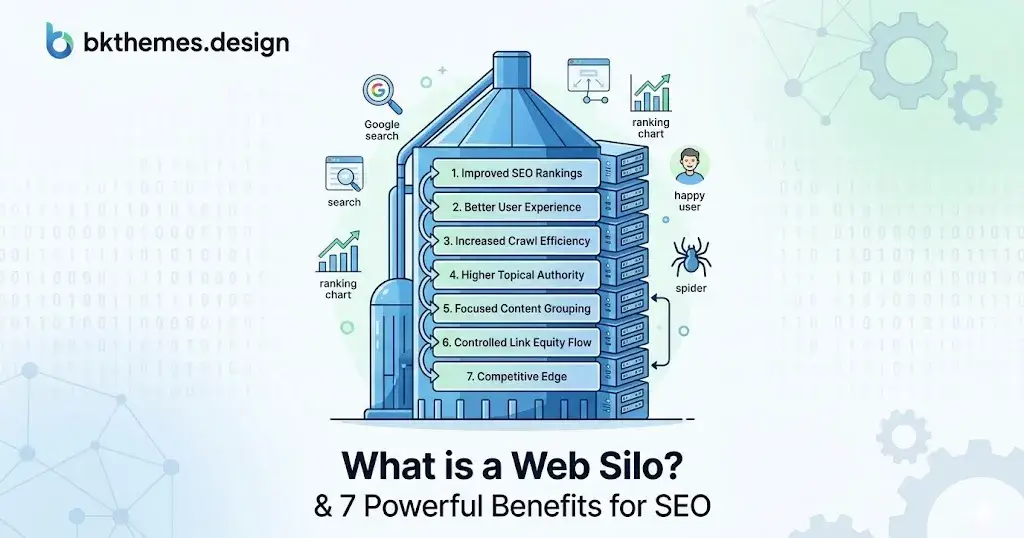
Benefits of Using Web Silos
Using a silo structure offers several powerful advantages:
Improved SEO Rankings
Search engines understand your site better, leading to higher rankings.
Better User Experience
Visitors can easily navigate and find related content.
Increased Crawl Efficiency
Search engine bots can crawl your site faster and more effectively.
Higher Topical Authority
You establish yourself as an expert in a specific niche.
How to Create a Web Silo
Creating a web silo requires planning and strategy.
Keyword Research
Start by identifying core topics and related keywords.
Content Planning
Create pillar content and supporting articles.
Internal Linking Setup
Link related pages within the same silo.
Anchor Text Optimization
Use descriptive anchor text to improve relevance.
Common Mistakes to Avoid
Avoid these common pitfalls:
Overlapping Content
Don’t mix unrelated topics within the same silo.
Poor Internal Linking
Broken or irrelevant links weaken your structure.
Ignoring User Intent
Always focus on what users are searching for.
Web Silo vs Traditional Website Structure
Key Differences
Feature
Web Silo
Traditional Structure
Organization
Topic-based
Random/flat
SEO Impact
High
Moderate
User Navigation
Easy
Confusing
Which One is Better?
Web silos are generally better for SEO because they:
Improve structure
Enhance relevance
Boost rankings
Tools to Build Web Silos
SEO Tools
Ahrefs
SEMrush
Google Search Console
Content Planning Tools
Trello
Notion
Mind mapping tools
FAQs About Web Silos
1. What is a web silo in SEO?
A web silo is a structured way of organizing website content into related topics to improve SEO.
2. Why are web silos important?
They help search engines understand your site and improve rankings.
3. How do I create a web silo?
Start with keyword research, organize content into topics, and use internal linking.
4. What is the difference between physical and virtual silos?
Physical silos use URL structure, while virtual silos rely on internal links.
5. Do web silos improve user experience?
Yes, they make navigation easier and more intuitive.
6. Are web silos necessary for small websites?
They’re beneficial for websites of all sizes.
Conclusion
Now that you understand what is a web silo, you can see how powerful it is for SEO and user experience. By organizing your content into clear, topic-focused structures, you make it easier for both users and search engines to navigate your site.
If you want to grow your website traffic and authority, implementing a silo structure is a smart and effective strategy.
Take Your SEO Strategy Further
If you found this guide on web silos helpful, you’ll love these deep dives into site architecture, internal linking, and advanced search optimization:
Master the Art of Connection: To see how this works in practice, check out our guide on building an internal linking strategy for smaller sites.
Future-Proof Your Rankings: See how structured content plays into the future of search in Mastering the Trifecta: A Comprehensive Guide to AEO, GEO, and SEO.
Optimize for Performance: A great structure needs a fast foundation. Learn how to Master Core Web Vitals to Elevate Your SEO & User Experience.
Real-World Success: See these principles in action with our Semantic SEO Case Study: A Traffic Surge Story.

Join Brian on Peerlist!
Join amazing folks like Brian and thousands of other builders on Peerlist.
0
4
0