

Pallet Shuttle System: The Smart Solution for High-Density Warehouse Storage
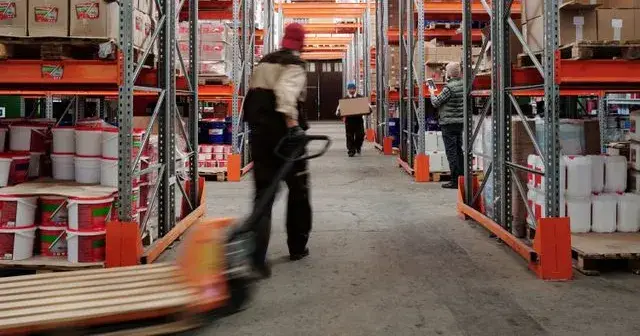
Warehouse operations are under constant pressure to store more inventory, fulfill orders faster, and reduce operating costs. As product demand grows and warehouse space becomes increasingly valuable, traditional pallet racking systems often struggle to deliver the storage density and throughput modern businesses require. A pallet shuttle system addresses these challenges by automating pallet movement within storage lanes, maximizing available space while improving productivity and inventory management.
Whether you're operating a distribution center, cold storage facility, manufacturing warehouse, or third-party logistics operation, pallet shuttle technology provides a scalable solution that enhances storage efficiency without requiring a complete warehouse redesign. By reducing forklift travel and increasing storage density, businesses can improve both operational performance and return on investment.
What Is a Pallet Shuttle System?
A pallet shuttle system is a semi-automated or fully automated storage solution that uses battery-powered shuttle carts to transport pallets within deep storage lanes. Instead of forklifts entering every storage lane to place or retrieve inventory, the shuttle performs the movement while forklifts remain safely at the aisle entrance.
The shuttle travels along specially designed rails, accurately positioning pallets in available storage locations before returning to receive the next load. This automated movement reduces handling time, minimizes equipment wear, and allows warehouses to store significantly more pallets within the same footprint.
Unlike conventional selective pallet racking, which requires access aisles between every row, pallet shuttle systems eliminate much of this unused space by creating high-density storage lanes capable of accommodating multiple pallets deep.
How a Pallet Shuttle System Works
The operation of a pallet shuttle system is straightforward yet highly efficient. A forklift places the shuttle into the designated storage lane before loading a pallet at the lane entrance. Once activated through a handheld remote or warehouse management software, the shuttle carries the pallet to the next available storage position.
Built-in sensors continuously monitor pallet placement, ensuring each load is positioned correctly while eliminating unnecessary gaps between pallets. After depositing the pallet, the shuttle automatically returns to the front of the lane, ready to receive the next load.
When retrieving inventory, the shuttle performs the process in reverse, bringing pallets back to the aisle where forklifts collect them without entering the storage lane.
This automated workflow dramatically reduces forklift travel while improving both storage density and operational safety.
Types of Pallet Shuttle Systems
Modern warehouses can choose between two primary pallet shuttle configurations depending on their automation goals and operational requirements.
2-Way Semi-Automated Pallet Shuttle
A 2-way pallet shuttle operates within individual storage lanes, moving forward and backward to deposit and retrieve pallets. The shuttle is typically transferred between lanes by a forklift and controlled using a wireless remote.
This configuration offers an excellent balance between automation and affordability. It allows facilities to increase storage density while minimizing forklift movement inside storage lanes.
A 2-way system can support either First-In, First-Out (FIFO) or Last-In, First-Out (LIFO) inventory management depending on warehouse layout and operational needs.
Because implementation requires minimal infrastructure compared to fully automated systems, many warehouses view the 2-way shuttle as an ideal entry point into warehouse automation.
4-Way Fully Automated Pallet Shuttle
The 4-way pallet shuttle expands automation by allowing movement in multiple directions. Instead of traveling only forward and backward, these intelligent shuttles also move sideways across aisles and vertically between storage levels through integrated lifts.
This multidirectional capability allows inventory to move seamlessly throughout the warehouse without manual intervention.
Integrated with Warehouse Management Systems (WMS), Warehouse Execution Systems (WES), and Warehouse Control Systems (WCS), 4-way pallet shuttle systems provide fully automated pallet handling capable of supporting demanding fulfillment operations with exceptional accuracy and throughput.
Benefits of Installing a Pallet Shuttle System
One of the biggest advantages of a pallet shuttle system is its ability to dramatically increase warehouse storage capacity. By eliminating unnecessary forklift aisles and creating deep storage lanes, businesses can often gain substantially more pallet positions within the same building.
This improved storage density allows facilities to delay costly warehouse expansions while maximizing the value of existing square footage.
Labor savings also contribute significantly to the return on investment. Since forklifts no longer travel deep into storage lanes, operators complete loading and unloading tasks more quickly while reducing equipment wear and fuel consumption.
Safety improves as well. Fewer forklift movements inside racking systems reduce the risk of rack damage, product damage, and workplace accidents.
The system also delivers greater inventory accuracy by positioning pallets consistently using automated sensors while integrating seamlessly with inventory management software.
Industries That Benefit Most
Pallet shuttle systems are particularly effective for industries managing large volumes of similar inventory.
Cold storage facilities benefit from higher storage density because refrigerated space carries significantly higher operating costs. Every square foot saved translates directly into lower energy expenses.
Food and beverage distribution centers use pallet shuttle systems to efficiently rotate inventory while maintaining product freshness.
Manufacturing operations utilize automated pallet storage for raw materials, finished goods, and production buffers, ensuring continuous material flow.
Third-party logistics providers benefit from increased flexibility, allowing them to adapt storage configurations for changing customer requirements.
Retail distribution centers, pharmaceutical warehouses, and consumer goods manufacturers also rely on pallet shuttle technology to improve throughput while maintaining accurate inventory control.
Improved Warehouse Efficiency
Traditional pallet storage often requires operators to spend valuable time driving forklifts through storage lanes. This creates congestion, increases travel distance, and slows overall warehouse productivity.
A pallet shuttle system eliminates much of this inefficiency by automating pallet movement within the rack itself.
Forklift operators simply deliver pallets to the aisle entrance while the shuttle handles placement inside the storage lane. This significantly shortens loading cycles and allows operators to focus on transporting inventory rather than navigating storage aisles.
The result is faster receiving, quicker shipping, and more consistent warehouse performance throughout every shift.
Flexible Inventory Management
Pallet shuttle systems provide flexibility to accommodate different inventory strategies.
Warehouses handling products with expiration dates often configure the system for FIFO inventory rotation, ensuring older stock is shipped first.
Operations focused on bulk storage may choose LIFO inventory management, allowing the most recently stored pallets to be retrieved first.
This adaptability allows businesses to align storage methods with product characteristics and operational requirements without changing physical infrastructure.
Scalability for Future Growth
One of the greatest strengths of modern pallet shuttle systems is their scalability.
Warehouses can begin with a semi-automated solution and gradually expand automation as demand increases. Additional shuttles, storage lanes, and software integrations can often be added without major facility reconstruction.
Fully automated systems also allow businesses to increase throughput simply by introducing additional shuttle vehicles, making it easier to accommodate seasonal demand or long-term growth.
This modular approach helps organizations invest strategically while preparing for future expansion.
Is a Pallet Shuttle System Right for Your Warehouse?
A pallet shuttle system is best suited for facilities that store high volumes of palletized inventory, manage repetitive product movement, or face warehouse space limitations.
Operations with high-throughput requirements, rising labor costs, and limited floor space often experience the greatest benefits from automated shuttle technology.
Before selecting a system, businesses should evaluate storage density requirements, SKU profiles, pallet dimensions, inventory rotation methods, warehouse height, throughput targets, and future expansion plans.
Working with experienced warehouse automation specialists helps ensure the selected solution aligns with both current operations and long-term business objectives.
Conclusion
As warehouses continue to face increasing pressure to maximize storage capacity while improving operational efficiency, the pallet shuttle system has emerged as one of the most effective high-density storage solutions available. By automating pallet movement, reducing forklift travel, increasing storage density, and supporting scalable warehouse automation, these systems help businesses achieve greater productivity without expanding their physical footprint.
Whether implementing a cost-effective semi-automated solution or investing in a fully automated multi-directional shuttle system, organizations can improve inventory management, reduce labor costs, and create a safer, more efficient warehouse capable of supporting future growth.

Join Mike on Peerlist!
Join amazing folks like Mike and thousands of other builders on Peerlist.
0
0
0