

Unified Multimodal AI Video Creation: Break Free From Fragmented Creative Workflows
Build Synchronized 2K Audio-Video Content With One Integrated Multimodal Engine
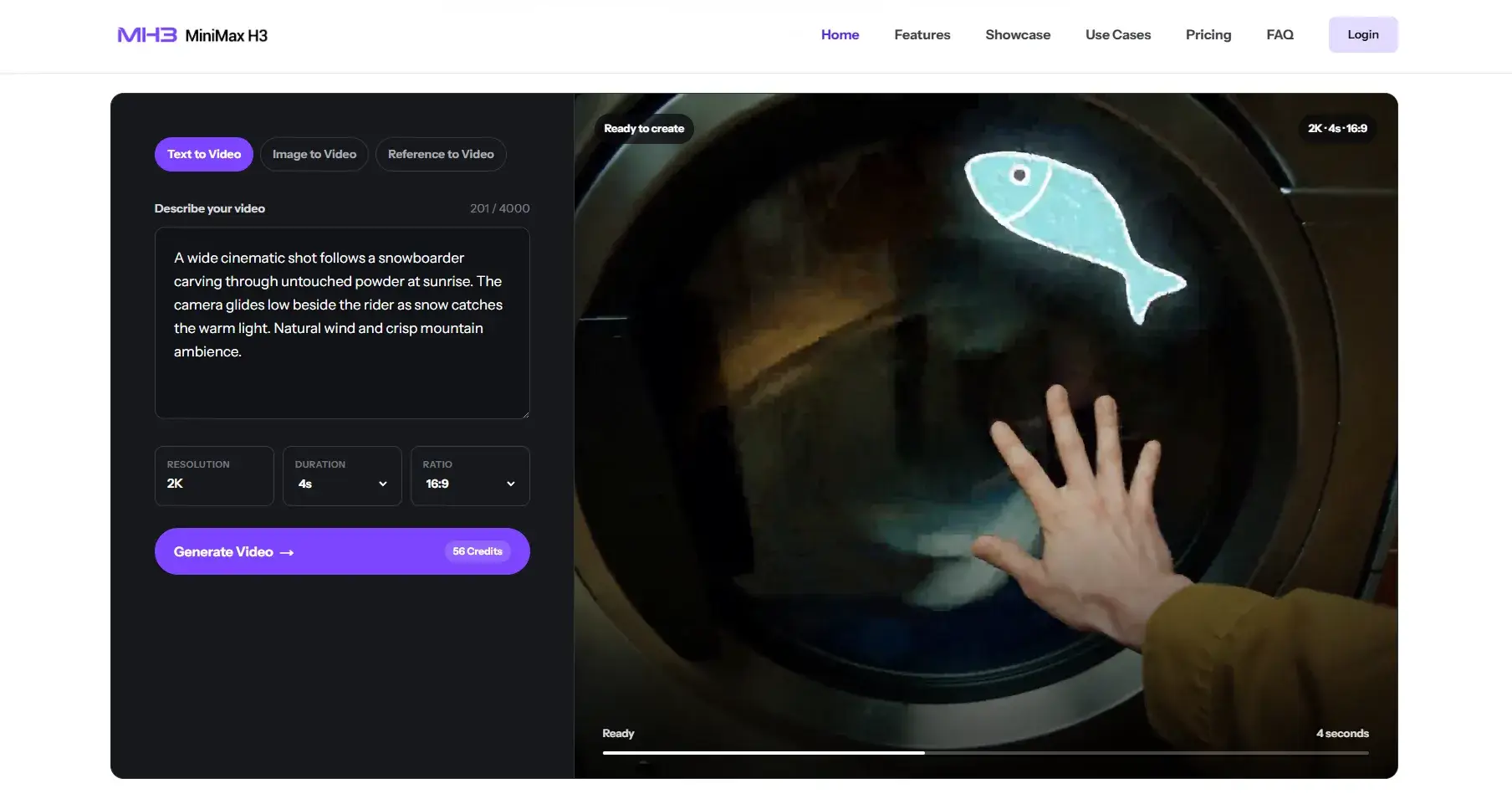
For designers, marketers, game creators and UI developers building short-form commercial video content, one universal pain point persists: disjointed toolchains. Most AI video platforms split visuals, motion references and audio generation into separate workflows, forcing creators to bounce between 3–5 tools to finish a single polished clip. File exports, timing mismatches, distorted brand assets and inconsistent character likenesses eat up hours of productive creative time. Today, an all-in-one multimodal engine solves these bottlenecks entirely: MiniMax H3.
Unlike siloed AI generation tools, MiniMax H3 unifies text, static images, reference footage and custom audio inputs within a single rendering pipeline, delivering fully synchronized 2K video with native stereo sound built frame-by-frame alongside visuals. There is no post-production audio layering required, eliminating the timing lag that plagues standard text-to-video workflows. The platform supports clip durations spanning 4 to 15 seconds and every mainstream aspect ratio, from vertical 9:16 social reels to cinematic 21:9 ad cuts, square 1:1 brand feeds and standard 16:9 product showcases. This built-in format flexibility makes it ideal for cross-platform content batches without manual cropping or resizing edits.
Core Multimodal Capabilities Built for Professional Creators
1. Rich Text-Driven Cinematic Generation
Creators input detailed prompts up to 4,000 characters to define subjects, dynamic camera movement, lighting, pacing, ambient sound and on-screen typography. The model interprets granular directional cues to produce cohesive, film-quality clips without rigid template limitations. Sharp text rendering is a standout feature, a critical upgrade for UI demo videos and branded marketing content where blurry on-screen copy undermines professionalism.
2. Precise Image Animation with Dual Frame Locking
Static product photos, character concept art and brand illustrations transform into fluid motion sequences via dual frame locking. Users upload one reference image to anchor the opening shot, or pair two visuals to lock both start and end compositions. Transitions, subtle camera pans and gentle movement render naturally while preserving fine details like product textures, brand logos and distinct facial features—an essential tool for e-commerce teams replacing costly physical studio shoots.
3. Cross-Asset Reference Guidance (Platform’s Defining Advantage)
The most powerful differentiator of MiniMax H3 is its multi-reference system, which lets creators combine three distinct asset types to fully control every layer of output footage:
Reference images lock consistent character appearances, brand color palettes and artistic styles across dozens of unique ad variations
Reference video clips transfer custom camera choreography and human motion to entirely new environments, streamlining game cutscene animation and replicating signature brand movement styles
Reference audio files set voice timbre, background music rhythm and environmental ambience, ensuring visual action aligns perfectly with audio beats and dialogue cadence
This cross-modal reference stack eliminates one of AI video’s biggest persistent flaws: broken character continuity and inconsistent brand identity across content batches.
4. Native Synchronized Stereo Audio Generation
Competing video AI tools force users to render visuals first, then import separate audio files, creating disjointed timing and flat mono sound. This engine generates stereo audio natively during video creation, matching environmental noise, voice lines and background scoring to every frame of on-screen action. Creative teams eliminate reliance on third-party sound design software to craft immersive, broadcast-ready short content.
Real-World Commercial Workflow Use Cases
Every feature of the platform is engineered to streamline tangible professional pipelines that Peerlist’s designer, developer and marketer audience works with daily:
E-commerce product reels: Animate flat product imagery with tailored lighting and background environments to replace expensive studio production cycles
Social media marketing assets: Generate vertical ad variants with crisp branded text and synced audio for TikTok, Instagram and short-video platforms
UI/UX walkthrough animations: Render smooth app and website interface demos with blur-free buttons, menus and typography for stakeholder presentations
Brand campaign visuals: Preserve logos, color schemes and typography uniformly across all generated footage to uphold consistent brand language
Game cinematic development: Transfer live actor motion to digital avatars for fluid cutscenes, drastically reducing manual frame-by-frame animation labor
Design concept previews: Turn rough sketches and product mockups into dynamic moving visuals to share polished client feedback before physical manufacturing
How This Unified Pipeline Outperforms Traditional AI Tool Stacks
Traditional video creation workflows require switching between separate platforms for prompt writing, image animation, motion transfer and sound mixing. Each file transfer introduces quality degradation, alignment errors and visual inconsistencies. By centralizing all inputs and rendering within one environment, MiniMax H3 cuts repetitive export steps, manual timing fixes and quality loss between creative stages.
For solo freelance creators, small design agencies and large in-house marketing teams alike, the unified multimodal architecture delivers two transformative benefits: drastically faster turnaround for high-volume content batches, and consistent, studio-grade final video quality with minimal post-production touch-ups.
Closing Thoughts
As demand for polished short-form commercial video explodes across every creative industry, fragmented AI generation workflows are no longer viable for scaling teams. Tools that separate visuals and audio, limit reference controls or cap output resolution fail to match the speed and polish unified multimodal generation enables. Whether you’re building branded ads, digital product demos or game cinematic assets and looking to streamline your full video production pipeline, explore the complete feature set available via MiniMax H3 to rethink how your team creates AI video content.

Join michael on Peerlist!
Join amazing folks like michael and thousands of other builders on Peerlist.
0
1
0