

Pixal3D Shows Where AI 3D Generation Is Going Next
Image-to-3D is no longer just about generating a model. The next battle is fidelity, workflow, and making AI 3D usable for real creators.
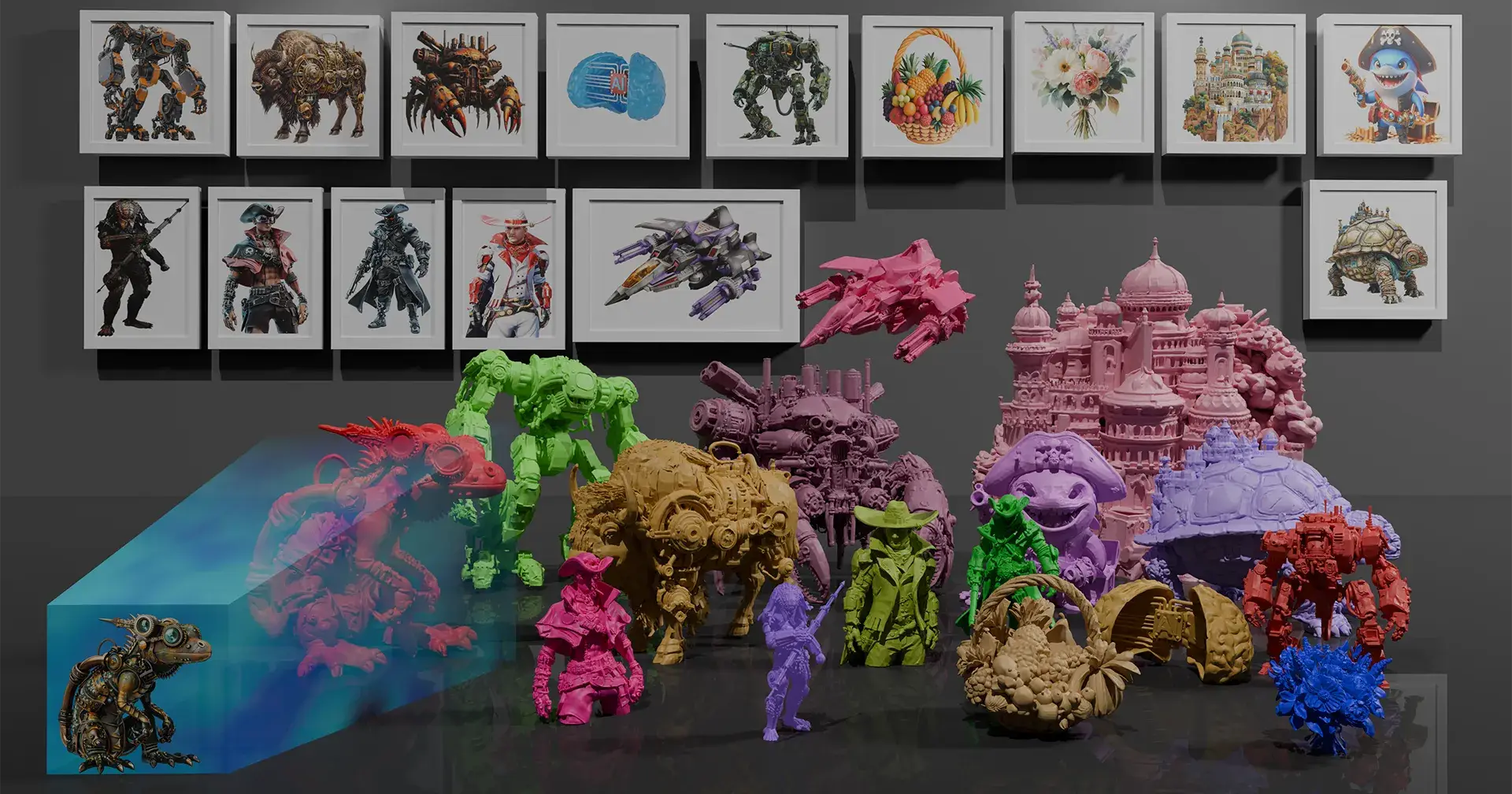
I have been following image-to-3D models closely because I believe 3D generation is still in an early but important stage.
The category has a very simple promise:
Turn one image into a 3D model.
That promise is powerful enough to attract game developers, e-commerce sellers, AR builders, designers, 3D artists, and indie hackers.
But the hard part is not the promise.
The hard part is making the output useful.
The demo is easy. The workflow is hard.
A good image-to-3D demo can be impressive in a few seconds.
Upload a clean image. Wait. Rotate the generated model. It feels like magic.
But when users start using it seriously, they notice the details:
The back side may not make sense.
The shape may be close but not accurate.
Textures may look good from one angle but break from another.
The model may be hard to use in a real 3D pipeline.
Different objects require different model strengths.
This is where image-to-3D becomes a product problem, not just a model problem.
Why Pixal3D is interesting
Pixal3D is a new image-to-3D model focused on pixel-aligned generation.
The important idea is that it tries to preserve a stronger connection between the input image and the generated 3D asset.
That matters because many AI 3D models can generate something plausible, but not always something faithful.
For real users, faithfulness matters.
If someone uploads a product image, they are not asking for a random similar object. They want a 3D version of that product.
If someone uploads a game concept, they want the model to respect the design.
If someone uploads a piece of furniture, they care about the shape, proportions, and material feeling.
This is why Pixal3D feels like a useful step forward. It is not just chasing “more beautiful” 3D. It is trying to make image-to-3D more faithful to the input.
My view: image-to-3D needs a model marketplace experience
I do not think the final user experience will be one model, one upload button, one output.
That is too simple for a category where results vary so much.
A better experience may look like this:
Upload one image
Choose a model or let the system recommend one
Generate multiple results
Preview them in the browser
Compare quality, texture, geometry, and file size
Download the best result
Continue with texture generation or format conversion
This is especially useful because different models may be better for different objects.
Pixal3D may be strong when fidelity matters. Another model may be better for speed. Another may be better for stylized objects. Another may be better for certain e-commerce product categories.
Users should not need to understand every model name. The product should help them choose.
The real opportunity is not only 3D generation
The bigger opportunity is 3D workflow simplification.
Most non-technical users do not think in terms of mesh, UV, PBR texture, topology, GLB, OBJ, FBX, or game engine import settings.
They think in terms of outcomes:
“I want to show my product in 3D.”
“I want a game asset from this image.”
“I want to turn my sketch into something I can rotate.”
“I want a quick 3D model for a prototype.”
“I want something I can open in Blender.”
A useful product should translate those goals into a simple workflow.
That is why I am adding Pixal3D into AI Image to 3D as part of a broader multi-model experience.
The goal is not just to say “we support Pixal3D.”
The goal is to let users test modern image-to-3D models without needing to understand the technical details behind each one.
What still needs to improve
I am still cautious about image-to-3D hype.
Even with better models, there are still hard cases:
transparent glass
reflective metal
thin parts
complex interiors
hands, humans, animals
exact mechanical accuracy
production-ready topology
rigging
For professional 3D artists, AI does not remove the need for judgment and cleanup.
But for many users, that is not the point.
The point is speed.
If AI can turn a flat image into a usable first 3D draft, that already changes the workflow.
It reduces the blank page problem.
It helps creators test ideas faster.
It gives small teams access to 3D workflows that used to require more time, budget, and expertise.
My takeaway
Pixal3D is interesting because it represents a shift in image to 3D.
The category is moving from novelty to fidelity.
From “can it generate something?” to “can it generate something close enough to what I uploaded?”
From model demos to user workflows.
That is where I think the next wave of AI 3D products will be built.
Not just around one model, but around a better experience for choosing, previewing, comparing, and using AI-generated 3D assets.

Join chou on Peerlist!
Join amazing folks like chou and thousands of other builders on Peerlist.
0
0
0