

How Enterprise AI Services Enable Predictive, Agile Business Models
Unlock Predictive Agility with Enterprise AI Services
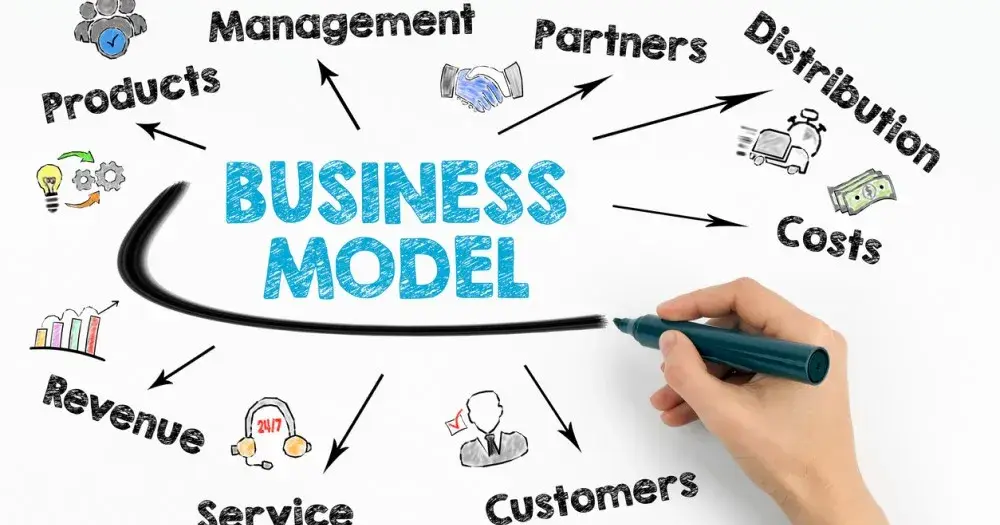
Enterprise AI services are changing how companies operate, not in theory but in day-to-day work. We’re seeing more teams use AI tools to support decisions and automate routine tasks. It’s no longer something only tech-forward brands experiment with—it’s becoming part of standard business operations.
Businesses consider AI solutions to improve their capabilities and build more responsive organizational models. The global enterprise AI market will reach $155.2 billion by 2030. This growth comes from the need for intelligent automation and live analytics. AI brings major benefits through process optimization and can automate 60-70% of employee tasks.
Organizations that partner with the right enterprise AI solutions company see dramatic cost savings. These savings come through effective forecasting and resource allocation. This helps companies adapt quickly to market shifts and customer demands.
Understanding Enterprise AI Services in Business Context
Enterprise AI services work differently from general AI applications. Companies engineer them specifically for organizational use by merging advanced technologies with their infrastructure to boost business functions. This merger helps companies reinvent their approach to creating, delivering, and capturing value.
What Sets Enterprise AI Apart
The specialized focus on business requirements makes Enterprise AI different from general-purpose AI. These systems give priority to:
Enhanced security protocols - Enterprise AI makes sure the most sensitive information is encrypted and tightly secured with strong access controls.
Customization capabilities - These allow the systems to adapt to specific industry needs and merge with existing business infrastructure.
Regulatory compliance - Enterprise solutions follow standards such as GDPR, SOC 2, and ISO certifications.
Scalability - Enterprise AI manages large volumes of data and users without slowing down.
Enterprise AI creates a closed information loop where employee data stays secure within the organization. In contrast, public AI tools may pose risks of data exposure or leakage. Businesses handling sensitive information and intellectual property need this level of protection to maintain confidentiality.
How AI Transforms Business Models
Modern AI solutions have changed how businesses operate fundamentally. Companies using AI extensively are creating new value processes. These new rules now replace traditional business fundamentals. These changes go beyond technology to completely transform business operations.
Artificial intelligence for enterprise is redefining business economics by letting companies personalize products more efficiently. Companies can now make money from complex, frequent activities because AI learns from huge amounts of data. This means businesses can create customer value with fewer production and labor constraints.
Why Predictive and Agile Models Need AI
Modern businesses need AI for predictive and agile models that respond to data in real time. AI makes adaptive decisions without getting stuck in data bottlenecks. This equips organizations to react faster to changing conditions and customer needs.
AI improves predictive analytics by quickly analyzing big datasets and finding complex patterns that humans might miss. This helps businesses understand early market trends and consumer behaviors, which helps them adjust their strategies.
Agile teams benefit from AI’s ability. It spots trends across sprints, finds common blockers, and depicts patterns that would take hours to discover manually. Teams can make data-based decisions and improve their processes continuously without manual analysis slowing them down.
The right enterprise AI solutions company provides the technology foundation for these predictive, agile capabilities. This gives businesses the tools to adapt faster while keeping their operations running smoothly.
8 Ways Enterprise AI Services Enable Predictive, Agile Business Models
Modern businesses require data-driven approaches for survival in the market. Enterprise AI services come with powerful capabilities that revolutionize organizations into predictive and agile operations. Here's how these technologies help transform businesses:
1. Real-Time Decision Support with Predictive Analytics
Businesses can process incoming data streams right away with predictive analytics that use pre-trained models to create immediate insights. These real-time systems work better than batch processing of historical data because they continuously review information as it emerges. Organizations can make quick decisions based on current conditions instead of past trends. For instance, fraud detection systems analyze transactions as they occur and flag suspicious activities within milliseconds.
2. Automating Repetitive Workflows for Faster Execution
More companies are now relying on AI for routine operational activities that generally bog down a team. Instead of the staff checking stock levels all the time or juggling the maintenance schedules, AI systems track inventory and place supply orders when materials start running low, helping them plan upkeep before issues pop up.
For many organizations, the shift isn’t just about speed—it’s about freeing people to do higher-value work. In practice, teams often recover a sizable amount of time (some report close to 40% of work hours), which makes it easier for employees to focus on strategy and problem-solving instead of repetitive tasks.
3. Improving Customer Personalization at Scale
AI analyzes behavior patterns and priorities to enable companies to create experiences that feel truly personalized. They deliver customized product recommendations and personalized interactions across channels. Companies using AI personalization are also much more likely to use machine learning for content analytics and intelligent content creation, which helps them unlock deeper insights and more responsive engagement strategies.
4. Improving Forecast Accuracy in Supply Chains
AI-driven demand forecasting helps companies significantly reduce inventory levels without compromising service quality. Smart algorithms analyze a variety of data sources-from historical sales to weather patterns-and identify patterns that might not be apparent to human analysts. One food manufacturer integrated data from 18 different sources, improving daily forecast accuracy and reducing production scheduling time by 96%.
5. Enabling Dynamic Pricing and Market Adaptation
With AI-driven dynamic pricing, companies don’t have to rely on fixed price lists or wait for end-of-quarter reviews anymore. They can adjust prices as market conditions shift— whether that’s a change in demand, a competitor moving their prices, or customers responding differently than expected.
This approach has shown real results. Many businesses see a 5–10% increase in gross profit simply by making pricing decisions more accurately and in a timely manner. The technology runs through an enormous number of possible scenarios in the background and recommends practical price points for each product and location.
One large grocery chain, for example, used AI-powered dynamic pricing to spot areas where it was either underpricing or missing margin opportunities. Rather than overhauling everything, they made a few focused adjustments. Result? Improved margins, steady sales, and stronger pricing position.
6. Supporting Risk Detection and Compliance Monitoring
AI improves risk management by continuously monitoring transactions, communication, and operational processes. Huge datasets are analyzed by machine learning models to identify patterns that may prove to be unusual and indicative of possible compliance issues or fraud. Companies can now identify problems much earlier and maintain their compliance with regulations rather than simply reacting after issues occur.
7. Accelerating Product Innovation with Generative AI
Generative AI speeds up product development by generating design alternatives and visualizing concepts in real time, permitting teams to explore more ideas, solicit customer feedback much earlier in the process, and iterate efficiently. Automation of workflows and reduction of manual effort are other ways AI can help organizations get innovative products to market faster.
8. Strengthening Workforce with AI-Augmented Tools
The aim of AI solutions is to boost human capabilities and not replace humans altogether. To achieve the same, these solutions handle repetitive tasks and offer smart insights. Thus, employees get the time for creative problem-solving and strategic thinking. Companies with fully modernized AI-led operations achieve 2.5 times higher revenue growth and 3.3 times greater success in scaling generative AI use cases.
Conclusion
Enterprise AI services play a key role in today's business success. Companies using such technologies boost market responsiveness and operational efficiency. AI-driven capabilities such as real-time data analytics, workflow automation, and improved personalization help businesses move from traditional models to predictive, agile frameworks.
Also, enterprise AI helps businesses detect market trends earlier and respond to customer needs faster. It lets companies make evidence-based decisions with greater confidence. These benefits explain why a majority of corporate strategists now see AI as vital to their organization's success.
The winners in today’s AI economy are those who act decisively and early. For companies aiming to stay competitive, the question is no longer ‘if’ they should adopt enterprise AI—but ‘how fast’ they can deploy it to drive impact.

Join Christine on Peerlist!
Join amazing folks like Christine and thousands of other builders on Peerlist.
0
0
0