

Mars to Table: Engineering Resilience Through Comfort Food
Mars to Table is not just about sustaining life. It is about designing systems that preserve what makes life worth sustaining.
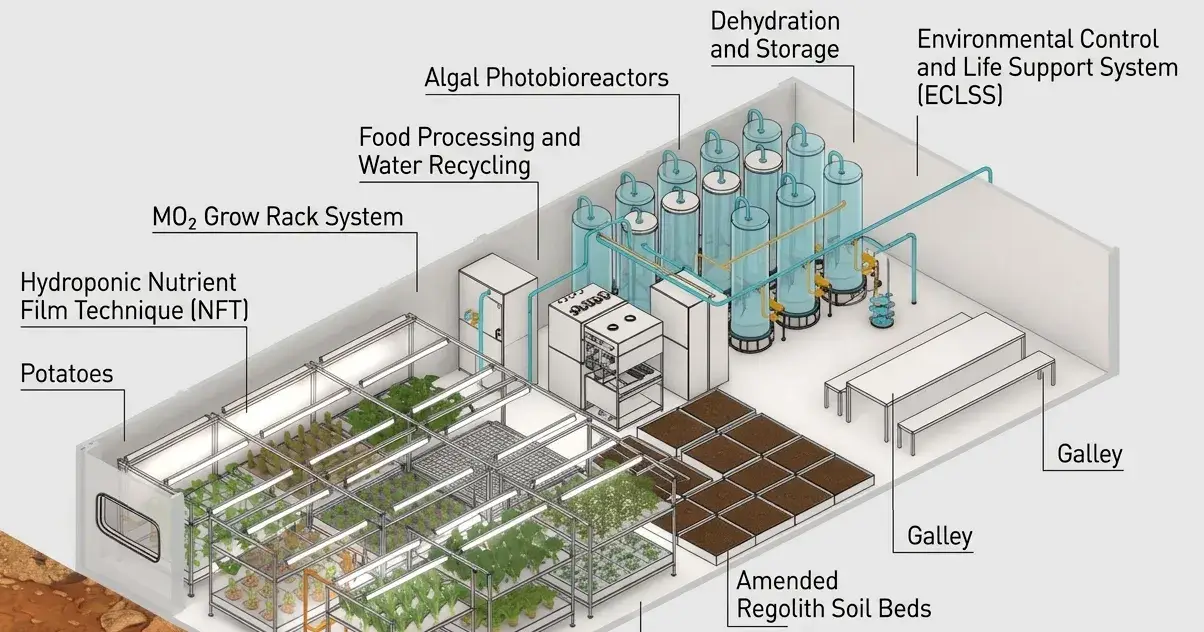
The Irresistible Puzzle
I’ll be honest: I’m a foodie. When NASA’s "Mars to Table" challenge landed in my inbox, I saw a "wicked problem." While some of my peers viewed the project as daunting, I was drawn to the puzzle — one that extends far beyond Mars. I kept thinking about something my AP Environmental Science professor once told me: an easy solution is not always the right one. That idea stayed with me. I saw the potential for real-world impact: sustainable agriculture, closed-loop systems, and solutions for food-insecure regions on Earth. The challenge was irresistible because it wasn't just about nutrition—it was about human resilience in the most extreme environment imaginable.
Food as Mission-Critical Infrastructure
"Space food" is often described by mass, water efficiency, and shelf life. However, food is much more than fuel; it is a psychological anchor. Research shows that food experiences in confined spaces are vital for mood and social connection.
When a crew is isolated for years, "comfort food" is part of the mission-critical infrastructure that keeps morale and cognition intact (Li et al., 2023). If a crew looks forward to a familiar flavor after a hard day, that isn't a luxury—that is mission support.
The Architecture: A Closed-Loop Ecosystem
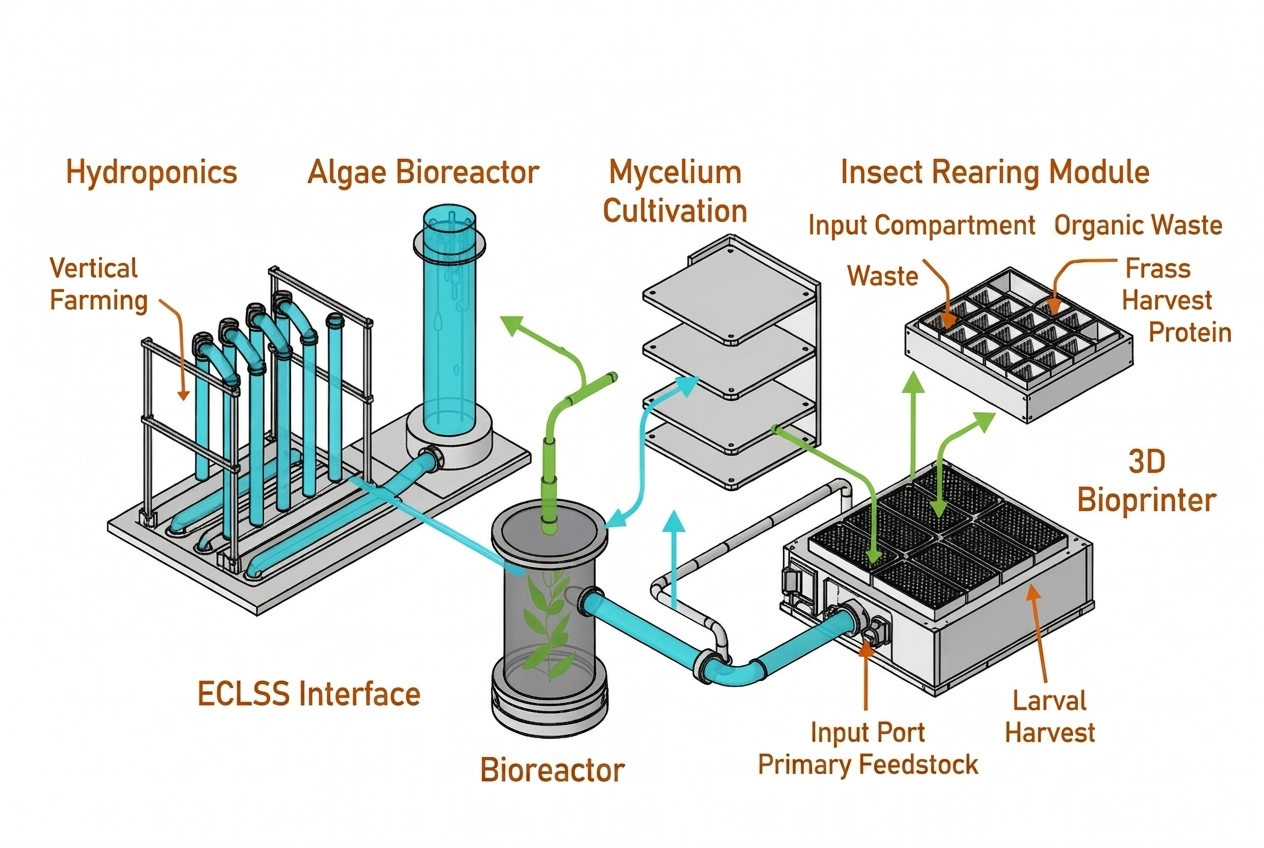
My approach focuses on a Quad-Bioregenerative System. By diversifying the raw biomass available, we can produce a wide rotation of familiar cuisines:
The Quad-Cycle: Integrating Hydroponics, Algal Bioreactors, Mycelium, and Insect Rearing to create a zero-waste resource recovery loop.
Vertical Integration: Utilizing the height of the module to stack NFT grow racks and processing units.
True-Texture Production: A 3D Food Bioprinter transforms biomass into familiar meat and vegetable analogs, preserving cultural identity through meals.
The Earth Spin-Off: Solving for Scarcity
The same principles that make a Mars food system resilient—closed-loop thinking and waste recovery—are the blueprints for solving food scarcity and climate resilience in remote regions here at home. If we can feed people in the harshest environment in the solar system, we can design better systems here on Earth.
Closing the Loop
I’m not doing this for a reward. I’m doing it for the opportunity to have this architecture vetted by a scientific panel. Sometimes you take on a project not because you’re certain of the end, but because the question itself—how to stay human in space—is worth pursuing.
References
Li, L., et al. (2023). "Nutrition and Performance in Long-Duration Spaceflight." Journal of Space Biology.

Join Chander on Peerlist!
Join amazing folks like Chander and thousands of other builders on Peerlist.
0
3
0