

Direct Kernel Interaction: Networking without libc in Project Lwanga
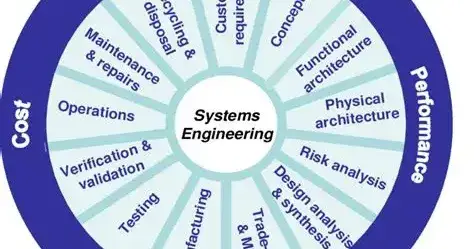
In systems programming, the "Standard Library" often acts as a mandatory middleman, adding hidden allocations and complex signal handling to simple operations. Lwanga is designed to bypass this abstraction tax.
By utilizing an LLVM backend and targeting the Linux x86_64 syscall interface directly, Lwanga allows you to write network utilities where the relationship between your code and the kernel is 1:1.
Implementation: A Lightweight TCP Connectivity Probe Instead of using a high-level connect() wrapper, Lwanga uses the syscall keyword to trigger the kernel's network stack. This ensures zero-dependency binaries and a minimal instruction footprint.
// Lwanga Systems Utility: Network Probe
// Goal: Deterministic connectivity check with zero library overhead
fn main() -> u64 {
let socket_fd: i64;
let conn_status: i64;
// 1. Resource Acquisition
// socket(AF_INET: 2, SOCK_STREAM: 1, Protocol: 0)
// Invokes Linux Syscall 41 directly via LLVM
unsafe {
socket_fd = syscall(41, 2, 1, 0);
}
if (socket_fd < 0) {
return 1; // Direct kernel error handling
}
// 2. The Connection Vector
// syscall 42: connect(fd, sockaddr_ptr, addrlen)
// 'target_addr_ptr' points to a manually aligned sockaddr_in struct
unsafe {
conn_status = syscall(42, socket_fd, target_addr_ptr, 16);
}
// 3. Low-Latency Feedback
if (conn_status == 0) {
let ok_msg: str = "PROBE_OK: Service Reachable\n";
unsafe { syscall(1, 1, ok_msg, 28); }
}
// 4. Explicit Resource Release
unsafe {
syscall(3, socket_fd); // close()
}
return 0;
}
Technical Advantages for Systems Engineering:
Instruction Cache Efficiency: A compiled Lwanga network probe is typically <10KB. This minimizes cold-start latency and makes the binary ideal for high-frequency health checks in containerized environments.
Deterministic Execution: No background runtime threads, no garbage collection pauses, and no dynamic linker (
ld.so) overhead.Memory Transparency: You define the exact memory layout of your structures (like
sockaddr_in), ensuring total control over what hits the wire.
Contribute & Explore: We are looking for maintainers and collaborators interested in Compiler Design and Linux Internals to help expand our syscall library and harden the LLVM code generation.
👉 GitHub Repo: https://github.com/cosmah/Project-Lwanga
👉 Peerlist Project: https://peerlist.io/cosmahke4/project/projectlwanga
Engineering Discussion: In your experience, do you prefer a language that abstracts the syscall interface for portability, or one that exposes it for maximum performance and transparency? Let’s discuss in the comments.
Join Ssekirya on Peerlist!
Join amazing folks like Ssekirya and thousands of other builders on Peerlist.
0
1
0