

The Future of Business Growth Depends on Intelligent Automation
Discover how AI-powered automation is helping businesses streamline operations, improve customer experiences, and achieve sustainable growth without increasing operational complexity.
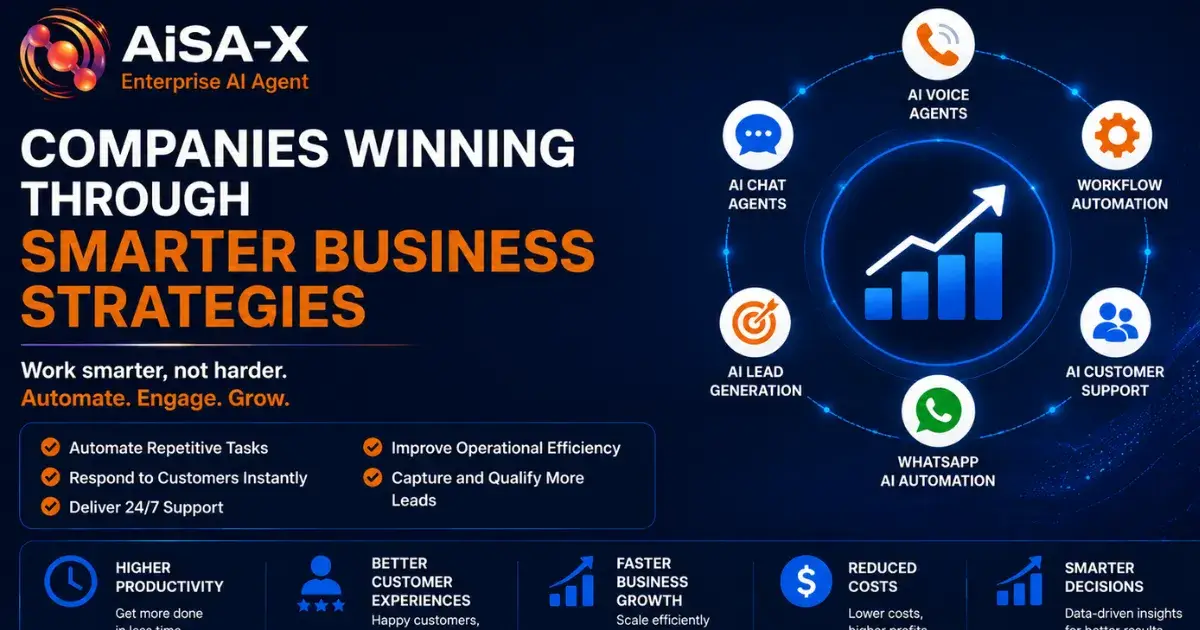
The way businesses grow has changed dramatically over the past few years. Success is no longer determined by the size of a workforce or the number of hours employees spend at their desks. Instead, organizations that consistently outperform their competitors are those that build efficient systems, automate repetitive work, and empower their teams with intelligent technology.
Customers today expect instant responses, personalized experiences, and seamless communication across multiple channels. At the same time, businesses are expected to control operational costs while maintaining high service quality. Meeting these expectations with traditional manual processes is becoming increasingly difficult.
This is where intelligent automation is making a significant impact. By combining Artificial Intelligence (AI), workflow automation, and connected business systems, organizations can improve productivity, enhance customer experiences, and scale operations more efficiently.
Business Growth Is No Longer About Doing More Manual Work
Many growing businesses face a common challenge. As customer inquiries increase, employees become occupied with repetitive administrative tasks instead of strategic work.
Daily activities such as answering frequently asked questions, qualifying sales leads, scheduling appointments, updating CRM records, sending payment reminders, and collecting customer feedback consume valuable time. While each task appears small on its own, together they represent hundreds of hours of manual effort every month.
Rather than continuing to expand teams to manage these workloads, many businesses are redesigning their operations around automation.
This shift allows organizations to improve efficiency without sacrificing customer service or employee satisfaction.
Understanding Intelligent Automation
Intelligent automation goes beyond traditional rule-based software. Modern AI systems can understand customer intent, communicate naturally, and execute business workflows with minimal human intervention.
Businesses are increasingly using AI to automate processes such as:
Customer support conversations
AI-powered voice calling
Website chat assistance
Appointment scheduling
Lead qualification
Customer onboarding
Order confirmations
Payment and renewal reminders
Feedback collection
CRM synchronization
Internal workflow approvals
Employee support requests
These automated processes operate around the clock, helping businesses provide faster and more consistent service while reducing manual effort.
Why More Organizations Are Investing in Automation
Companies across industries are adopting intelligent automation because it delivers measurable improvements throughout the business.
Enhanced Productivity
Employees no longer spend large portions of their day performing repetitive administrative work. Instead, they can focus on activities that require creativity, critical thinking, relationship building, and strategic planning.
Faster Customer Response
Modern customers expect immediate assistance. AI-powered systems can answer questions, provide information, and guide customers through common processes instantly, improving satisfaction while reducing response times.
Improved Operational Accuracy
Manual work often introduces inconsistencies and human error. Automated workflows follow predefined business rules, ensuring that routine tasks are completed accurately and consistently every time.
Greater Scalability
One of the biggest advantages of automation is its ability to support business growth without proportionally increasing operational costs. As customer demand grows, AI systems can handle significantly larger interaction volumes while maintaining consistent performance.
Better Employee Experience
Automation isn't just beneficial for customers—it also improves the employee experience. By removing repetitive tasks, organizations reduce workplace stress and allow employees to focus on more engaging and meaningful responsibilities.
Intelligent Automation Across Business Functions
One of the strengths of AI-powered automation is its flexibility. Nearly every department can benefit from smarter workflows.
Customer Support
AI assistants provide instant answers to frequently asked questions, resolve common issues, collect support requests, and escalate complex conversations to human agents when necessary.
Sales and Lead Management
AI helps qualify leads, answer initial inquiries, schedule meetings, and nurture prospects before they reach the sales team, allowing representatives to focus on closing opportunities rather than administrative work.
Marketing
Marketing teams can automate customer engagement, campaign follow-ups, event registrations, and personalised communication while gathering valuable customer insights.
Finance
Automation simplifies invoice reminders, payment confirmations, account notifications, and routine financial communications, reducing delays and improving operational efficiency.
Human Resources
HR departments use intelligent automation for interview scheduling, employee on-boarding, policy communication, leave management, and answering routine employee questions.
Operations
Businesses automate approvals, workflow routing, inventory updates, service requests, and internal communication to create smoother day-to-day operations.
Supporting Employees Rather Than Replacing Them
One of the most common misconceptions surrounding AI is that it exists to replace human workers.
In reality, the most successful implementations position AI as a productivity tool rather than a replacement for employees.
Automation manages repetitive, high-volume tasks while people continue to contribute empathy, creativity, complex decision-making, negotiation, and relationship building.
This collaboration creates stronger teams capable of delivering better customer experiences while improving operational efficiency.
Starting Small Creates Long-Term Success
Businesses don't need to automate everything at once.
Many successful digital transformation initiatives begin with one or two repetitive processes, such as appointment reminders, customer support inquiries, or lead qualification. Once organizations experience measurable improvements, they gradually expand automation into additional departments.
This phased approach minimizes disruption while allowing teams to adapt to new technologies with confidence.
The Future Belongs to Smarter Businesses
Artificial intelligence is rapidly becoming a core component of modern business operations. Organizations that embrace intelligent automation today are building systems capable of supporting long-term growth, adapting to changing customer expectations, and remaining competitive in increasingly digital markets.
Rather than viewing automation as simply a way to reduce costs, forward-thinking businesses recognize it as an opportunity to improve customer experiences, strengthen employee productivity, and create scalable operations that are prepared for future challenges.
Final Thoughts
Business success is no longer measured by how busy teams appear. It is measured by how effectively organizations use technology to simplify operations, improve customer interactions, and enable employees to focus on meaningful work.
Intelligent automation offers businesses an opportunity to transform everyday processes into efficient, scalable systems that support sustainable growth.
Companies that invest in smarter workflows today will be better positioned to innovate, respond quickly to market changes, and deliver exceptional customer experiences in the years ahead.
The Companies Winning Today Aren't Working Harder—They're Working Smarter
https://aisa-x.ai/blog/companies-winning-through-smarter-business-strategies/
Explore AI-Powered Business Solutions
Join Deepa on Peerlist!
Join amazing folks like Deepa and thousands of other builders on Peerlist.
0
0
0