

Why Conversational AI Is Reshaping Real Estate Lead Qualification
As buyer expectations evolve, real estate agencies are using conversational AI to qualify leads faster, improve response times, and create better customer experiences.
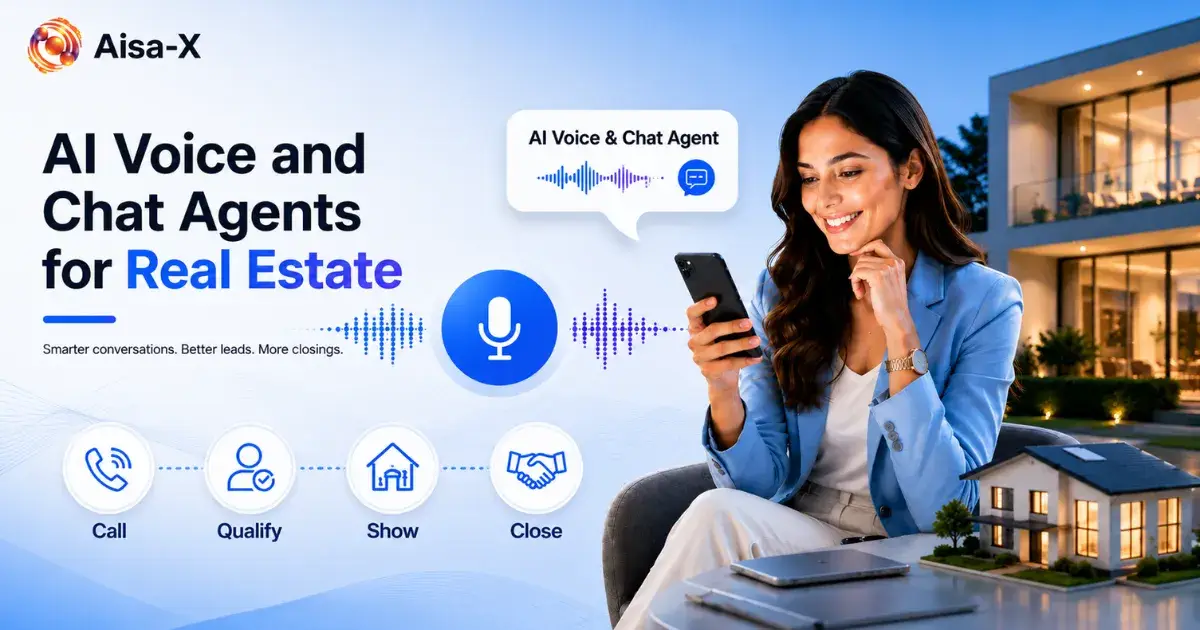
For years, how an agency qualified a lead was fairly straightforward. A client would fill out a lead form, a sales agent would call them back, ask a few questions, and decide if the person was serious about buying or not. The process, of course, wasn’t always efficient, but because there weren't nearly as many leads and because customers had much lower expectations, it was sustainable.
It’s not anymore.
Property buyers today expect near-instant communication, access to information, and multichannel interaction with their potential sales agent. On the flip side, real estate companies are receiving an ever-growing number of leads from all possible channels: property portals, Google Ads, social media, websites, referral networks, and more.
The problem isn’t lead generation.
The problem is lead qualification – pinpointing and connecting with interested prospects before your competition does. This is why conversational AI is emerging as such a critical tool for real estate companies.
The Ever-Increasing Discrepancy in Lead Generation vs. Qualification. Most real estate agencies have spent years cultivating their marketing and lead generation processes. Rarely, if ever, is the bottleneck to business acquisition lead generation. More often than not, real estate companies are already struggling with the number of leads their sales agents can realistically handle. The problem truly begins after the initial contact is made by the prospect. A lead arrives. It enters the CRM.
A sales agent intends to contact them back. Life gets in the way, however. There's no shortage of reasons why this doesn't happen immediately. Property tours, appointments with current clients, paperwork, negotiation with other parties, and general client support all vie for an agent's time, leading to slow response times and the loss of business to more responsive competitors. By the time a sales agent gets around to calling back, a prospect has already been contacted by a handful of different real estate agencies and is already further down their buying journey. It is at this stage where countless leads slip through the cracks.
Your potential buyers expect you to be there immediately
Take a minute to observe today's consumer interactions.
From ordering a pizza to calling for a taxi or shopping online, buyers have grown accustomed to an immediate answer to any inquiry, and this is now the same expectation for real estate.
This prospect looking at your properties late at night doesn't expect an extensive consultation, but they do expect to be engaged. The desire for simple questions like "Is the property available?", an answer to a specific inquiry, and how they can proceed must be available with ease. Waiting until tomorrow to respond can sometimes seem like forever when we live in a world with instant communication, and the agencies that respond first have already begun the sales conversation, even before they have spoken.
What makes Conversational AI different?
In contrast to traditional chatbots that utilize inflexible preprogrammed scripts to guide the conversation, modern Conversational AI is designed to provide more organic and conversational interactions. It will ask questions to understand the context of the buyer's search, and then help walk them through the early stages of their buying experience. For instance, through these questions, Conversational AI can discover:
*What kind of property a prospect is looking for
*Their preferred location
*Their budget
*When the prospect would like to purchase a property
*Their financing status
*Their desired investment goal
Instead of your sales agents having to extract this information themselves, this tool will compile and organize the information, and by the time they have joined the conversation, they will already have the answers.
What This Means for Real Estate Teams
Not all inquiries are created equal-it’s a bit obvious to state that a buyer in need of an open house tour today isn't the same type of prospect as someone who's still months away from signing a deal. Lead qualification is what distinguishes the two, helping agents to avoid spending time working with the latter in the same way that they are working with the former. Conversational AI can prioritize which leads are most likely to move forward and which will be a waste of time. This ensures time is spent most effectively with highest-value prospects.
Not About Replacing Human Interactions
Wherever AI comes up as part of the conversation, we often see it quickly followed by concern about the displacement of human workers. As for real estate, we’re not likely to see a completely automated environment in any foreseeable future. The sale of a property will always be a major financial and emotional event for someone, and it is those elements that contribute to the continued importance of human expertise and trust. Conversational AI is there to assist agents, not replace them. It can manage many time-sensitive and repetitive tasks such as lead follow-up, qualification and scheduling, and basic consumer questions. Agents, meanwhile, are focused on client interactions and transactions. If anything, conversational AI can be viewed as an effective digital assistant to agents.
The Trend toward Intelligent Conversation
Perhaps the biggest transformation that is occurring in real estate today is the shift from manual to automated or intelligent processes. For a long time, growth has been thought of primarily as adding more staff. Increasingly, businesses are trying to add more efficiency to their processes without merely hiring more people. Conversational AI is one such efficiency that allows for scaled communication. In place of agents sifting through hundreds of tasks, technology can automate many of the repetitive interactions with consumers.
Moving Forward
Real estate has always been a relationship-based industry-that won't change.
But the way those relationships begin-will.
As consumer behavior shifts, agencies will require systems that can engage new leads promptly, qualify opportunities efficiently, and enhance customer experiences across the entire purchasing process.
Conversational AI is evolving into one piece of that picture-not to replace humans but to help uncover and cultivate high-value opportunities before they vanish.
The agencies that effectively integrate technology and human acumen will be at a distinct advantage in the speed-of-play market; often that advantage begins with a conversation.
Read the full blog:https://aisa-x.ai/blog/how-ai-voice-agents-help-real-estate-teams-convert-property-leads-faster/

Join Deepa on Peerlist!
Join amazing folks like Deepa and thousands of other builders on Peerlist.
0
0
0