

Designing Vibe, Not Wireframes.
Modern design tools and AI coding assistants have made traditional design processes obsolete, enabling teams to skip wireframes and even formal design phases to build functional products faster.

A decade ago, wireframes made sense. Design tools were clunky (remember Photoshop). Iterating was slow and painful. So the wireframes let designers plan layouts before committing to high-fidelity designs. But today, tools like Figma and Sketch come with components, variables, and design tokens. You can build polished prototypes almost as fast as wireframes.
This evolution means designers can now focus on delivering polished, functional designs faster while maintaining consistency through design systems. The time previously spent on wireframes can now be invested in user research, testing, and refining the actual product experience.
Few more rationale:
Direct-to-high-fidelity is more efficient - Creating wireframes, then mockups, then prototypes triples work. Moving straight to high-fidelity with component libraries eliminates redundant steps.
Client/stakeholder comprehension - Non-designers often misinterpret wireframes as final designs minus color. High-fidelity prototypes communicate actual intent more clearly. This also makes sign off process faster. Obviously you should involve the stakeholders as early as possible.
Component-based design systems enable speed - Design systems with established patterns allow designers to build solutions quickly without compromising quality.
User testing validity - Testing with wireframes produces less accurate feedback than testing with realistic UI that users can properly contextualize.
Real-time collaboration tools - Modern tools like Figma allow multiple designers and stakeholders to work simultaneously on the same file with different, making rapid iteration possible without wireframe steps. That's how Figma was born btw!
I won't say wireframing is dead. For complex projects, some initial sketching may still help organize thoughts, but formal wireframing as a dedicated phase has rightfully been replaced by more efficient approaches like Prompt-to-Code also famously known as "Vibe Coding" 😃.
AI is Changing How We Build Software
The rise of AI coding assistants is further disrupting traditional design workflows. Many teams now bypass formal design phases entirely, using AI copilots to iterate directly in code. These tools enable developers to describe features in natural language and generate functional MVPs without intermediate design steps.
This direct-to-code approach dramatically speeds up product development cycles. Small teams can now build, test with real users, and refine based on actual usage data, all in the time previously spent on design. For startups and tiny teams, this compression of the build-measure-learn cycle provides a significant competitive advantage.
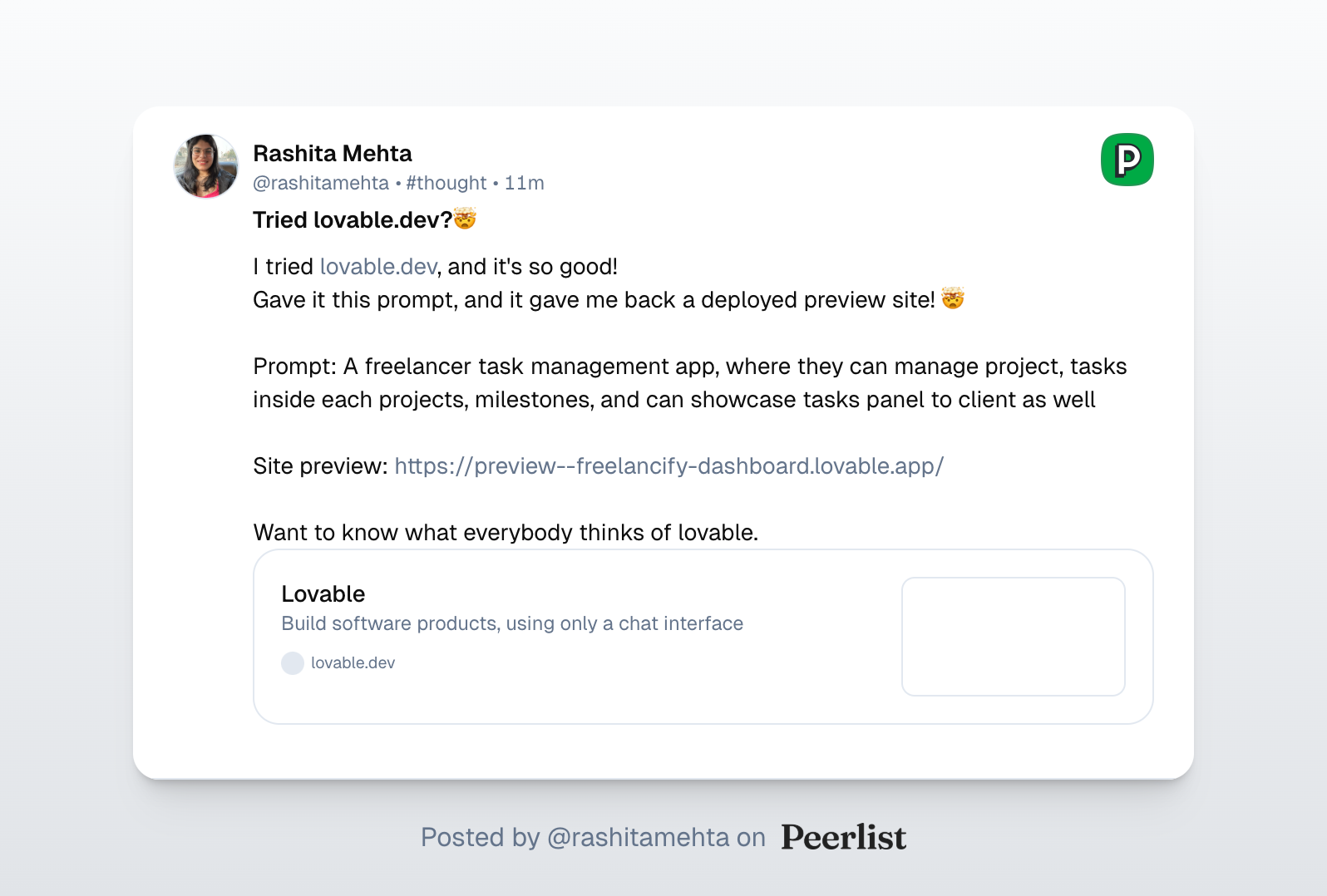
Case in point ☝️ — check the above post on Peerlist.
With such a rapid change in the way we're building products, getting stuck with wireframing and low-fidelity designs feels unnecessary. At least to me personally!
Do share your thoughts below, if any :)

Join Akash on Peerlist!
Join amazing folks like Akash and thousands of other builders on Peerlist.
3
21
2