

How to Make Your Most Precious Files Ransomware‑Attack Resilient?
Make them practically useless to the attackers
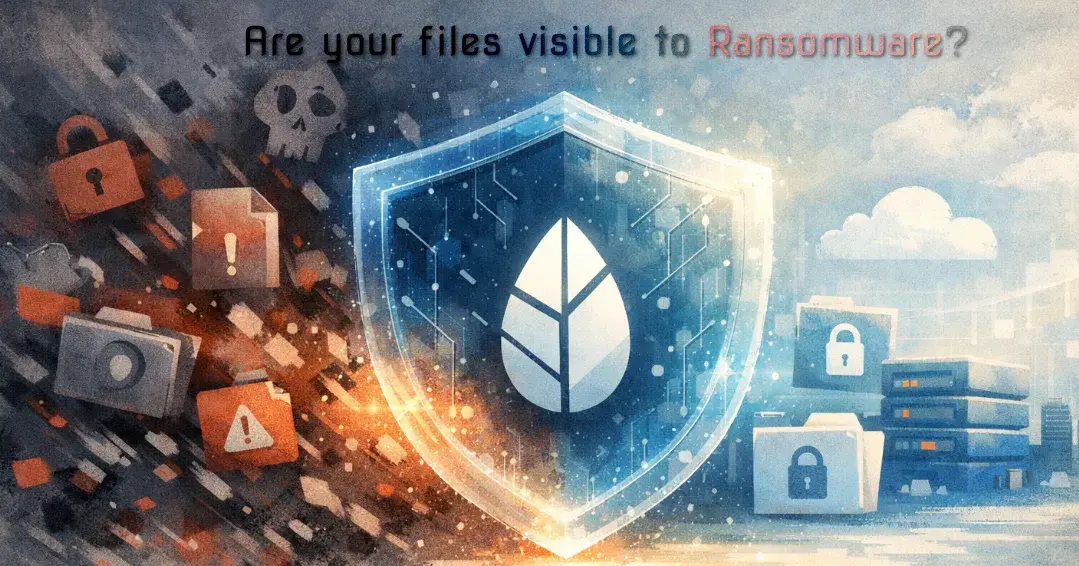
Ransomware has changed the way organisations think about digital safety. As you might be aware that attackers no longer rely only on just encrypting files, rather they steal data, threaten leaks, and target backups.
Even the well‑protected systems can fall victim because ransomware does not necessarily need to break your defenses. Instead, it only needs to find your precious files worth exfiltrating for extortion.
The uncomfortable truth is that "Ransomware succeeds because it can recognise what is valuable".
How Ransomware works in the first place?
Almost among all the ransomware families, this workflow is predictable:
Scan the system for documents, databases, images, archives
Classify files based on extensions, headers or content signatures
Identify what is precious enough and worthy to be exfiltrated
Exfiltrate those precious assets
Encrypt them on the target, using hybrid cryptography
Leave ransom notes and threaten data leaks
But, all this depends on one step, i.e. "The attacker must be able to recognise your files as meaningful targets." If this capability fails, the rest of the attack collapses.
What if the Ransomware cannot peek into your files?
Imagine that the Ransomware tries to exfiltrate all your precious files, but as it tries to access them, they all appear to be corrupt. Now if the ransomware cannot identify your files, it cannot encrypt them, steal them, or enable the attackers to use them for extortion. This is where the idea of file shielding becomes important.
The Missing Layer: Shielding Files Before the Attack
Organisations generally rely on detection tools, backups, and recovery plans. These although are crucially essential, they do not change the attacker’s leverage. If your files are visible and readable, ransomware can still exfiltrate them.
File shielding introduces a different idea:
Make your important and precious files unrecognisable before the attacker arrives.
Now shielding is not the same as traditional encryption. In fact, it is a transformation that removes all patterns, the ransomware depends on to be able to understand what your file is made of.
When a file is shielded:
It does not look like a document
It does not look like a database
It does not match any known file signature
It appears corrupted or meaningless to scanning tools
This breaks the ransomware's search model at the earliest stage.
How Shielding Creates Ransomware Resilience
This is what changes when your critical files are shielded:
1. Ransomware cannot classify the file
Ransomware engines rely on file extensions, magic bytes, and content patterns, which the shielded files cannot expose.
2. There is nothing valuable to encrypt
Even if the ransomware breaches your system, the files it is interested in, are already shielded. It cannot exfiltrate and encrypt what it cannot interpret.
3. Data theft becomes useless
Modern ransomware steals data before encryption. However sine now the stolen shielded files are unreadable, the extortion loses its power as the attackers are not in a position to prove that they have exfiltrated your precious files worth paying a ransom. The attack becomes void at that spur of moment, moreover it renders expensive to the attackers as they spend huge amount of resources and money in every attack.
4. Shielding works even if the system is compromised
Ransomware often disables backups, kills processes, and deletes shadow copies. However, the shielded files remain protected because the protection is embedded in the file itself, instead of depending on external protection.
Ransomware Resilience vs. Ransomware Recovery
While the cybersecurity tools help you recover after an attack, shielding helps you remain resilient during an attack.
Antivirus / EDR: Detect and block malware, but they might fails against new variants until they are discovered and publicly declared through updated virus definitions.
Backups: They help restoring the lost data, however ransomwares steal the data before encrypting and later the attackers extorting you by threatening to leak your confidential data.
Network controls: They limit the spread and even try to block the intruders, however their primary goal isn't protecting the files, rather securing the perimeter.
Shielding on contrary makes file unrecognisable, while disabling the attackers leverage.
But this doesn't mean that the cybersecurity tools are worthless. Shielding, rather is an additional security layer which acts a Plan B when the former fail to prevent intrusion.
How to shield the file?
There are many ways to shield the file. There are lots of applications which are capable of shielding your files.
Using DELOL Shield as an Example for Shielding
One of such application is DELOL Shield https://www.delolshield.com
DELOL Shield is built on a new frontier of Factorial Integrity. It represents a significant advancement in data protection by shifting from traditional exponential math to the expansive landscape of 256 Factorial (256!) Entropy.
While standard 256-bit encryption operates within a searchable space of approximately 1.15 x (10^77) combinations, DELOL expands this to an astronomical 8.57 x (10^506) permutations. This creates a mathematical moat that is not just stronger, but is fundamentally designed to remain resilient against the most advanced computational threats of the future.
The DELOL Suite is the first cryptographic solution specifically architected for the high-bandwidth requirements of modern media and industrial data. It utilizes a native High-Speed Binary Encoding engine that provides instantaneous shielding for 4K video streams, massive architectural datasets, and complex PDF archives. These are the specific types of assets that frequently cause traditional encryption tools to experience lag or memory overflow.
Central to this performance is it's proprietary Ghost Signature Technology. During the shielding process, the engine injects a unique 4-byte salt into every operation. This ensures that the resulting shielded file is binary-unique even if the same source file is processed multiple times. This feature is a critical defense against forensic pattern recognition because it ensures that your precious digital assets maintain absolute integrity without sacrificing the speed required for a professional workflow.
Final Thought
Ransomware thrives on visibility, which means that it needs to see your files, understand them, and classify them, and Shielding removes that visibility.
When your most precious files are shielded, ransomware loses its purpose. It cannot encrypt what it cannot recognise, and it cannot extort what it cannot read.
This is what true ransomware resilience looks like.
This video demonstrates how to shield your precious files using DELOL Shield.

Join Pravin on Peerlist!
Join amazing folks like Pravin and thousands of other builders on Peerlist.
4
3
0