

Fake Persona Testing Changed How I See My Own Work
Fake Persona Testing Changed How I See My Own Work
I used to think our biggest UX issues would show up in metrics. Funnel drop-offs. Session time. Click-throughs. That sort of thing.
Turns out, they usually show up somewhere else entirely: a frantic support ticket. A confused Slack message. A friend who texts, "Hey, is this page supposed to reload every time I press back?"
It was frustrating. We tested things. We followed patterns. But friction kept slipping through the cracks.
Then I stumbled into what I now call the Fake Persona Test.
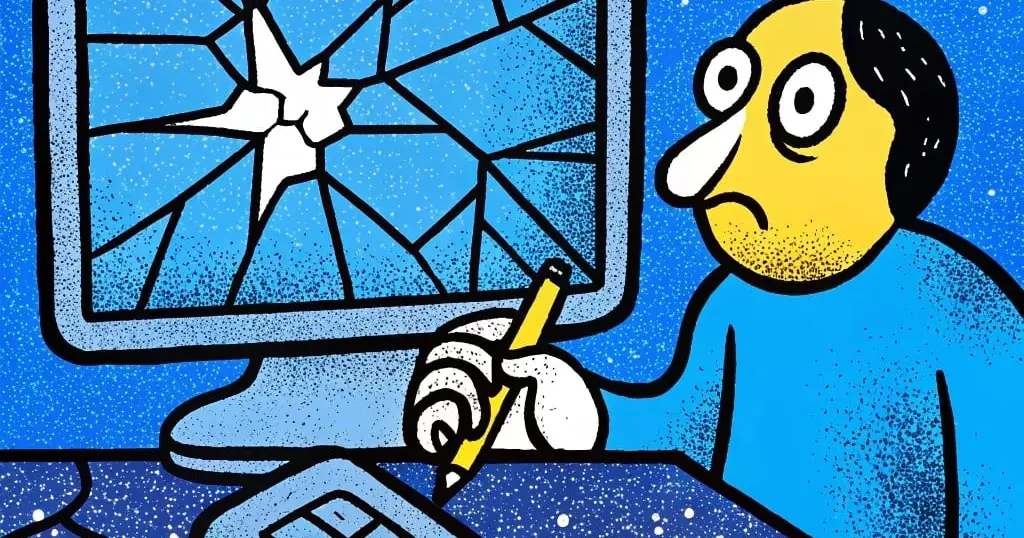
It didn’t come from a research book or one of those UI/UX Design Services pages. It started as a joke. We were trying to explain a weird UI bug and someone said, "Well, imagine you're on a cracked Android in bright sunlight with 4% battery..."
That was it. That was the moment the frame shifted.
What Is Fake Persona Testing?
It’s simple. You pretend to be someone else — a chaotic, slightly cursed someone else — and you use your own product as them.
Not based on demographics. Based on behaviours. Habits. Mindsets. And yes, old hardware.
The goal isn’t to be accurate. It’s to break your own assumptions.
Because when you design in a team, day in and day out, you unconsciously start designing for people like you. People who know what a kebab menu is. People who have fast Wi-Fi. People who trust autofill.
That’s how good intentions turn into fragile flows.
My Favourite Personas
Edith, 69
Retired librarian. Uses an old iPad Mini and doesn’t trust anything that autocompletes. She double-taps everything and always reads the small print. Edith doesn’t want to explore. She wants to finish her task and move on.
Dennis, 47
A Linux purist. Navigates everything via keyboard. Hates animation. If your nav hides behind an icon or a swipe, Dennis will not find it. He’ll think it doesn’t exist.
Joel, 34
One hand on a toddler, the other on his phone. 3G signal. In a car park. He’s in a rush. If your form breaks once, he’s done. No second chances.
Reese, 21
Digital native. Has 67 apps and 0 folders. Taps before reading. Assumes everything scrolls and swipes. If your UI doesn’t feel right in the first two seconds, Reese bounces.
What It Taught Me
Running this test — even just narrating the experience aloud with a persona in mind — surfaced problems I never saw in Figma. It made obvious the things I had stopped noticing.
The modal with a too-small close button.
The dropdown that hides in mobile.
The five-second delay on a key action.
I began seeing friction not as bugs, but as blind spots.
And something else happened, too: I started designing more generously. Less for myself. More for the people who don’t care about design, but need things to work.
How To Try It
Pick a live flow in your product
Choose a persona (or invent one)
Use your product as them
Speak out loud: what confuses them? What slows them down?
Fix just one thing
That’s it. Ten minutes. Zero budget. But it might just shift how your whole team sees the product.
A Reflection
Fake Persona Testing isn’t a framework. It’s not even a method, really. It’s a mindset.
It’s a reminder that most people who use what we build are not designers. They’re not product managers. They’re just people. Tired, distracted, on the move. Making dinner. Holding kids. On bad Wi-Fi.
If you can make something that works for them? You’re probably on the right track.
And if nothing else, this little test will make you laugh, squirm, and ask better questions.
It did for me.

Join Tanya on Peerlist!
Join amazing folks like Tanya and thousands of other builders on Peerlist.
0
5
0