

Voice AI Agents: The Smarter Way Businesses Communicate, Coordinate, and Get Work Done
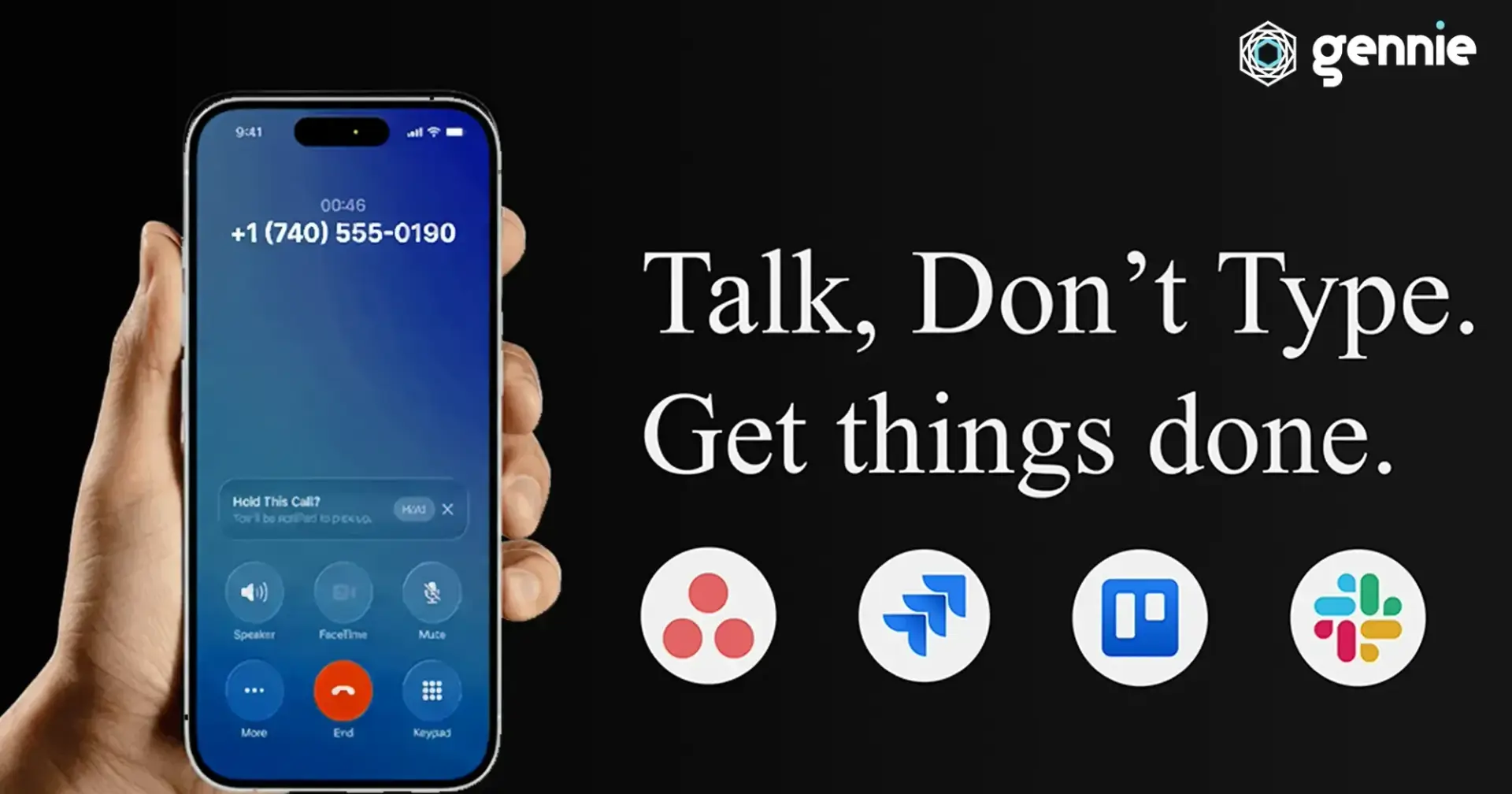
Every business runs on communication. Calls to customers, updates to teams, reminders, confirmations, coordination, and follow-ups, the daily flow of conversation keeps operations moving.
Yet communication is also where time disappears.
Employees type updates after meetings. Managers chase status reports. Teams switch between tools just to record what already happened. Important details get delayed because someone plans to “update it later.”
Modern organizations are addressing this problem with voice AI agent systems that listen, understand, and perform tasks automatically through natural conversations.
Instead of communicating about work and then documenting it separately, work now happens directly through conversation.
What Are Voice AI Agents?
Voice AI agents are intelligent assistants powered by speech recognition and natural language understanding. They can talk with people in real time, understand intent, and complete actions based on the conversation.
Unlike traditional IVR menus or chatbots that rely on rigid commands, voice AI agents behave more like a human assistant. You simply speak naturally, and the system understands what you want to accomplish.
For example:
You say a task update aloud.
The system records it.
The relevant tools update automatically.
No typing. No logging in. No manual documentation.
They turn communication into execution.
Why Businesses Are Rapidly Adopting Voice AI Agents
The biggest operational inefficiencies rarely come from complex work. They come from repetitive micro-tasks, updating systems, recording notes, confirming details, and coordinating people.
Voice AI agents eliminate small delays that compound into significant productivity losses.
Faster execution
Speech is significantly faster than typing. What takes minutes to document can be completed in seconds.
Reduced administrative workload
Employees spend less time reporting work and more time doing it.
Real-time accuracy
Information is captured immediately instead of relying on memory later.
Continuous availability
Voice AI agents operate 24/7 without fatigue or scheduling constraints.
Consistent communication
Every interaction follows the same structured process, improving clarity and accountability.
For leaders, this means visibility. For teams, it means less friction.
Real-World Impact Across Industries
The value of voice AI agents isn’t limited to one sector. Their benefits scale across any organization that relies on coordination.
In healthcare environments, staff can capture updates during patient movement rather than documenting afterward, reducing delays and missed details.
In financial operations, teams can record compliance and verification steps instantly, improving audit reliability and turnaround time.
Technology and SaaS teams can update project workflows during meetings without interrupting the discussion to type notes.
Logistics and field teams can report progress from any location, even without internet access, so that central systems always reflect real-world activity.
Executives and managers can manage priorities while traveling, and they can issue instructions once instead of repeating them across multiple tools.
Across industries, the outcome is the same: communication becomes action.
Moving from Tool-Based Work to Conversation-Based Work
Traditional workflows require multiple steps:
You complete a task.
You remember to document it.
You open a tool.
You type the update.
Voice AI agents remove the extra layers:
You complete a task.
You say it.
It’s done.
This shift significantly improves productivity. Instead of forcing people to adapt to software, software adapts to human behavior.
People naturally talk.
Now systems naturally listen.
How Gennie Brings Voice AI Agents Into Everyday Work
Platforms like Gennie are designed around this principle, enabling users to operate their digital workspace via voice.
Gennie is a voice-powered assistant that enables teams to interact with their existing tools via spoken commands or phone calls. Rather than opening multiple apps, users can simply communicate their needs.
They can assign tasks, send updates, request information, or coordinate workflows by speaking naturally. The system understands the request and performs the action instantly.
This removes a major barrier to productivity: the gap between communication and documentation.
Instead of remembering to update systems, the update happens during the conversation itself.
Why This Matters for Leaders and Growing Teams
For founders and executives, clarity drives decision-making.
For managers, visibility drives accountability.
For teams, simplicity drives adoption.
Voice AI agents support all three.
They provide structured updates without forcing employees to change behavior. People don’t need training to speak; they already do it all day.
As organizations grow, communication volume grows faster than headcount. Voice automation allows operations to scale without increasing administrative overhead.
That’s not just convenience.
That’s operational leverage.
Designed Around Helpful Content and Real Value
The purpose of voice AI agents isn’t to replace human communication; it’s to enhance it.
They reduce repetitive effort, improve accuracy, and help teams focus on meaningful work. Rather than introducing complexity, they simplify interaction with technology.
This aligns with modern best practices: tools should solve real problems, not add features for their own sake.
Businesses that prioritize clarity and efficiency naturally build stronger teams and better customer experiences.
The Future of Work Is Conversational
Work is becoming more mobile, distributed, and real-time. The interface of productivity is shifting from screens to conversation.
Instead of asking employees to adapt to software workflows, organizations are adopting systems that adapt to human behavior.
Voice AI agents represent this transition. They allow businesses to move faster while keeping processes structured and reliable.
The question is no longer whether communication should be automated, but whether documentation should remain manual.
Final Thoughts
Voice AI agents transform everyday communication into immediate action. They remove repetitive admin work, improve accuracy, and help organizations operate with clarity and speed.
By bridging conversation and execution, they enable teams to focus on decisions, creativity, and service rather than documentation.

Join Vishal on Peerlist!
Join amazing folks like Vishal and thousands of other builders on Peerlist.
0
1
0