

What Medical EMR Software Really Means and Why It Matters
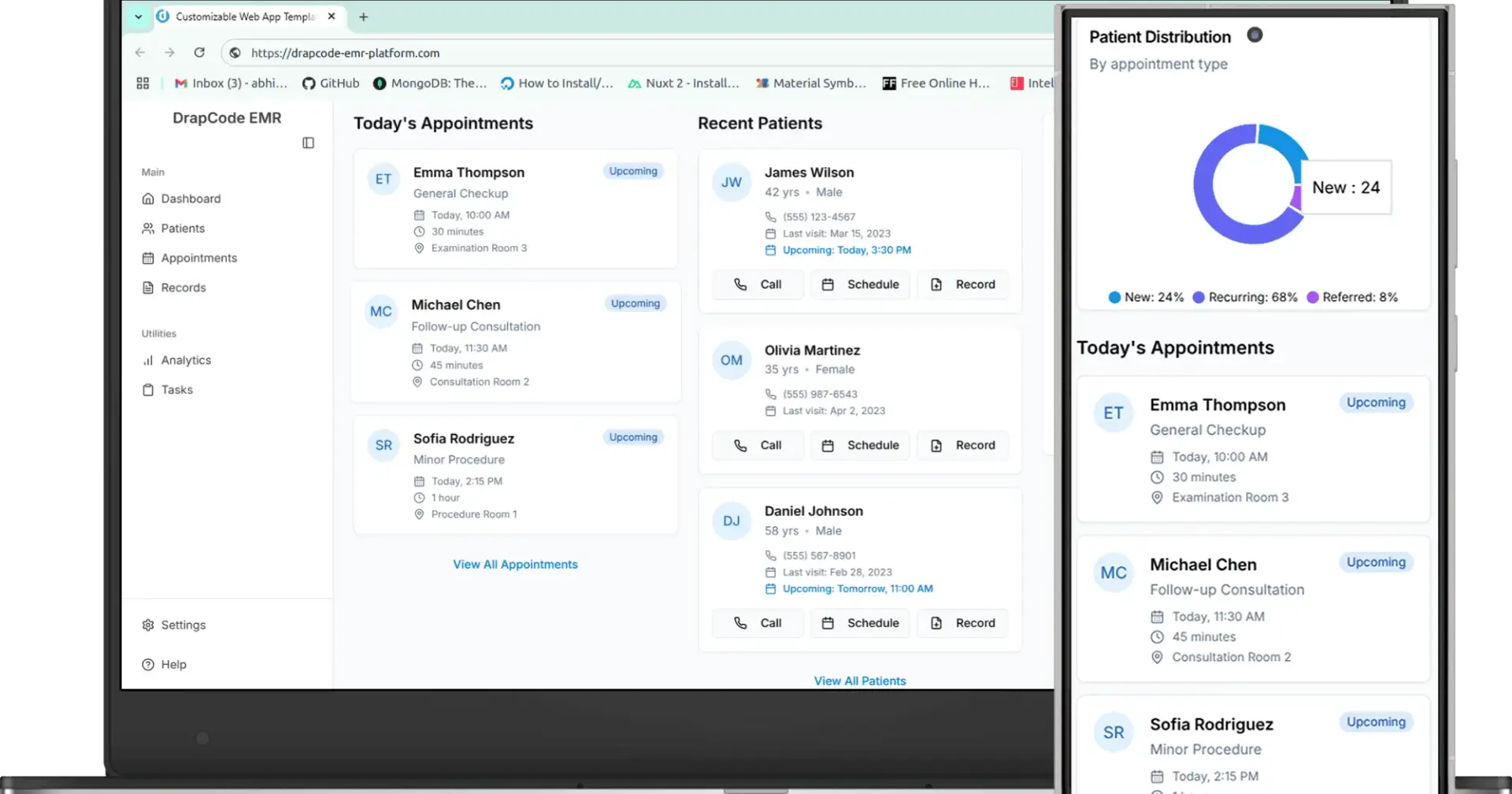
In modern healthcare, the move from paper records to digital systems isn’t just a convenience; it’s essential for quality, safety, efficiency, and patient satisfaction. At the heart of this shift is medical EMR software, which plays a central role in managing patient data, workflows, billing, and many other aspects.
This article explores what medical EMR software is, its main benefits, key features, common challenges, and best practices. It also explores how platforms like DrapCode are facilitating the adoption or development of robust medical EMR software by healthcare providers more effectively.
What is Medical EMR Software?
“EMR” stands for Electronic Medical Record. A medical EMR software system digitizes the patient record—a collection of notes, diagnoses, test results, medications, allergies, treatment plans, and more. Unlike broader EHR (Electronic Health Record) systems, which often emphasize sharing data across multiple organizations or providers, EMRs are typically focused on use within a single clinic, hospital, or health system.
Medical EMR software includes tools for:
Storing and retrieving patient medical histories and charting visits
Managing lab and diagnostic result integration
Facilitating medication prescribing and tracking
Handling scheduling, billing integration, and administrative workflows
Providing decision-support (alerts, reminders) to reduce risks
Top Benefits of Medical EMR Software
When implemented correctly, medical EMR software brings substantial advantages for both providers and patients. Some of the most important benefits:
Improved Quality of Care
Having accurate and up-to-date patient data helps clinicians to make more informed decisions. EMR systems also offer clinical decision support, drug interaction warnings, allergy checks, and reminders that reduce medical errors.Increased Efficiency & Time Savings
Tasks that once required manual effort, such as chart searches, paper filing, and transcription, are significantly streamlined. Automated documentation, templates, scheduling tools, and integrated billing reduce administrative overhead.Better Patient Access & Engagement
Many medical EMRs include patient portals, where patients can view lab results, past visits, prescriptions, and communicate with providers. Having records accessible improves transparency and fosters engagement.Data Security & Compliance
EMR software typically offers secure storage, encryption, audit trails, user authentication, and access controls. These help meet legal regulations, such as HIPAA in the U.S. and similar privacy laws elsewhere.Interoperability & Integration
A well-built EMR can integrate with labs, imaging, pharmacies, billing systems, remote monitoring tools and more. That integration means fewer manual data entries, fewer errors, and smoother workflows.Cost Savings & Scalability
By reducing paper costs, physical storage, transcription fees, and the time spent on clerical tasks, EMR software reduces long-term costs—cloud-based EMRs further lower hardware and maintenance overhead.
Key Features to Look for in Medical EMR Software
If you’re evaluating medical EMR software (or planning to build one), these are features that healthcare providers frequently need:
Comprehensive Medical Charting – including history, allergies, medications, diagnoses, and treatments
Lab & Imaging Integration – automatic incorporation of test results
Electronic Prescribing (E-Prescribing) – sending prescriptions securely to pharmacies
Scheduling & Workflow Tools – appt. management, reminders, staff communication
Billing & Claims Integration – matching coding, handling claims and denials efficiently
Patient Portal – visibility for the patient, communications, perhaps telehealth integration
Security & Privacy Features – role-based access, audit logs, encryption, compliance support
Analytics & Reporting – usage, clinical outcomes, patient population health trends
Challenges in Implementing Medical EMR Software
Even with all its advantages, adopting or building medical EMR software comes with challenges. It’s helpful to understand them to avoid pitfalls.
Implementation Costs & Training
Initial set-up, data migration, and training of clinical/staff users can be time-consuming and expensive.Usability & Workflow Fit
If the system doesn’t match how clinicians work, it can slow them down rather than help. Poor design or over-complexity are common complaints.Data Interoperability Issues
Different systems often use different data formats, which complicates the exchange of patient data across clinics or with other providers.Maintaining Compliance & Security
Regulatory requirements change; cyber-threats evolve. Software that’s secure today needs regular updates, patches, and reviews.Resistance to Change
Staff accustomed to paper or older digital systems may resist transitioning. Adequate change management is essential.
How to Select or Build Effective Medical EMR Software
Taking into account the benefits and challenges, here are some best practices:
Start with Clinical & User Needs
Involve doctors, nurses, admin staff, billing personnel, and patients in understanding what workflows are essential.Ensure Scalability
The software should be able to handle growth in patient numbers, accommodate additional modules, and integrate with remote or telemedicine tools.Choose Secure & Compliant Architecture
Use encryption, secure backups, precise access controls, and audit logs. Make sure the software or platform supports meeting privacy laws relevant to your region.Focus on Interoperability
Support standard protocols (HL7, FHIR), integrate well with labs, imaging, pharmacies, and payment platforms.Provide Training & Support
Users must understand not just “how,” but “why” certain features are there. A strong support channel helps adoption and problem-solving.Measure Impact
Define metrics like reduced errors, faster billing, patient satisfaction, and staff time saved. Collect feedback and adjust the system over time.
Case Examples / Real-World Value
A clinic using EMR software saw fewer duplicated tests and faster turnaround on lab results because of the integrated lab module.
A small practice reduced billing rejections by incorporating a claims workflow and real-time validation (checking coding), saving staff hours.
Patients appreciated being able to view their test results and previous visit notes via a patient portal, which reduced the need for repeated phone calls or visits for clarification.
How DrapCode Relates to Medical EMR Software
Platforms like DrapCode can simplify the building and deployment of medical EMR software, especially for organizations without large in-house development teams. By offering modular workflows, secure data handling, and options for integration, DrapCode enables healthcare providers to focus more on patient care rather than reinventing their infrastructure.
Using a flexible platform, clinics can get medical EMR software that adapts to their needs, whether it’s integrating billing, handling medical charting, or supporting patient portals with less overhead.
Conclusion
Medical EMR software isn’t just a modern upgrade; it’s a cornerstone of efficient, safe, and patient-centric healthcare. Although it involves investment, proper planning, and ongoing commitment, the benefits in terms of care quality, cost savings, compliance, and satisfaction are compelling.
If your healthcare facility or practice is looking to adopt or build medical EMR software, prioritize clear goals, security, interoperability, usability, and scalability. Platforms like DrapCode offer a valuable avenue for building robust EMR systems that align with clinical and operational realities.

Join Vishal on Peerlist!
Join amazing folks like Vishal and thousands of other builders on Peerlist.
0
0
0