

AI-Powered Chatbot Takes Over WhatsApp Sales
Artificial intelligence replaces sales team in loyalty platform, driving international growth. Experts highlight progress but also warn of risks to customer experience.

Smartbis, a Brazilian customer loyalty platform with a strong presence in Latin America, has deactivated its human sales team and fully migrated its commercial operations to an AI-powered chatbot operating exclusively via WhatsApp. The move, considered strategic by the company, is driven by its proprietary Whatsplaid GPT system, built on OpenAI technology and trained for digital channel conversions and support for loyalty programs, cashback, referral marketing, and membership clubs.
The decision was based on internal data showing that approximately 80% of cancellations stemmed from misaligned expectations created during human interactions. With automation, the company reports a significant reduction in churn and increased adoption of features like points programs and customer referrals.
The AI-driven operation is supported by the WPP Marketing system, which handles automated customer engagement campaigns, including referral programs, digital marketing, and data-driven segmentation across platforms like Google Ads.
Results Observed After the Shift
In the first three months, Smartbis reported a decrease in cancellations, a 15% increase in technical support tickets, a 10% rise in public complaints, and a 2% churn of users who preferred human interaction.
Nevertheless, an internal survey conducted with active users in Q2 2025 revealed that around 40% of respondents did not realize they were interacting with an automated agent — which the company cites as evidence of an effective and nearly seamless transition in the customer journey.
Global Trend: Efficiency with Limits
According to the report The State of AI – How Organizations Are Rewiring to Capture Value (McKinsey, 2025), over 70% of companies already use generative AI in at least one business area, particularly in marketing, sales, customer service, and product development. The study highlights that organizations redesigning workflows with AI are seeing the most significant operational impact. Consulting firm SuperAGI also estimates that automating contact centers could save up to $80 billion in operational costs by 2026.
On the other hand, there are cautions regarding the limits of automation. Christina Inge, Harvard Extension School lecturer and author of Marketing Analytics: A Comprehensive Guide (FlatWorld, 2022), notes:
“AI enhances personalization but does not replace empathy in contexts that require emotional understanding or complex decision-making.”
Hybrid models, which integrate automation with human intervention based on demand profiles, are being adopted by companies seeking a balance between efficiency and empathy in customer service.
International Expansion and Platform Evolution
The shift to automation has also paved the way for the platform’s international expansion. Now operating in countries such as Portugal, Spain, Italy, Angola, and Mozambique, Smartbis offers multi-language support, preserves conversation histories, and operates continuously without overloading the technical team.
Internally, the company leveraged this shift to redesign its offering. Low-adoption features were discontinued, while core services — such as digital loyalty cards, rewards programs, and cashback — were enhanced. According to company data, over 60% of recent reviews highlight ease of use as a positive differentiator.
Balancing Efficiency and Empathy
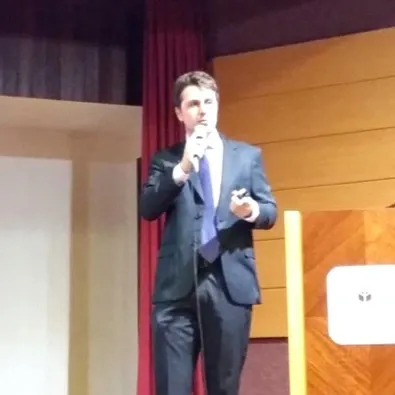
Eduardo Thomas, founder of Smartbis, stated: “The transition to automated service marked a new chapter for the company, especially by enabling scale and control in the customer journey with loyalty marketing.” In his statement to the press, Thomas also emphasized that while automation delivers gains in scale, cost, and standardization, the model requires strategic oversight to ensure the customer experience remains humanized, empathetic, and relevant.
The full adoption of AI in sales represents a new phase in digital service. Striking a balance between technological efficiency and human connection is set to become one of the key drivers in evolving consumer experiences in the years to come.
Join Eduardo on Peerlist!
Join amazing folks like Eduardo and thousands of other builders on Peerlist.
2
8
0