

I Googled GhostPrompter and Found It on Wondershare Filmora
An unexpected Google search led me to two independent Wondershare Filmora mentions—and a reminder of why discoverability matters.
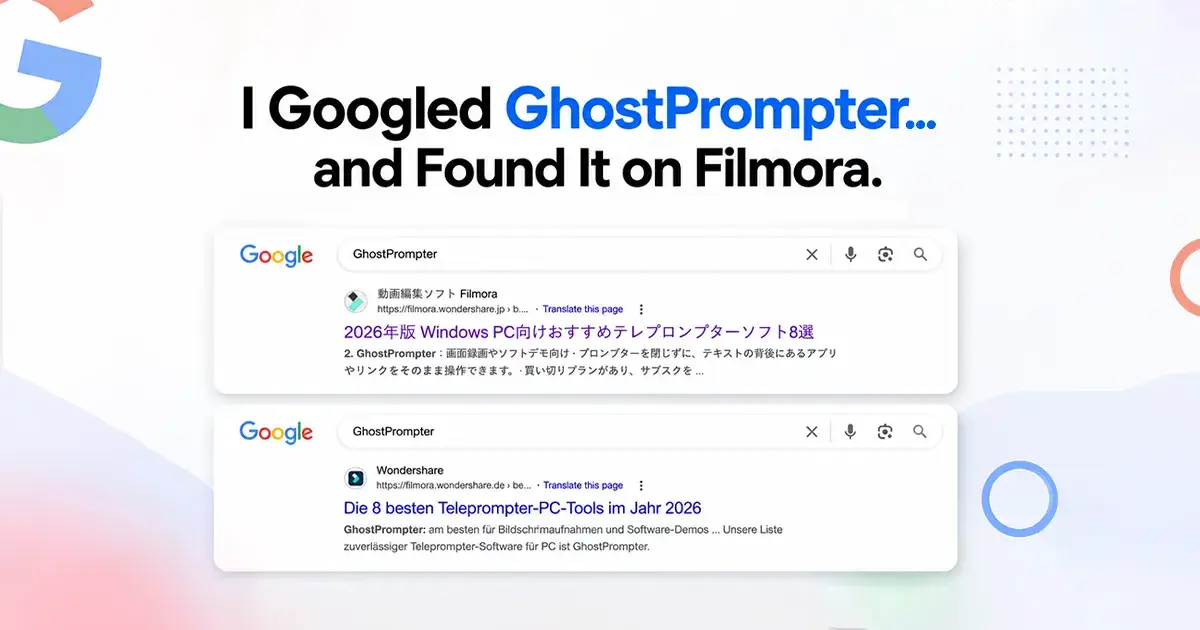
I have a habit of occasionally searching for GhostPrompter on Google. Part curiosity, part professional habit. I'm always interested in seeing where it appears and who's talking about it, not because I'm hoping to find anything specific, but because it's a habit left over from the early days when every mention felt rare enough to bookmark. Most of the time it's the same handful of results: Reddit comment where someone asked if GhostPrompter was worth trying and someone else answered honestly.
That day was no different at first. I typed the name in, half-distracted, coffee going cold, thinking about a bug I still hadn't fixed. I wasn't checking rankings. I wasn't tracking mentions for any campaign. I was just curious, the way you're curious about whether anyone's talking about the the product you've spent a lot of time working on.
I scrolled past the usual results without much thought. And then one entry didn't match the pattern I'd gotten used to.
The Search Result That Made Me Stop
It was a Wondershare Filmora article in Japanese, and GhostPrompter was mentioned in it.
I sat with that for a second before I even clicked through. Filmora is a video editing tool used by a huge number of creators, and I had never reached out to them, never submitted GhostPrompter to any list, never had a single email exchange with anyone on their editorial team. So my first reaction wasn't excitement. It was confusion. I actually wondered, briefly, if I was misreading the page, or if this was some kind of scraped content that had picked up the name incidentally.
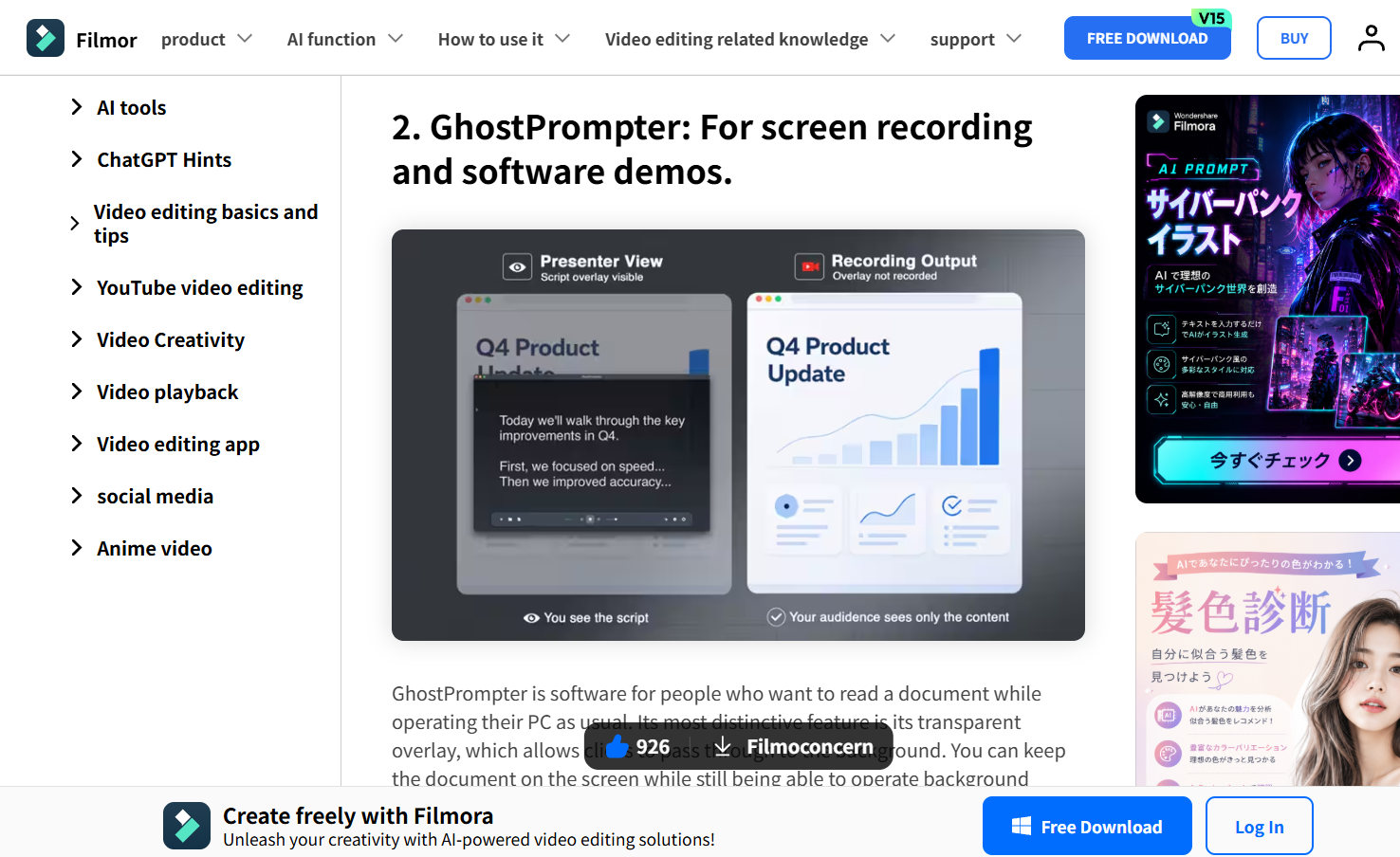
It wasn't incidental. It was a genuine mention, written the way you'd write about a tool you'd actually tried, not a tool you were paid to mention. I read it a few times, partly because my Japanese comprehension isn't great and partly because I think I just needed to confirm to myself that it said what I thought it said.
I found the piece the way anyone finds anything now, mid-search, not through a notification or an alert I'd set up. Sat there in my results like it had been there for a while, quietly existing, completely indifferent to the fact that I had no idea it existed until that moment.
I didn't post about it. I didn't screenshot it for social media that day. I just sat there for a minute, recalibrating what I thought I knew about who was using this thing I'd built.
Then I Found Another One
A few weeks later, doing the same aimless search, I found a second one. This time it was a German Filmora article, different author, different angle, same basic fact: GhostPrompter mentioned as something worth knowing about, again without a single conversation between us and them.
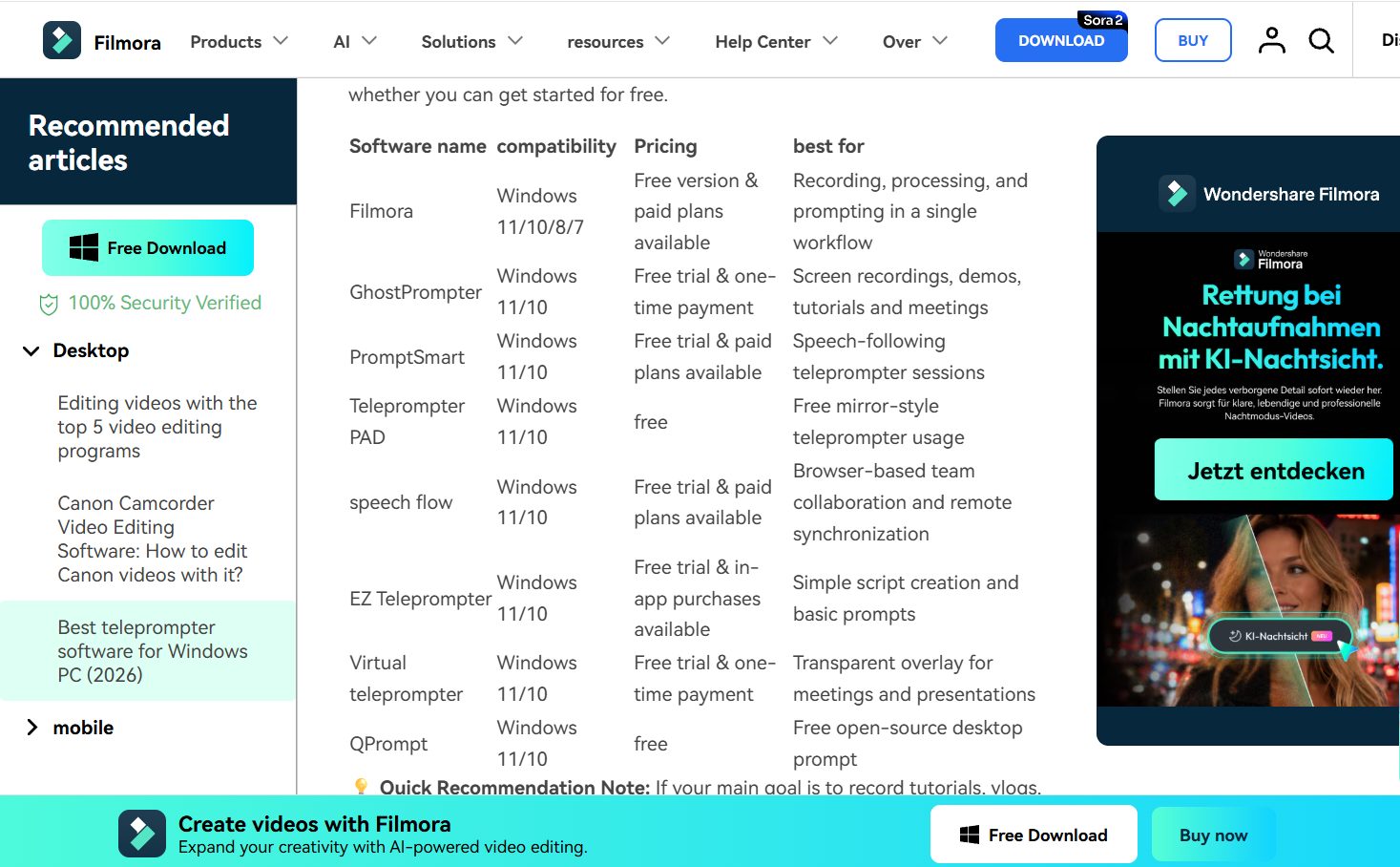
The second one hit differently than the first. One mention, I could rationalize as a fluke, a coincidence, an editor who happened to stumble onto the same the product I'd spent so much time working on. Two mentions, from two different regional teams, in two different languages, meant something else was going on. It meant this wasn't a one-off. Someone, somewhere in that organization, had found GhostPrompter useful enough, or notable enough, to write about more than once, without ever needing my input to do it.
I remember opening a spreadsheet I keep, half-jokingly, called "mentions," and adding both entries. Then I closed the laptop and went and did something unrelated, because I didn't quite know what to do with the feeling yet.
Why This Meant More Than I Expected
I've had product mentions before that came through the usual channels: a submission to a directory, a cold outreach that landed, a friend who wrote something nice. Those all felt good in a straightforward way. You did the work of getting the mention, and the mention arrived.
This was different because I hadn't done the work of getting it, at least not in any way I could point to directly. What I had done was build something, keep it working, and pay attention to search visibility the way you're supposed to if you want to be findable at all. Somewhere in that ordinary, unglamorous maintenance, GhostPrompter became discoverable enough, and apparently useful enough, for an editorial team at a company with real reach to find it on their own and decide it was worth writing about.
There's a particular kind of trust embedded in that. Editorial teams at established companies don't need to mention smaller tools. They have plenty to write about. When they choose to mention something they found rather than something they were pitched, it means the tool passed some kind of test I never got to see. I didn't get to make a case for GhostPrompter. It just had to hold up on its own.
That's the part that stuck with me. Recognition you ask for tells you people are willing to say yes when you ask. Recognition you didn't ask for tells you something closer to the truth.
The Lesson Wasn't "Get Featured"
I want to be careful here, because it would be easy to turn this into a lesson about chasing press or optimizing for editorial pickup, and I don't think that's actually what happened, or what I'd want anyone to take from it.
I didn't do anything designed to get featured by Filmora. I didn't have a PR strategy aimed at video editing companies. What I did was keep shipping updates, keep the product's SEO fundamentals in reasonable shape, keep fixing the things users complained about, and keep the site structured in a way that made sense to both people and search engines. None of that was done with Filmora in mind. It was done because that's what you do if you want a product to survive past its first few months.
You can't really engineer this specific outcome. You can put a product in a position to be found, and you can make sure that when it is found, it holds up under scrutiny. But the actual discovery, the moment someone on an editorial team decides your tool is worth their readers' time, is out of your hands. I think that's the honest version of the lesson: build something that survives contact with a stranger's judgment, and let go of trying to control who makes that judgment or when.
Recognition Is Nice, But User Feedback Matters More
Here's the thing I keep coming back to, though. As good as it felt to find those two articles, neither of them taught me anything about GhostPrompter that I didn't already know from users.
The emails I get when something breaks teach me more than a mention ever could. The bug reports, even the terse, slightly annoyed ones, tell me exactly where the product still falls short. The feature requests, especially the ones I disagree with at first and come around to later, shape the roadmap in ways no editorial mention ever will. A stranger writing a paragraph about your product in another language is a nice moment. A user writing three sentences about why something didn't work for them is instructions.
I think it's tempting, when something like this happens, to treat it as validation that settles the question of whether the product is good. It doesn't settle anything. It's a data point, a genuinely encouraging one, but it doesn't replace the slower, less flattering work of listening to the people actually using the thing every day. If anything, finding those mentions made me want to be more responsive to user feedback, not less, because it was a reminder that people are watching and forming opinions about GhostPrompter even when they never tell you directly.
A Closing Thought
I still haven't reached out to anyone at Filmora, and I'm not sure I will. Part of me likes that the whole thing happened without any effort on my part to make it happen. It feels more honest that way, like a small piece of evidence that the work itself was doing something, even on the days it didn't feel like it.
The Filmora mentions were unexpected.
The real motivation is still the same as it was on day one:
Building something useful enough that people recommend it—even when you've never spoken to them.

Join Eldho on Peerlist!
Join amazing folks like Eldho and thousands of other builders on Peerlist.
3
11
0