

Building “Slow Tech”: Why we intentionally made our AI pipeline take 7 days
In an era of 5-second AI generation, here is why adding friction and a human-in-the-loop became our most important product feature.
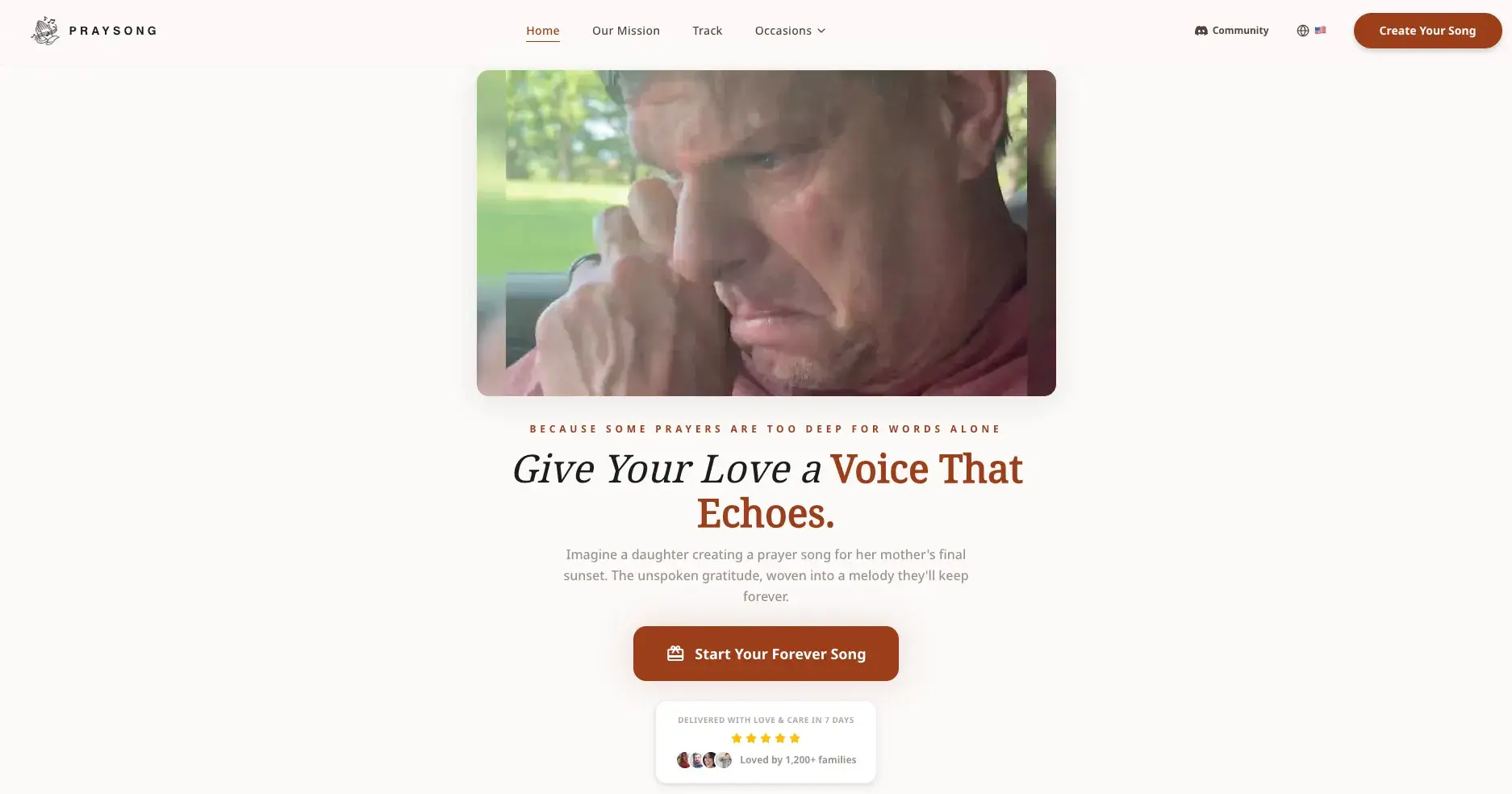
Hey Peerlist community! 👋 We just submitted PraySong to Launchpad, and I wanted to share the behind-the-scenes of why and how we built it.
Right now, the Generative AI space is obsessed with speed. Tools like Suno and Udio can churn out a technically perfect pop track in 5 seconds. So, why did we build an AI-assisted music platform that takes 7 days to deliver a single song?
Here is our journey of building a "Digital Heirloom" studio and leaning into friction as a feature.
1. The Problem: AI’s "Sincerity Gap"When we started exploring the $30B spiritual, memorial, and legacy market, we realized something quickly: 5-second AI generation feels like an insult when dealing with grief or a 50th wedding anniversary.
We had a user, Rebecca, who wanted to write an apology and blessing to her three kids—things she couldn't say out loud for a decade. A generic, instant prompt-to-song output wouldn't cut it. A machine can perfectly mimic the pitch of a human voice, but it cannot yearn. AI is great at generating noise, but terrible at sincerity.
2. Our "Inefficient" Hybrid StackTo solve this, we decided to build a "Human-in-the-loop" pipeline. We didn't build a wrapper; we built a studio workflow.
Here is how our stack looks today:
• The Input (LLMs): We use fine-tuned LLMs to process the user's raw, often chaotic emotional stories (like a 28-year love story) and structure them into a coherent thematic arc and draft melody foundation.
• The Craft (Human Lyricists): Real humans take the AI's structural output and find the poetry. They ensure the lyrics don't sound like a generic ChatGPT response.
• The Delivery (Studio Vocalists): We strictly refuse to use synthetic voices for the final delivery. We bring in professional studio vocalists to record the tracks.
3. Friction as a FeatureBy slowing the process down to 7 days, something magical happened. The waiting period actually increased the perceived value of the product.
For high-stakes life events like Baptisms or Memorials, users want to know that time, effort, and human soul went into their creation. We managed to take a traditional custom studio process that usually costs $1,000+ and crushed it down to $77, without losing the human touch.Last month, we helped over 1,200 families lock in their digital legacies.
4. What’s Next?
We are continuously refining how our LLMs interface with our human artists to make the workflow smoother without compromising the "soul" of the output.
I’d love to hear from other builders here: How are you balancing AI efficiency with human authenticity in your products? (P.S. If you want to hear what our hybrid approach sounds like, check out our Launchpad submission or the audio stories on our site!)

Join Elinda on Peerlist!
Join amazing folks like Elinda and thousands of other builders on Peerlist.
0
1
0