

Why Poker and Bridge Cards Have Different Sizes
Playing Card Dimensions
Introduction
If you’ve ever played cards, you may have noticed that poker and bridge cards have different sizes. But why is that? The size of a playing card isn’t just aesthetic—it affects handling, shuffling, and even gameplay strategy. In this article, we’ll explain the reasons behind these differences and help you choose the right card size for your games.
Standard Playing Card Sizes
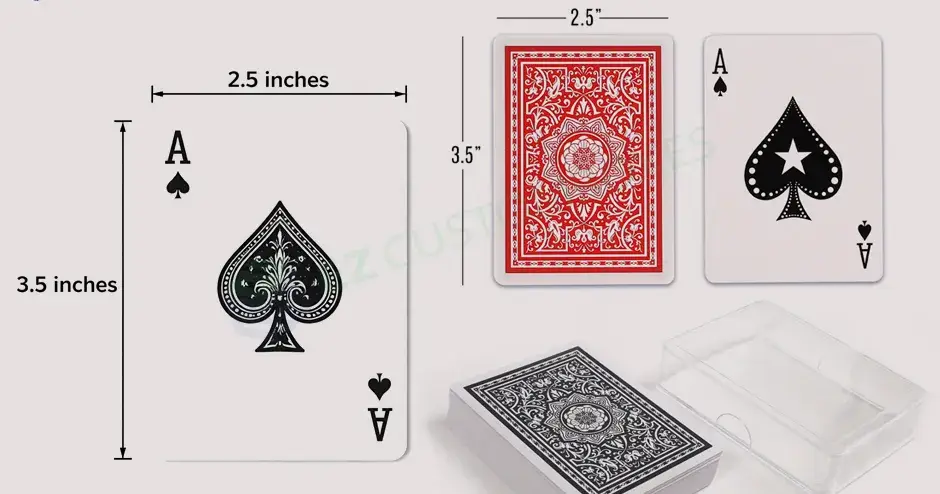
Playing Card Dimensions, let’s look at standard sizes:
Poker cards: Typically 2.5 x 3.5 inches (63 x 88 mm)
Bridge cards: Slightly narrower at 2.25 x 3.5 inches (57 x 88 mm)
Key Takeaway: Both types share the same height, but the width varies, making bridge cards easier to hold in larger hands or when holding multiple cards.
How Poker and Bridge Cards Differ
1. Width and Handling
Poker cards: Wider design allows easier spreading on tables for larger groups or casino play.
Bridge cards: Narrower shape fits comfortably in hand, especially useful when holding 13 cards in bridge.
2. Gameplay Considerations
Bridge requires holding many cards at once, so a slimmer design reduces hand fatigue.
Poker often involves fewer cards per hand, so wider cards enhance visibility and table presentation.
3. Shuffling and Dealing
Wider poker cards make shuffling easier for casinos and home games with many players.
Narrow bridge cards facilitate faster and more comfortable multi-hand dealing.
Why the Differences Exist
Historical reasons: Card manufacturers designed bridge cards for tournament play, focusing on ergonomics.
Ergonomics: Slimmer bridge cards are easier for long games.
Gameplay mechanics: Poker emphasizes table display and readability; bridge emphasizes hand management.
Pro Tip: When buying cards, always consider both your game type and personal comfort.
Choosing the Right Card Size
For Poker: Go for standard poker size (2.5 x 3.5 inches) for comfort and professional feel.
For Bridge: Use narrower bridge cards (2.25 x 3.5 inches) to easily hold multiple cards.
Custom or Collector Cards: Consider material, thickness, and finish, which can impact feel and durability.
FAQ: Why Poker and Bridge Cards Have Different Sizes
Q1: What are the exact dimensions of poker and bridge cards?
A1: Poker cards sizes are usually 2.5 x 3.5 inches; bridge cards are slightly narrower at 2.25 x 3.5 inches.
Q2: Can you use poker cards for bridge?
A2: Yes, but they may be harder to handle when holding many cards at once.
Q3: Why are bridge cards narrower than poker cards?
A3: To make it easier to hold 13 cards in hand during bridge games without fatigue.
Q4: Do card materials affect gameplay?
A4: Yes, coated or plastic cards shuffle better and last longer, improving game experience.
Q5: Are card sizes regulated for tournaments?
A5: Yes, most official bridge and poker tournaments specify standard card dimensions.
Conclusion
Understanding why poker card dimensions helps you pick the right deck for comfort and gameplay. Wider poker cards enhance table display, while narrower bridge cards improve hand management.
Take Action: Next time you buy a deck, choose the size that fits your game and playing style to maximize enjoyment and performance.

Join Eric on Peerlist!
Join amazing folks like Eric and thousands of other builders on Peerlist.