

The Barrier Was Never the Technology
by Spencer Claydon
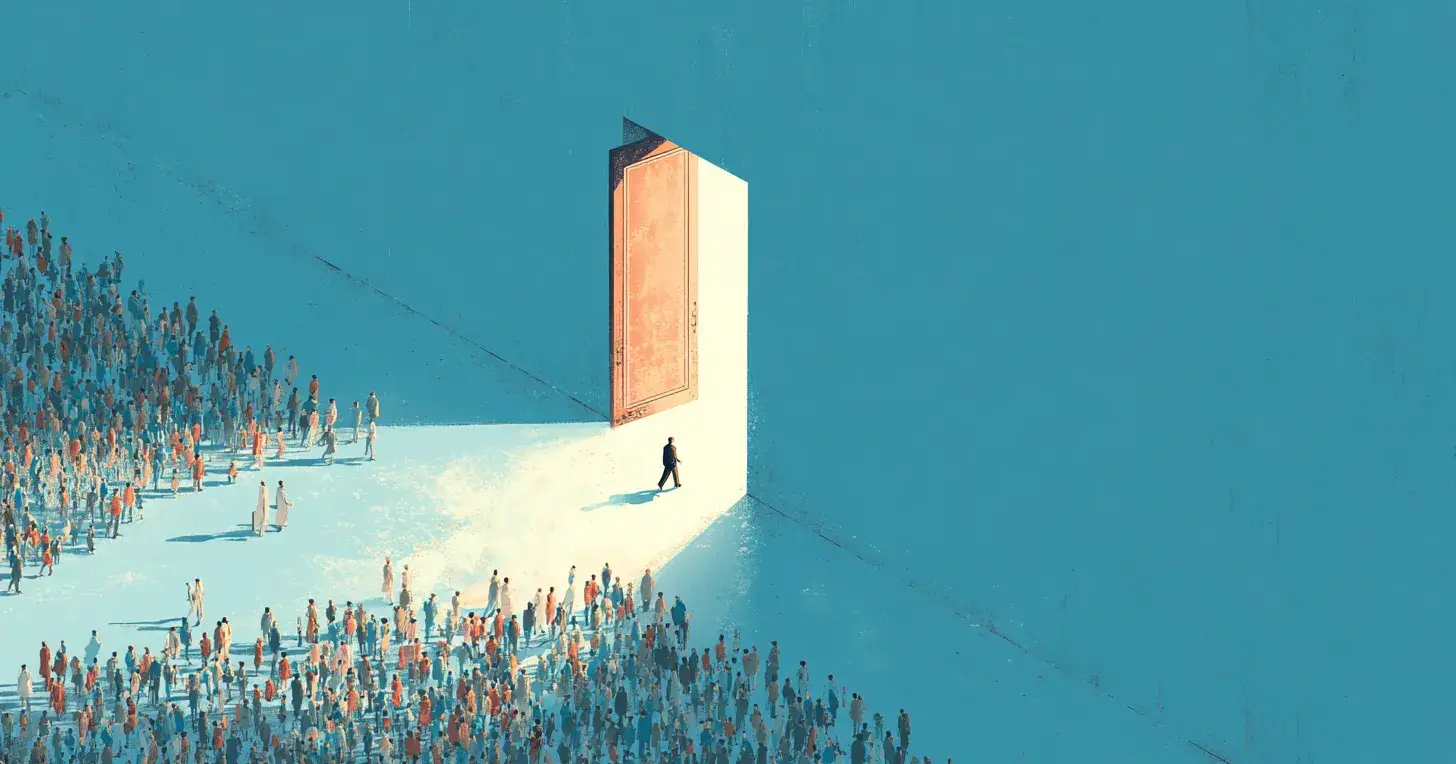
Business has never required you to be the technician. It required you to want to run a business. Those are two very different things.
You could start a restaurant without being a chef. You could launch a DTC brand without being an ecommerce expert. You could own a dental practice without being a dentist. You could run a construction company without swinging a hammer. You could open a gym without being a personal trainer.
The technician wants to do the craft. The business owner wants to run the operation. Some people are both. Most aren't. And every time a new tool makes the craft easier, a flood of people discover they wanted the craft, not the operation.
The Shopify Wave
When Shopify made it easy to launch an online store, millions of people did exactly that.
No coding. No warehouse. No upfront inventory if you didn't want it. Just pick a template, connect Stripe, and you're in business. The whole thing could be done in a weekend.
YouTube filled up with tutorials. Courses promised six-figure dropshipping empires. Success stories spread everywhere. The message was clear: the barrier is gone, now anyone can do this.
Most of those stores are gone now.
Not because Shopify was bad. The tool worked exactly as advertised. The problem was that people wanted a store, not a business.
A store is a thing you set up. A business is a thing you run. The difference is everything that happens after launch.
Finding customers when you have zero brand recognition and a $200 ad budget. Managing margins when Facebook CPMs spike 40% in Q4. Handling returns from customers who ordered the wrong size and blame you. Iterating on products based on reviews that hurt to read. Staying solvent when sales dip for three months and you don't know why. Negotiating with suppliers who know you need them more than they need you. Dealing with chargebacks from fraudsters. Answering customer emails at 10pm because you can't afford support staff. Figuring out why your conversion rate dropped and realizing you have no idea.
Shopify removed the technical barrier to launching a store. It didn't remove any of that.
The people who built real businesses on Shopify were the people who were ready for that part. They didn't fall in love with the launch. They fell in love with the game.
The Alibaba Wave
Same story, different chapter.
Alibaba made sourcing products from China trivially easy. Suddenly anyone could find a manufacturer, order 500 units of something, slap a label on it, and sell it on Amazon FBA. Let Amazon handle fulfillment. Let Amazon handle customer service. Just collect the checks.
The playbook spread everywhere. YouTube videos with thumbnails showing revenue screenshots. Courses priced at $997 promising freedom and passive income. Gurus explaining exactly how to find winning products.
Millions tried. A handful built real businesses. Most discovered that sourcing was the easy part.
The hard part was differentiation. How do you stand out when fifteen other sellers are selling the exact same garlic press from the exact same factory in Shenzhen? You can't compete on product. You can only compete on listing optimization, review velocity, and ad spend. That's a game of inches against people willing to go negative on margins for months to win market share.
The hard part was inventory management. Order too little and you stock out, tank your ranking, and lose the momentum you spent months building. Order too much and you're paying Amazon storage fees while your cash sits in cardboard boxes.
The hard part was cash flow. Your manufacturer wants 30% upfront and 70% on shipment. Amazon pays you two weeks after the customer orders. Your shipment takes six weeks on the water. That's real money floating in the system for months. One bad container, one customs delay, and your whole operation seizes up.
The hard part was Amazon itself. They can suspend your listing because a competitor filed a fake IP complaint. They can change the fee structure and wipe out your margins. They can decide your product category needs gating and suddenly you need approval you can't get. You're building on rented land and the landlord is capricious.
Alibaba removed the sourcing barrier. It didn't make the business easy.
The Dropshipping Wave
Dropshipping was supposed to be the ultimate low-risk model.
No inventory. No upfront cost. Customer orders from your store, you order from the supplier, supplier ships directly. You're just the middleman taking a cut.
The math looked beautiful on paper. The reality was brutal.
Shipping times from China meant customers waited three weeks for their stuff. By the time it arrived, they'd forgotten they ordered it, filed a chargeback, and left a negative review. Support tickets piled up with angry people asking where their package was.
Returns destroyed margins. When someone wants to return a $15 product that shipped from Shenzhen, you just refund them and eat the cost. You can't have them ship it back. Now that sale cost you money.
Competition was immediate. Any product that worked got copied within days. You'd find a winning Facebook ad, start scaling, and suddenly five other stores were running the same product with the same creative. CPMs spiked, margins collapsed, and you were back to testing.
The people who built real businesses in dropshipping did one of two things: they moved to US suppliers and accepted lower margins for faster shipping, or they found winning products and then bought inventory to actually control the experience. Either way, they graduated from the "pure" dropshipping model into something that required real operational skill.
The barrier to starting was zero. The barrier to building something sustainable was the same as it ever was.
The Print-on-Demand Wave
Print-on-demand was the creative person's entry into ecommerce.
Upload designs. Connect to a service like Printful or Printify. They print and ship when orders come in. No inventory. No minimums. Just your art on t-shirts, mugs, phone cases, whatever.
The tools were genuinely good. The unit economics were genuinely terrible.
A t-shirt that costs you $12 to print and ship sells for $25 if you're lucky. That's $13 gross margin before ad spend. Customer acquisition costs $10-15 on a good day. You're making $2 per shirt. Maybe.
The people who made it work did one of three things: they built an audience first and sold to people who already cared, they created designs for hyper-specific niches where competition was low and intent was high, or they scaled to such volume that tiny margins compounded into real money.
Everyone else uploaded designs to Etsy, made a few sales to friends and family, and quietly moved on.
The barrier to putting a design on a shirt was gone. The barrier to building a brand was exactly where it always was.
The No-Code Wave
Bubble. Webflow. Glide. Softr. Adalo. Zapier. Airtable. Notion.
The promise: build apps without writing code. The pitch: your idea is now possible. The implication: the only thing standing between you and success was the technical barrier.
Suddenly everyone could prototype. Product Hunt filled up with no-code launches. Indie hackers shared their stacks. Twitter threads explained how to build a SaaS in a weekend.
The tools were legitimately impressive. Some of those no-code products became real businesses. Most didn't.
Not because the tools failed. Because finding users was never the technical problem.
The hard part was the same as it always was. Figuring out what people actually want, not what they say they want. Reaching them in channels that aren't saturated. Convincing them to try something from someone they've never heard of. Getting them to pay when free alternatives exist. Keeping them around when shinier things launch every day.
No-code removed the development barrier. It didn't remove any of the business barriers. The people who succeeded with no-code were people who would have succeeded anyway. They just moved faster.
The Crypto Wave
The crypto boom created an entire generation of people who thought they were entrepreneurs.
They weren't building businesses. They were buying things and hoping other people would buy them for more later. That's speculation, not operation.
But some people did try to build. NFT projects. DAOs. Web3 startups. Token-gated communities.
Most of it collapsed. Not because the technology was bad (though some of it was). Because the builders were following hype, not solving problems.
The projects that survived were the ones that would have made sense without the crypto angle. The ones where the blockchain was a technical choice, not a marketing story. The ones run by people who cared about the operation, not just the launch.
My Instagram got hacked two years ago. The hacker used it to send thousands of DMs about minting NFTs. I got the account back last week. Every message is still there. Zero responses. Thousands of messages, zero conversions. That's the crypto wave in miniature. The tools existed. The hustle existed. The business didn't.
The AI Wave
Now it's AI.
Cursor. Claude. ChatGPT. Replit. V0. Bolt. Lovable. Windsurf.
The pitch is the same as every wave before: the barrier has been removed. Anyone can build now. Your idea is finally possible. Non-technical founders can ship products. Solo developers can do the work of teams.
And it's true. The barrier to building software has never been lower. Things that took teams and months now take individuals and days. The leverage is real. I've felt it myself.
But the pattern will repeat.
Millions will build things. Product Hunt will overflow with AI-built launches. Twitter will fill with screenshots of apps built in a weekend. The success stories will spread.
Most will launch to silence. Not because AI failed them, but because they wanted to build something, not run something.
Building vs. Running
Building is the fun part.
It's creative. It's satisfying. You can see progress every day. You can show people what you made. There's a clear endpoint: the thing is done, it works, you can launch it.
Building feels like the hard part when you're in it. The bugs, the edge cases, the features that take longer than expected. It's real work.
But building is the easy part.
Running is the hard part.
Running is repetitive. It's the same problems recycled with slight variations. Customer says the thing doesn't work. Supplier missed a deadline. Payment failed and you have to chase it. Server went down at 2am. That feature you thought was done has a bug that only shows up in production.
Running is stressful in a different way than building. When you're building, stress comes from complexity. When you're running, stress comes from uncertainty. You don't know if this month will be better than last month. You don't know if that big customer will churn. You don't know if your marketing is working or if you're just burning money.
Running is invisible. Most days nothing visible happens. You're fixing things that were broken. Optimizing things that were slow. Reaching out to people who don't respond. Getting rejected. Trying again. None of it looks like progress.
Running is lonely. Nobody cares about your operational problems. Nobody wants to hear about your billing integration bug or your customer support backlog. The building phase has an audience. The running phase has a spreadsheet.
The people who survive every wave are the ones who actually like running. Or at least tolerate it. They find something satisfying in the grind, in the slow compounding, in the game of keeping something alive and growing.
The people who disappear are the ones who wanted the launch. They wanted to build something and show people. Once it was built and the launch was over, there was nothing left they wanted to do.
The Game of Business
The game of business is not the game of building.
The game of building is: can I make this thing exist?
The game of business is: can I make this thing sustain itself?
Sustaining means customers keep coming. Revenue exceeds costs. Problems get solved faster than new ones appear. The operation runs without requiring heroics every week.
This is not glamorous. It's not a TED talk. It's not a launch tweet with a thousand likes. It's showing up every day and doing the thing that needs doing, even when nobody's watching and nothing exciting is happening.
The people who are good at this game share certain traits.
They're comfortable with ambiguity. They can make decisions without complete information and live with the consequences.
They're okay with repetition. They can do the same things over and over, slightly better each time, without needing novelty.
They're patient. They understand that compounding takes time and most of the gains come later.
They're stubborn in a specific way. Not stubborn about tactics, but stubborn about staying in the game. They'll change everything about how they operate if they have to. They won't quit.
They actually like the work. Not the idea of the work. The actual daily reality of it.
The Question
Every wave creates two groups.
The first group sees an opportunity to finally start that thing they've been thinking about. They focus on the tool. They're excited about what's now possible. They build something, launch it, and wait for customers to arrive.
When the customers don't arrive, they tweak the product. They add features. They redesign the landing page. They do more building, because building is what they know how to do and what they enjoy doing.
Eventually they run out of motivation. The thing sits there. They move on to the next idea, the next tool, the next wave.
The second group sees a shift in leverage. They focus on the game. They've been thinking about customers and problems and markets. The new tool just lets them move faster toward something they were already aimed at.
They build something minimal and then spend most of their time on everything that isn't building. Finding customers. Talking to customers. Selling. Marketing. Fixing what's broken. Doing the boring work that actually makes a business run.
The first group disappears when the next wave comes. The second group compounds.
The Real Barrier
The barrier was never the technology.
Restaurants existed before restaurant management software. Ecommerce existed before Shopify. Apps existed before no-code. Software companies existed before AI.
The technology made certain things easier. It lowered the cost of starting. It reduced the time to launch. It expanded who could participate.
But it never changed what the game required.
The game required finding people who would pay you money. It required delivering something they valued. It required doing that repeatedly, reliably, and at a cost lower than what they paid you.
That's it. That's the whole game. Everything else is tactics.
AI made building software dramatically easier. It's a genuine shift. I'm not dismissing it.
But it didn't make finding customers easier. It didn't make pricing easier. It didn't make support easier. It didn't make staying motivated during the long flat middle section easier. It didn't make any of the business parts easier.
The barrier to building dropped. The barrier to running stayed exactly where it was.
Are You In It for the Game?
The question for everyone building right now: which group are you in?
Are you in it for the game of business, or just following the hype?
Because if you're just following the hype, that's fine. Build things. It's fun. Learn a lot. Ship some stuff. See what happens.
But know that the wave will recede. It always does. The hype will move somewhere else. The easy wins will get competed away. And you'll either be running a business by then or you'll be looking for the next wave.
If you're in it for the game, the AI wave is a gift. You can move faster than ever. You can test ideas cheaper than ever. You can build leverage that wasn't possible before.
But the game is the same game. Customers. Revenue. Operations. Persistence.
AI made building easier. It didn't make business easier.
The people who win the AI wave will be the same people who would have won without it. The tool changed. The game didn't.

Join Spencer on Peerlist!
Join amazing folks like Spencer and thousands of other builders on Peerlist.
0
4
0