

Google CEO Sundar Pichai Says Vibe Coding Is Making Software Development Fun Again 🚀
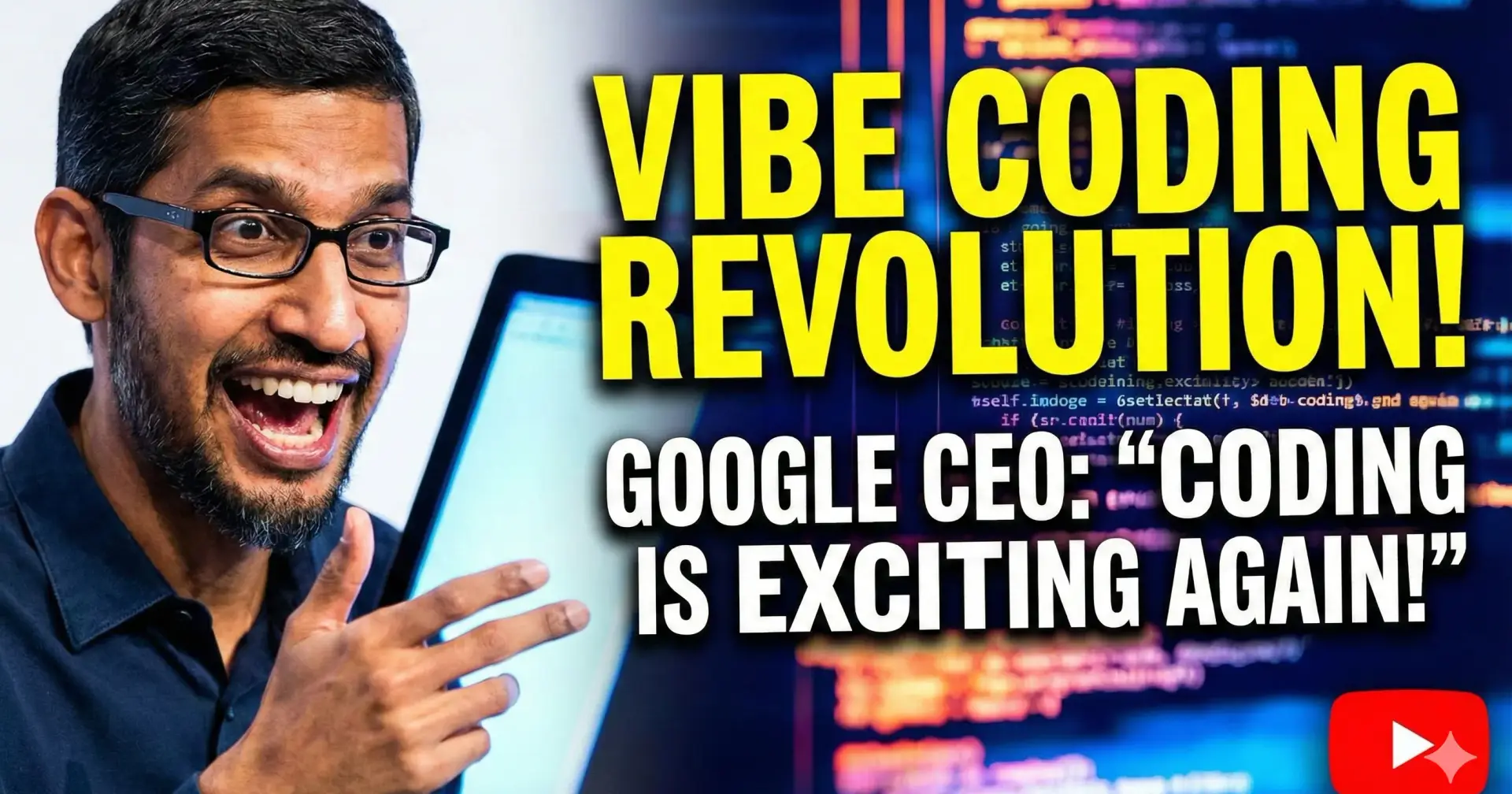
Remember when blogging turned regular writers into internet celebrities? Or when YouTube made anyone with a camera a potential star? Well, Sundar Pichai thinks something similar is happening in the world of coding right now 💡
What is Vibe Coding Anyway? 🤔
Imagine building an app without writing a single line of code. Sounds impossible, right? Not anymore!
Vibe coding is when you simply tell an AI what you want to build, and it creates the code for you. Instead of spending hours learning programming languages, you just describe your idea in plain English.
The term was coined by Andrej Karpathy, a former OpenAI co-founder, in February 2025. And guess what? Collins Dictionary named it their Word of the Year for 2025. That's how big this thing has become!
Pichai is Really Excited About This ✨
In a recent Google for Developers podcast, Pichai shared his thoughts on this coding revolution. And he didn't hold back his excitement.
"It's making coding so much more enjoyable," Pichai said. "Things are getting more approachable, it's getting exciting again, and the amazing thing is it's only going to get better."
He compared vibe coding to what blogging and YouTube did for creators. These platforms opened doors for millions of people who had ideas but lacked traditional skills. Now vibe coding is doing the same for people who want to build apps and websites.
Who is Using Vibe Coding Today? 👩💼👨💼
Here's the surprising part. It's not just developers using these tools!
HR professionals are building custom apps for their teams. Accountants are creating tools to automate their workflows. Product managers are building prototypes to show their bosses.
At Meta, product managers are vibe coding prototype apps and showing them directly to Mark Zuckerberg! At Google, there's been a sharp increase in people submitting their first code changes, even those who never considered themselves coders.
Tools like ChatGPT, Gemini, Claude, and Replit are making this happen. You just describe what you want, and these AI tools turn your words into working code.
Some Real Examples That Will Blow Your Mind 🔥
People are building some incredible stuff with vibe coding:
Mealmuse is an app where you snap a photo of your groceries, and AI creates personalized meal plans for you. Someone built this using Lovable and Cursor!
ChoresAI helps parents track their kids' chores. Kids take photos of completed tasks, and AI verifies them automatically. Built with v0 and Claude Code!
Lambo Levels helps crypto enthusiasts visualize potential gains on their tokens. Built with ChatGPT and Lovable!
One software engineer even uploaded a video showing how he built three apps in just 20 minutes using vibe coding. Twenty minutes!
But Wait, There's a Catch ⚠️
Pichai didn't pretend everything is perfect. He was honest about the risks too.
"I'm not working on large codebases where you really have to get it right, the security has to be there," he said. "Those people should weigh in."
Right now, developers agree that vibe coding works best for experimenting and building small projects. It's not ready for building banking apps or handling sensitive data.
Some experienced developers have also reported frustrations. AI generated code can sometimes be messy and hard to maintain. One founder even shared how an AI agent accidentally deleted their database despite clear instructions not to make changes.
The Future Looks Amazing 🌟
Here's what really got me excited. Pichai said something powerful about where this technology is headed.
"It's both amazing to see, and it's the worst it'll ever be," he said. "I can't wait to see what other people in the world come up with it."
Think about that for a second. What we see today is the weakest version of this technology. It will only get better from here.
Pichai reminded everyone that Google has been building toward this moment since 2016. The company launched Google Brain in 2012, acquired DeepMind in 2014, and invested heavily in AI chips. All of that groundwork is now powering tools like Gemini.
What This Means for You 🎯
If you've ever had an app idea but thought "I don't know how to code," your excuse just disappeared 😄
Vibe coding is making software development accessible to everyone. You don't need a computer science degree anymore. You don't need years of programming experience. You just need an idea and the ability to describe it.
Whether you want to build a simple tool for yourself, create a prototype for your company, or just explore what's possible, now is the perfect time to start.
The tools are here. The technology is ready. And as Pichai says, it's only going to get better 🚀

Join Gajanan on Peerlist!
Join amazing folks like Gajanan and thousands of other builders on Peerlist.
0
5
0