

From Manual Chaos to Intelligent Automation: The Power of AI Agents
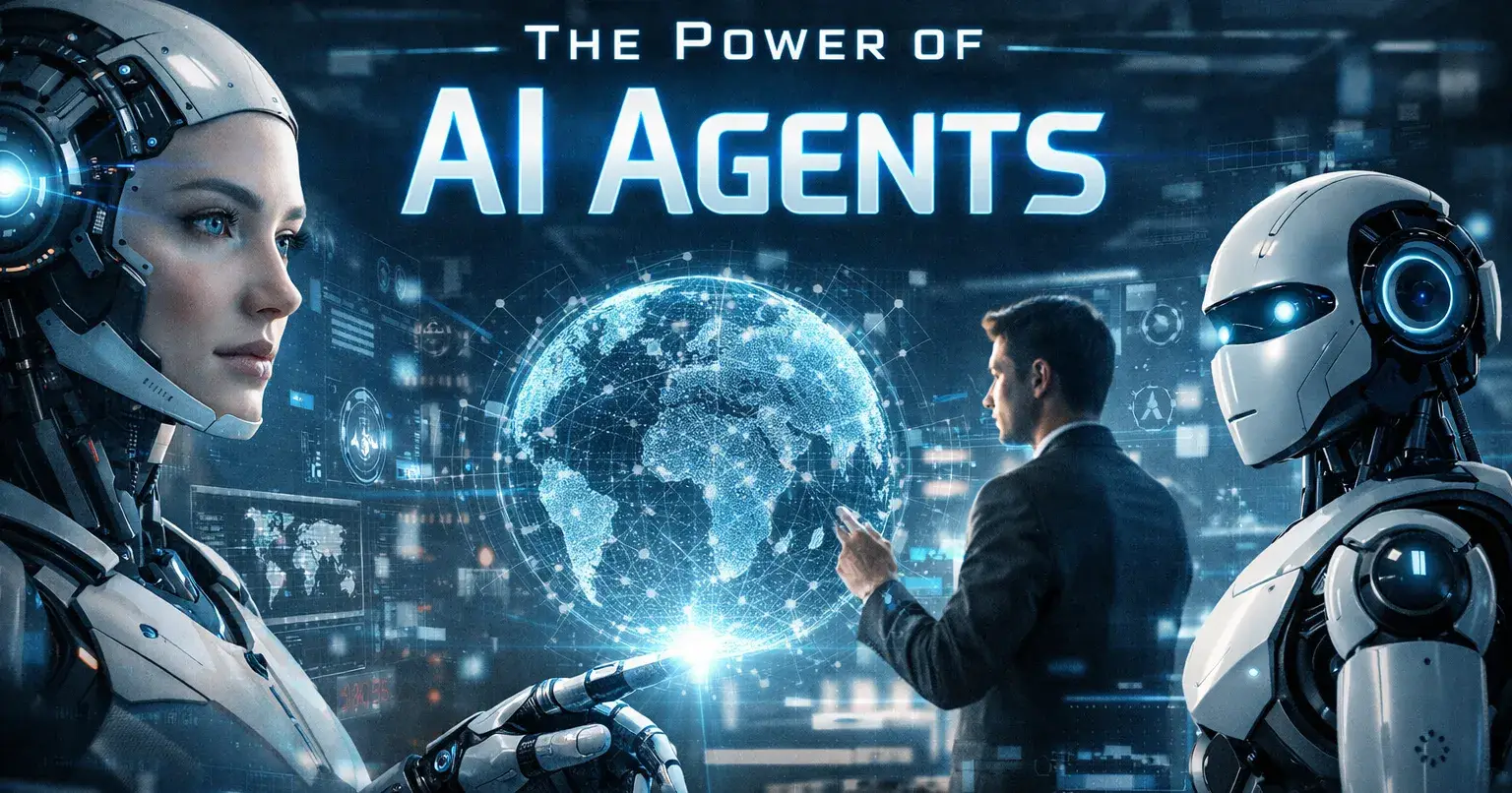
Businesses today are buried in processes. Approvals move across departments. Data flows between disconnected systems. Hence, teams are forced to spend hours switching tools, looking for updates, and fixing errors. Resulting in things taking days instead of minute.
This is where AI agents come in.
They understand content, make decisions, and adapt with the changing inputs. Instead of following instructions, they interpret goals and take measures to achieve them.
For business owners exploring AI/ML Services, this shift changes what automation can actually do.
What Are AI Agents?
An AI agent is a system powered by artificial intelligence that can:
Understand instructions in natural language
Access and process data from multiple systems
Make decisions based on context
Execute tasks autonomously
Learn and improve over time
Traditional automation handles structured, repetitive tasks. AI agents handle complexity.
This is where advanced Machine learning services become essential. Without robust models and training pipelines, these agents cannot operate reliably at scale.
Where AI Agents Make the Biggest Impact
1. Finance and Accounting Workflows
Finance teams deal with multi-step processes: invoice matching, fraud detection, expense audits, regulatory checks.
AI agents can:
Extract data from unstructured documents
Validate entries against ERP systems
Flag inconsistencies
Trigger approvals automatically
This reduces manual review while improving compliance accuracy.
2. Customer Support Operations
Modern support environments span email, chat, CRM systems, and knowledge bases.
AI agents can:
Classify tickets based on intent
Draft context-aware responses
Pull relevant customer history
Escalate only when human judgment is required
The result is faster response time and lower operational cost without sacrificing quality.
3. Supply Chain and Logistics
Supply chains involve forecasting, inventory tracking, vendor coordination, and real-time adjustments.
AI agents can:
Monitor stock levels
Predict shortages using demand patterns
Communicate with vendors
Automatically generate replenishment orders
Instead of reacting to disruptions, businesses can proactively manage them.
4. HR and Recruitment Processes
From resume screening to onboarding workflows, HR processes are highly manual.
AI agents can:
Screen resumes against role requirements
Schedule interviews
Verify documentation
Guide new hires through onboarding steps
This frees HR teams to focus on culture and strategy rather than paperwork.
What Makes AI Agents Different from Traditional Automation?
Many businesses already use RPA (Robotic Process Automation). So what is different?
Traditional automation:
Follows predefined rules
Breaks when inputs change
Cannot handle ambiguity
AI agents:
Interpret natural language
Handle unstructured data
Adapt to new scenarios
Learn from historical patterns
This adaptability is critical in dynamic business environments.
Architect Behind Intelligent Automation
Deploying AI agents is different from plugging in a chatbot.
It involves:
Data pipelines to aggregate structured and unstructured data
Machine learning models for prediction, classification, and decision-making
Integration layers connecting CRM, ERP, HRMS, and other enterprise systems
Monitoring frameworks for accuracy, bias, and compliance
High-quality AI/ML Services focus on building this ecosystem properly. Poor implementation leads to unreliable outputs and trust issues within teams.
A strong approach includes:
Clear use case identification
Clean, well-labeled data
Human-in-the-loop validation
Continuous model retraining
Governance and security controls
Key Business Benefits
When implemented correctly, AI agents deliver measurable outcomes:
Reduced operational costs
Faster process completion
Lower error rates
Improved compliance
Better customer experience
Scalability without proportional hiring
More importantly, they allow leadership teams to shift focus from operational firefighting to strategic growth.
Common Challenges to Address
Data quality issues
Integration complexity
Change management resistance
Ethical and regulatory considerations
Model transparency
Therefore, partnering with experienced providers matters. They have technical depth, comprehensive domain understanding, and offer long-term support.
Is Your Business Ready for AI Agents?
If your organization:
Relies heavily on manual, repetitive workflows
Struggles with cross-department coordination
Handles large volumes of unstructured data
Faces rising operational costs
Then AI agents are not a future concept. They are an immediate opportunity.
A competent machine learning services partner assist with identification of viable use cases, creating scalable models, and integrate them into your existing systems.
Previously, businesses saw automation as a way to save time. With AI Agents, it has turned into intelligent systems that can think, decide, and act in cohesion with the team.
Businesses that move early will not just operate more efficiently. They will operate smarter.

Join Ganesh on Peerlist!
Join amazing folks like Ganesh and thousands of other builders on Peerlist.
0
0
0