

Agentic web and the missing trust layer
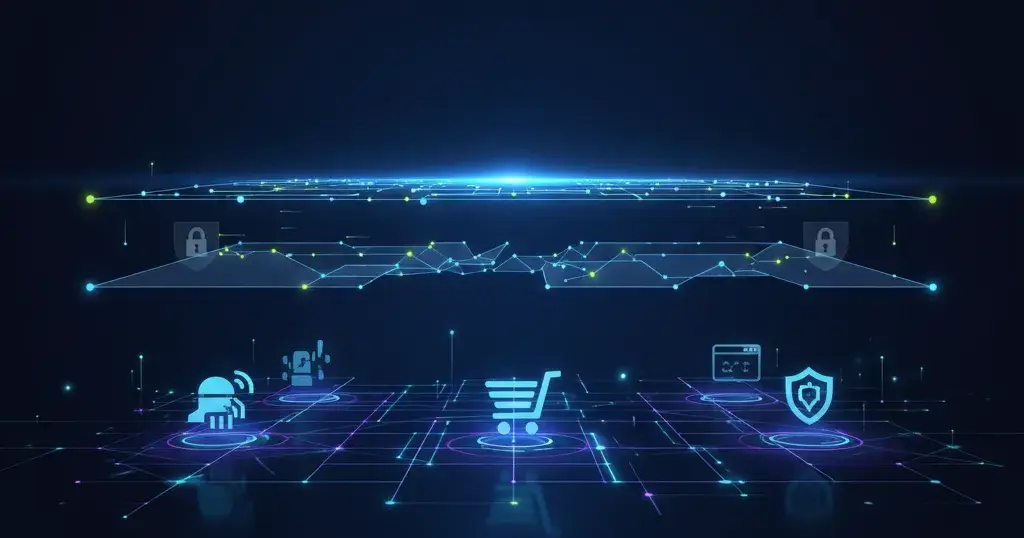
The agentic web, where models browse, rank and transact on our behalf, is introducing a new kind of risk that did not exist in the traditional web. Over the past few weeks I have spoken with founders, security leads and product teams, and I have tested several of the tools emerging in this space. The pattern is clear. Agents are becoming capable of ranking, recommending and transacting, but there is still no shared system that can prove identity, provenance or intent.
Right now we have a growing ecosystem of point solutions. What we do not have is the equivalent of the security and verification standards that made the web safe enough for online payments and trusted email. There is no common way to say who is behind a product card, what data the agent actually saw, or whether a recommendation is driven by relevance or by spend. The trust layer is missing.
One early example is the new wave of tools marketed as LLM SEO or LLM visibility boosters. I tested three of them. All of them provided dashboards that showed how a brand ranks against competitors, but none of them were able to change a live model answer in any reliable way. Today they sell measurement, not placement. The real concern is what happens when this becomes a paid channel. If a model answer can be bought, the top recommendation a user sees may no longer be the most relevant choice. It may simply be the one that paid the highest bid, even if the query is about something as sensitive as a medical product or a financial decision. Discussions on Reddit and Quora already show users expecting the labs to harden their ranking pipelines before this turns into an AI version of paid search manipulation.
Commerce is the next frontier. Product cards inside chat interfaces are already being tested and the experience is simple and fast. Ask the model for a book, confirm, receive delivery. The issue is not the interface. The issue is the missing verification layer behind it. There is no standard for verified merchants, no fulfilment history, no shared dispute path. Today this is not a live problem because agentic commerce is still closed. The risk begins the moment third party sellers are allowed in. If thousands of small shops can connect to an agent surface without identity checks, any of them can present a product card that looks like a known brand and route payment to their own endpoint. The danger is not one fake product. The danger is scale. We have been experimenting with product passports and structured provenance records, but none of this is standardised or mandatory.
Real time scraping agents create a different kind of exposure. In a test with an Atlas style browsing agent, which reads full HTML rather than only what is visible on screen, the agent extracted content that was hidden from human users but still present in the page. Collapsed sections, pre login previews and lightly obfuscated elements were all captured. The old assumption that invisible UI equals safe content breaks the moment the user is a model that reads the entire document. This makes data leakage easy and can surface internal material that was never meant to be exposed, such as staging notes, planned pricing changes or promotional logic.
Teams working on the Agentic Commerce Protocol recognise the same gap. Most of the effort today goes into enabling transactions, not into deciding who is allowed to transact. A product lead at a marketplace told me they expect the first high visibility agent mediated fraud case in 2025. They do not expect it to look like a hack. They expect it to look like a completely normal purchase inside a trusted interface that is simply never fulfilled.
The imbalance is clear. Agents already know how to scrape, rank and execute actions at scale. They do not yet know how to prove that a seller is real, that a product exists or that a recommendation is not quietly pay to play. Payment flows are being built and shipped. Verification flows are still prototypes and concept decks.
If identity, provenance and permission standards do not arrive in time, the first wave of incidents will not involve clever exploits. They will look like ordinary commerce flows driven by a confident model inside an interface the user already trusts. The logic on screen will appear safe. The system underneath will not. The teams that win this space will not only build better agents. They will build the trust rails that make those agents safe to use.

Join Vitaly on Peerlist!
Join amazing folks like Vitaly and thousands of other builders on Peerlist.
0
1
1