

A Masterclass in Product Discovery for New Ventures

In the world of product development, there is a ghost that haunts every startup: the Build-it-and-they-will-come fallacy. Statistical reality is far colder. According to multiple industry studies, including data from CB Insights, nearly 42% of startups fail simply because there was "no market need." They spent millions building a "perfect" solution for a problem that didn't actually exist.
Product Discovery is the antidote to this failure. It is not a "phase" you finish; it is a rigorous, evidence-based mindset designed to reduce uncertainty. For a new product, discovery is the process of deciding what to build - and, more importantly, what not to build.
1. The Discovery Mindset: Problem Space vs. Solution Space
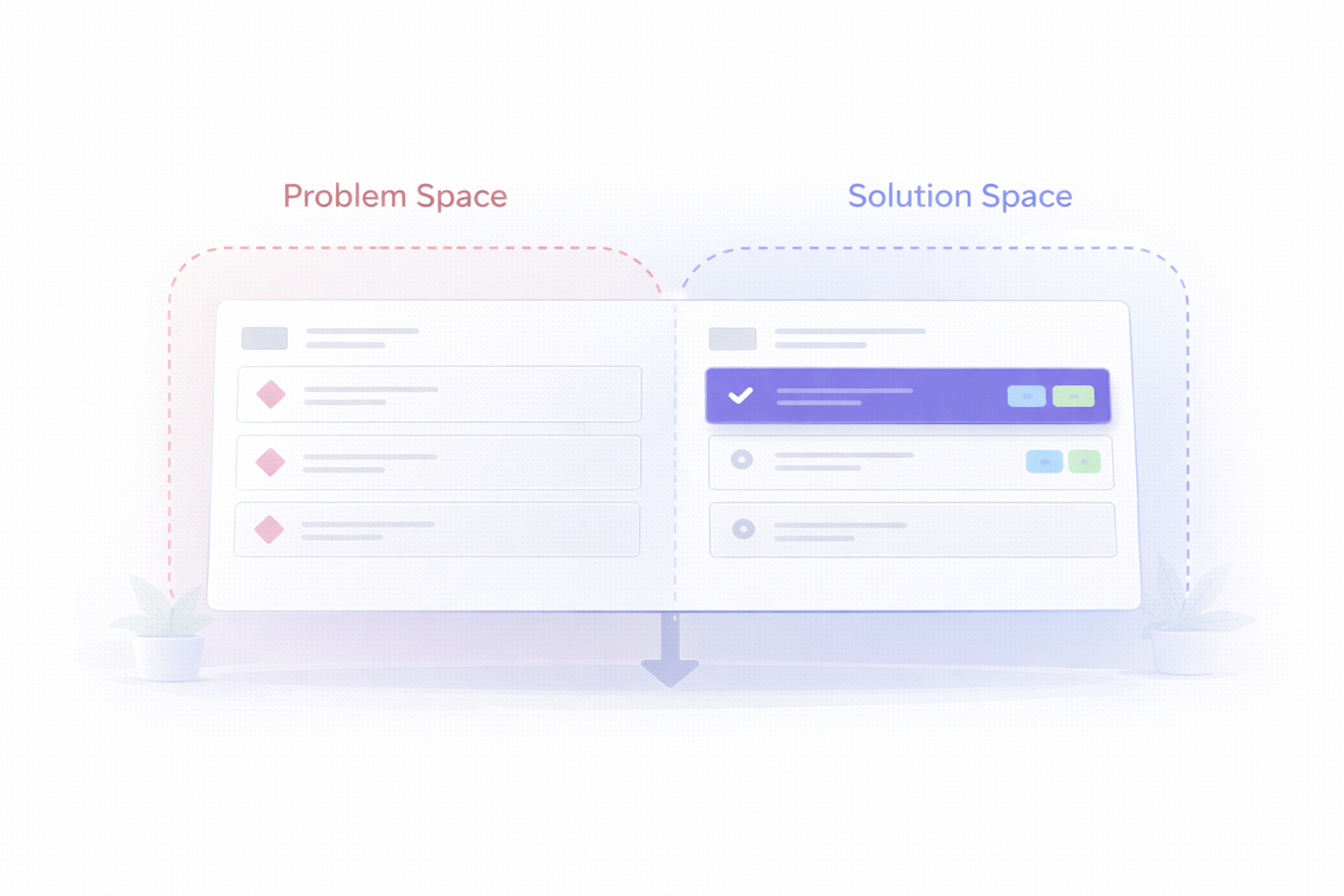
The most common mistake product teams make is jumping into the "Solution Space" (features, UI, tech stack) before they have fully mapped the "Problem Space" (customer pain, unmet needs, desired outcomes).
The "Discovery Trio"
To think effectively about discovery, you must move away from the "siloed" approach where a PM writes a PRD and hands it to a designer. Instead, adopt the Discovery Trio (popularized by Teresa Torres):
Product Manager: Focuses on business viability.
Product Designer: Focuses on usability and desirability.
Lead Engineer: Focuses on technical feasibility.
When these three minds collaborate from Day 1, you avoid the heartbreak of "discovering" that your brilliant solution is impossible to build or won't make money only after you’ve spent three months on it.
2. Framing the Search: Outcomes over Outputs
Traditional roadmaps focus on outputs (e.g., "Build a chat feature"). Effective discovery focuses on outcomes (e.g., "Reduce the time it takes for teams to resolve a conflict").
For a new product, your "Outcome" is usually a proxy for value. If you are building a tool like Lane, a next-generation product management platform, your outcome isn't "adding a calendar view"; it's "increasing the speed of cross-functional alignment."
The Opportunity Solution Tree (OST)
A visual way to think about this is the OST.
Desired Outcome: What business/user metric are we trying to move?
Opportunities: What are the customer pains/needs that, if solved, would achieve that outcome?
Solutions: What specific features could address those opportunities?
Assumptions: What must be true for this solution to work?
3. The Customer Interview: "The Mom Test"
The most dangerous words in a startup are "The customers said they liked the idea."
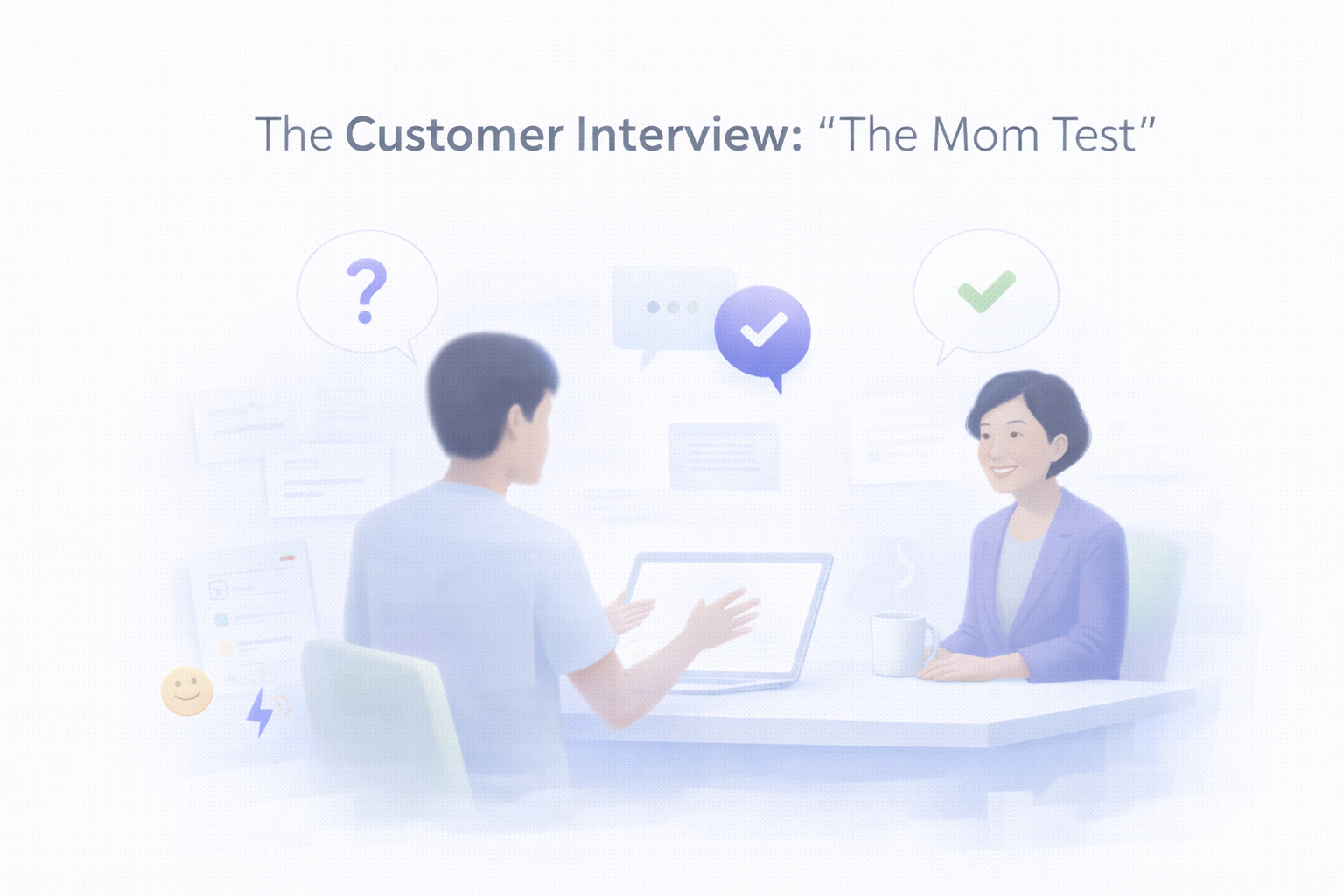
People are nice; they will lie to you to make you feel good. To get real value, you must use The Mom Test principles:
Talk about their life, not your idea.
Ask about specific things that happened in the past, not what they might do in the future.
Talk less, listen more.
Example: Discovering the need for a tool like Lane
Instead of asking: "Would you use a tool that automates initiatives updates?" (They will say yes, but it means nothing). Ask: "Tell me about the last time an initiative fell behind schedule. Why did it happen? How did you find out? What did you do to fix it?"
If the answer involves "I spent 4 hours manually checking Jira and Slack," you have found a High-Intensity Pain Point. This is where your product lives.
4. Validating the "Four Big Risks"
Marty Cagan, author of Inspired, suggests that discovery must address four specific risks before you write a single line of production code:
Value Risk
Will the customer buy this or choose to use it?
Usability Risk
Can the user figure out how to use it?
Feasibility Risk
Can our engineers build this with the time/tech we have?
Viability Risk
Does this solution work for our business (legal, sales, ethical)?
Interactive Validation Technique: The "Wizard of Oz" Prototype
You don't need a backend to test value. If you think an AI-driven automation feature is the key, build a front-end that looks real, but have a human manually perform the "AI" tasks behind the scenes. If users find the "manual" result valuable, the "Value Risk" is cleared.
5. Jobs-to-be-Done (JTBD): Why Do They "Hire" You?
People don't buy products; they "hire" them to make progress in a specific circumstance.
Functional Job: The task they need to complete.
Emotional Job: How they want to feel.
Social Job: How they want to be perceived by others.
Lane isn't just a "task manager." A team lead "hires" Lane because they are tired of feeling anxious (Emotional Job) about missing deadlines and want to look organized to their VP (Social Job). When you understand the "Job," your discovery shifts from "what features to add" to "how to make the user feel like a hero."
6. Prototyping for Learning, Not Launching
In discovery, a prototype is a "throwaway" artifact meant to answer a question.
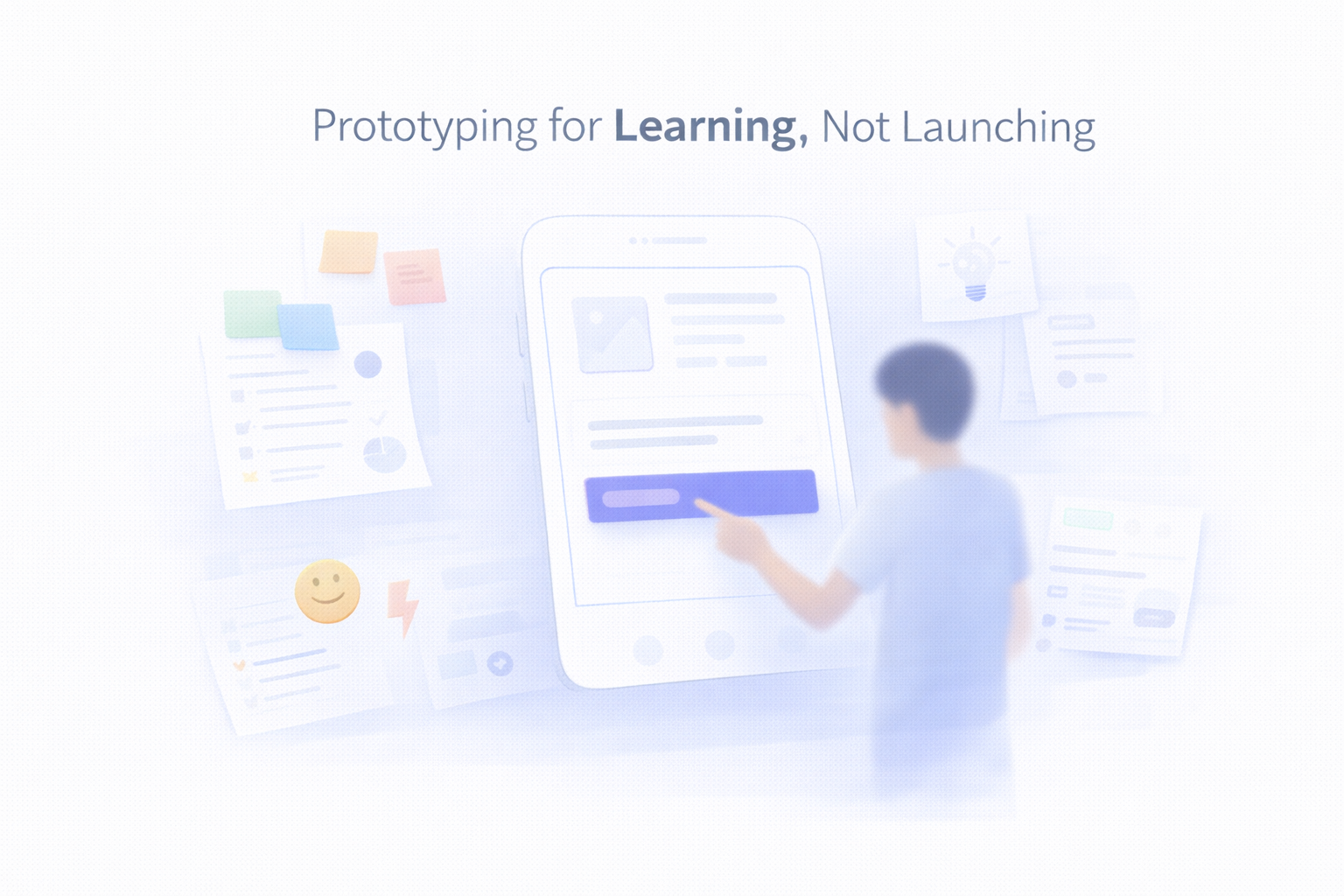
Low-Fi (Sketches/Paper): Best for testing the "Mental Model." Does the user understand the core concept?
Mid-Fi (Figma Wireframes): Best for testing "Usability." Can they find the 'Submit' button?
High-Fi (Interactive Mockups): Best for testing "Value." Are they willing to give you their email address or a credit card for this?
7. Continuous Discovery: The Feedback Loop
Discovery doesn't end at the MVP launch. In fact, that's when the real discovery begins. By integrating tools like Lane into your workflow, you can keep discovery tasks, interview notes, and validation results in the same space as your development tasks. This ensures that the "Why" (Discovery) is never separated from the "What" (Delivery).
The Feedback Cycle
Hypothesize: "We believe [Feature X] will help [User Y] achieve [Outcome Z]."
Experiment: Run a 15-minute usability test or a landing page smoke test.
Learn: Analyze the data. Did the "Value" signal move?
Pivot or Persevere: Based on evidence, not ego.
Conclusion: Building for the Real World
Product discovery is an exercise in humility. It requires you to be okay with being wrong so that you can eventually be right. It’s about falling in love with the problem, not your solution.
As you embark on your journey to build something new, remember that tools are your allies. Platforms like Lane are built for this modern, iterative way of working—keeping your team aligned on the "why" while you focus on the "how."
Stop guessing. Start discovering. Build something that the market is actually pulling out of your hands.

Join Ishan on Peerlist!
Join amazing folks like Ishan and thousands of other builders on Peerlist.
0
1
0