

Why Strategy and Customer Needs Must Work Together in Product Prioritization
Understand why strategy and customer needs must work together for effective product prioritization and long-term success.
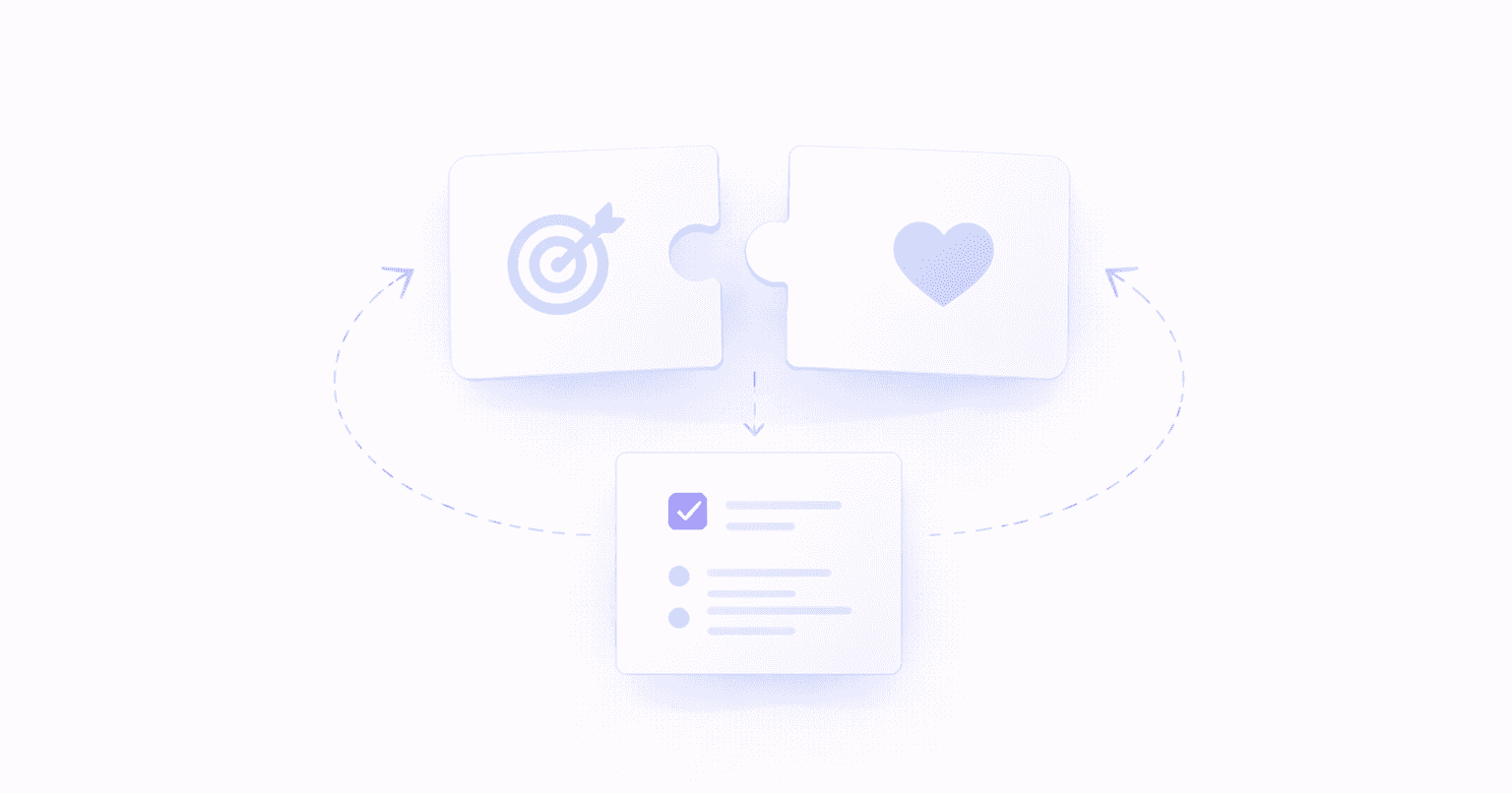
Product prioritization is often treated as a mechanical exercise, pick a framework, score ideas, and move on. But in reality, prioritization is one of the most strategic decisions a product team makes.
Every item you prioritize says something about:
Who your product is really for
What problems you choose to solve
How you intend to grow the business
When prioritization goes wrong, it’s rarely because teams picked the “wrong” framework. It’s because they optimized for only one input- either customer demand or internal strategy- and ignored the other.
Great product teams don’t choose between strategy and customer needs. They deliberately design systems where both inform every decision.
The False Trade-Off Product Teams Often Make
Many teams believe they must choose between:
Being customer-driven or strategy-led
Reacting to feedback or executing a vision
This is a false trade-off.
Customer needs and strategy are not competing forces- they are complementary signals. When separated, each becomes dangerous. When connected, they create clarity.
What Happens When Customer Needs Drive Everything
Listening to customers is foundational. Early-stage teams often survive because they stay extremely close to users.
But when customer needs become the only driver of prioritization, teams often experience:
Roadmaps shaped by the loudest voices, not the largest problems
Endless feature requests with unclear long-term value
Short-term fixes that accumulate product debt
Difficulty saying no, even when requests don’t align with direction
Customer feedback is excellent at highlighting pain. It is less effective at defining direction.
What Happens When Strategy Operates in Isolation
On the opposite end, some teams rely heavily on internal strategy — vision decks, OKRs, and leadership-driven initiatives.
This provides structure and focus, but without customer grounding, it creates different risks:
Features that look compelling internally but fail to resonate
Assumptions mistaken for validated problems
Slow adoption despite heavy investment
Erosion of trust when customers feel unheard
Strategy without customer validation becomes aspiration, not execution.
Why the Best Prioritization Sits at the Intersection
Strong prioritization exists at the intersection of real customer problems and clear business intent.
A prioritization decision is strong when it answers:
Does this problem genuinely exist for our customers?
Is solving it meaningful for the business right now?
Does this move us closer to our long-term direction?
If any one of these is missing, prioritization becomes fragile.
Customer Needs: Identifying What Truly Hurts
Customer needs surface through many channels:
Support tickets and escalations
Sales objections and churn reasons
User interviews and usability testing
Behavioral data and product usage
On their own, these signals are raw. Their real value emerges when teams:
Group them into themes
Track frequency and momentum
Understand which segments they affect
This turns feedback from noise into insight.
Strategy: Choosing What Matters Most
Strategy provides the necessary constraints for prioritization.
It helps teams decide:
Which customer segments to focus on
Which problems align with differentiation
Which bets are worth sustained investment
Which trade-offs are acceptable
Without strategy, prioritization becomes reactive. With strategy alone, it becomes detached.
How Modern Product Teams Connect Strategy and Customer Needs
Rather than prioritizing features directly, modern teams follow a layered approach.
Step 1: Treat Feedback as Signals, Not Requests
Instead of acting on individual requests, teams analyze feedback to understand patterns and root problems.
This prevents reactive roadmaps driven by one-off asks.
Step 2: Translate Signals Into Opportunities
Feedback is reframed into opportunity statements:
What problem exists?
Who is affected?
What outcome would improvement create?
Opportunities preserve customer context while allowing multiple solution paths.
Step 3: Filter Opportunities Through Strategy
Each opportunity is evaluated against:
Business goals or OKRs
Target customer segments
Strategic themes
Resource constraints
This ensures teams invest where impact and intent align.
Step 4: Prioritize Using Evidence
Instead of opinion-driven debates, teams use:
Frequency and severity of signals
Revenue, retention, or adoption impact
Strategic relevance
Confidence level in the insight
This creates clarity and reduces internal friction.
Use Lane to prioritize your opportunities
Why This Balance Breaks Down Over Time
Even teams that start well often drift.
Common reasons include:
Feedback scattered across tools
Strategy living in separate documents
Context lost as teams scale
Decisions revisited without shared history
Without connected systems, teams oscillate between customer-driven chaos and strategy-led detachment.
How Lane Helps Teams Maintain This Balance
Modern product discovery and management tools like Lane are designed to keep strategy and customer needs connected.
Lane helps teams:
Collect feedback from multiple channels
Automatically analyze sentiment, themes, and insight types
Connect insights to business goals and objectives
Identify and prioritize opportunities with full context
Plan roadmaps that reflect both evidence and intent
This creates a continuous loop where customer reality informs strategy, and strategy guides execution.
If you want to build prioritization systems that scale without losing clarity, you can get started with Lane and apply this approach in practice.
Final Thoughts
Product prioritization is not about choosing between customers and strategy- it’s about connecting them.
Customer needs reveal what’s broken. Strategy defines what’s worth fixing.
Teams that master this balance build products that are both loved by users and sustainable for the business. In 2026, that balance isn’t optional — it’s the foundation of great product management.

Join Ishan on Peerlist!
Join amazing folks like Ishan and thousands of other builders on Peerlist.
0
0
0