

10 Must-Try Cross-Platform Frameworks for Scalable App Development
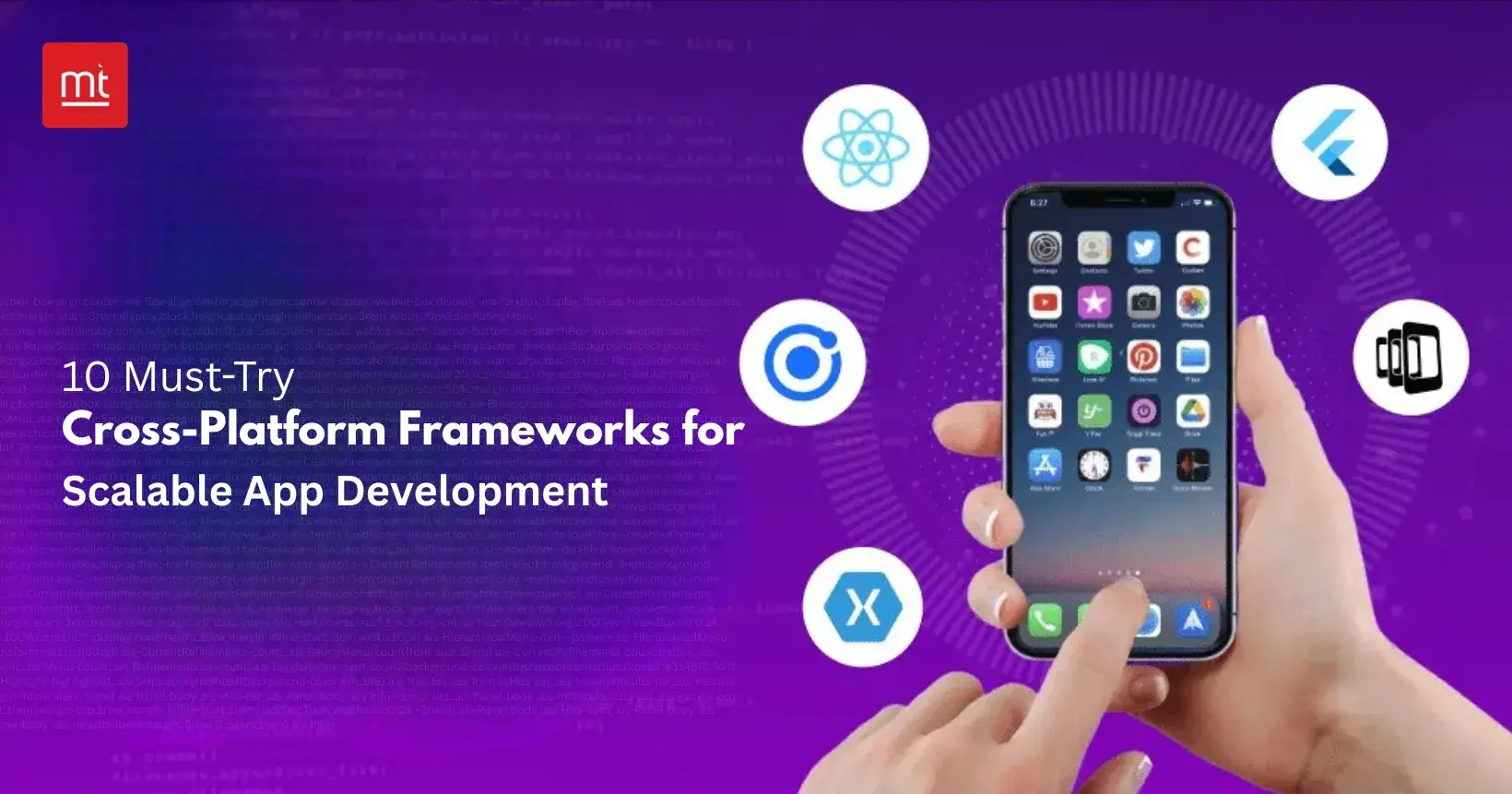
In the current rapidly changing digital environment, companies want quick-to-create, cost-efficient, and device-consistent app solutions. This has positioned cross-platform frameworks as the most preferred options among contemporary developers and companies. As a start-up or an expanding business, the selection of the framework to use can be decisive to the scalability, time to market, and ultimate success of your app.
As a firm interested in solving business problems, a cross-platform app development agency USA can make that journey, especially in terms of planning to launch, smoother. This group of agencies specializes in frameworks that can be deployed on Android, iOS, and the web, reducing development time and cost without sacrificing quality.
So, without further ado, here are the 10 most potent cross-platform frameworks you ought to consider regarding scalable and high-performance mobile apps.
Top 10 Cross-Platform Frameworks That Ensure Scalability and Performance
1. Flutter
Created by Google, Flutter is extremely popular and owes its success to native-like performance and UI beauty. It is based on the Dart programming language and enables the users to design expressive and flexible UI using pre-existing widgets.
Key Benefits:
Hot reload for rapid development
A single codebase for Android, iOS, web, and desktop
Strong support from Google and a vibrant developer community
Startups and enterprises love Flutter for its agility and customization options, especially when paired with reliable mobile app development services.
2. React Native
Maintained by Facebook, React Native enables developers to create such mobile apps with JavaScript and React, thus easily supporting both iOS and Android operating systems.
Key Benefits:
Reusable components
Active open-source community
Integration with native code possible when needed
React Native is a great option for businesses that want to hire Android app developers who are also well-versed in web technologies.
3. Xamarin
Xamarin, which is a proprietary Microsoft product, is well suited to those .NET developers who want to create cross-platform applications with the help of C#. It gives you near-native performance and one common code base.
Key Benefits:
Full access to native APIs
Strong Microsoft support
Integration with Visual Studio
It's best for enterprise-level applications requiring robust back-end integration and a structured development environment.
4. Ionic
Ionic is an advanced HTML5 SDK that allows developers to write a native-like mobile app to web technologies including HTML, CSS and JavaScript.
Key Benefits:
Extensive UI components
Cordova plugins for native functionality
Easy integration with Angular, React, or Vue
Ionic is especially appealing for those transitioning from web to mobile and is often used in conjunction with mobile app development agency partners for quick MVPs.
5. NativeScript
NativeScript enables the choice between JavaScript, TypeScript, or Angular to develop really native iOS and Android apps.
Key Benefits:
Direct access to native APIs
No need for WebViews
Large plugin ecosystem
It is particularly effective for complex applications that require tight integration with native features while keeping a shared codebase.
6. Cordova (PhoneGap)
Apache Cordova (previously PhoneGap) can be used to wrap HTML/JS applications in native containers, to use device functions.
Key Benefits:
Access to native device APIs using JavaScript
Wide range of plugins
Support for multiple platforms
It also lost its popularity after the introduction of newer frameworks but is applicable when an app or prototype is lightweight or a quick deployment is required.
7. Kotlin Multiplatform Mobile (KMM)
The Kotlin-based Android and iOS cross-platform library, KMM, has been created by JetBrains.
Key Benefits:
Reuse of business logic across platforms
Full interoperability with existing code
Ideal for Android-focused teams
KMM is a great option for Android-heavy teams planning expansion into iOS. It’s becoming a go-to for any Android app development company that aims to reduce duplication in code and effort.
8. Unity

Unity is also an excellent solution to launch and work with interactive applications, AR/VR, and rich graphical interfaces, although people are more likely to associate the company rather with game development.
Key Benefits:
High-end graphics rendering
Multi-platform export (25+ platforms)
Powerful asset store and community
If your app involves immersive experiences or interactive UI, Unity can be an ideal choice even beyond gaming.
9. Sencha Ext JS
Sencha is a well-established framework that is focused on enterprise-level applications. It is based on JavaScript and HTML 5 to develop data-intensive web and mobile applications.
Key Benefits:
Rich UI components
High performance for data-heavy apps
Integrated tools for development, testing, and debugging
It is mostly favorable to large-scale businesses which are more interested on the long term assisting and efficiency of the handling of data.
10. Framework7
Framework7 enables programmers to make native-looking Android and iOS applications in HTML, CSS, and JavaScript. It is lightweight and can be easily combined with such tools as Vue. js or React.
Key Benefits:
Customizable themes and layouts
Easy prototyping
Fast learning curve
This makes it perfect for startups or solo developers looking for a quick and efficient development cycle.
Final Thoughts
The ability to do cross-platform development has altered the process of app-building and scaling in businesses. Given the number of feature-packed frameworks out there now, the task of selecting one will revolve around how well your app functions, your performance requirements, as well as, the resources at your disposal to develop.
There is a framework to suit your intent when it is to develop a customer-facing mobile application, an inward-looking business tool or a game. You just need to have the right tech partner.
Looking to scale your app idea efficiently and affordably? Consider partnering with a cross platform app development agency USA like ManekTech to build high-performance mobile applications that drive business results.

Join Ishan on Peerlist!
Join amazing folks like Ishan and thousands of other builders on Peerlist.
2
2
0