

Are You Building a System, or Just a Large Software Shack?
You ship first features in days, and progress feels undeniably fast. Why can this be a trap?
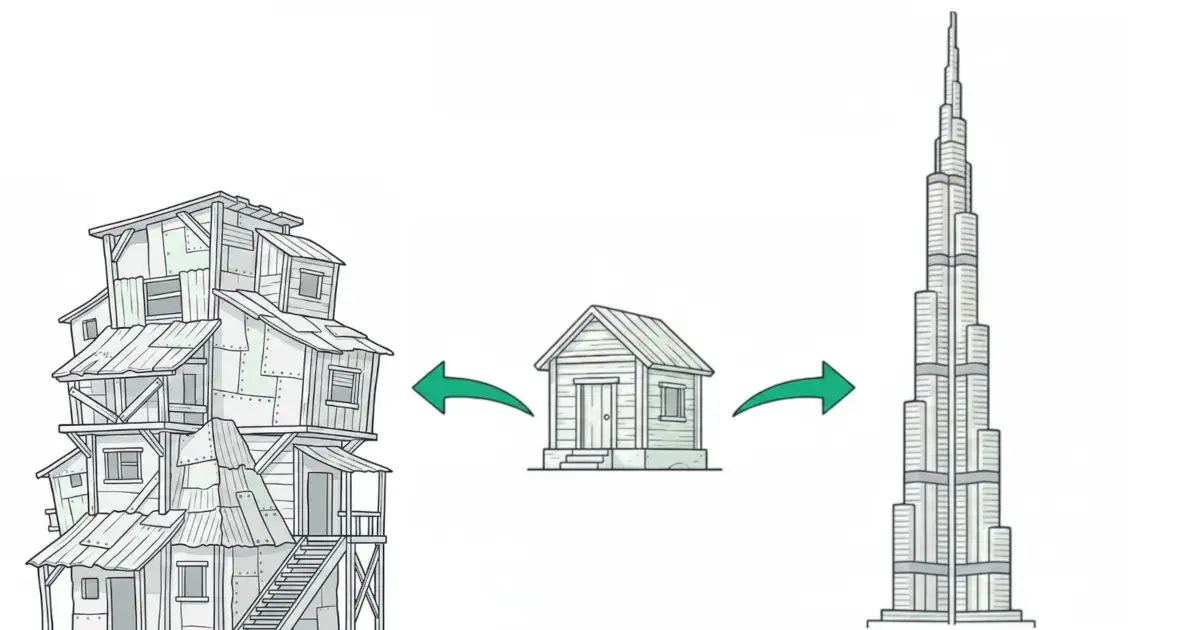
You ship first features in days, and progress feels undeniably fast. Why can this be a trap?
When early iterations work, quick results create a dopamine loop. You keep asking for the next feature because each step feels productive. That is the first trap: fast rewards hide structural debt.
Then the same codebase saturates. Bug loops get longer, and touching the next feature feels risky. By then you already invested a lot, so rebuilding from scratch feels unacceptable.
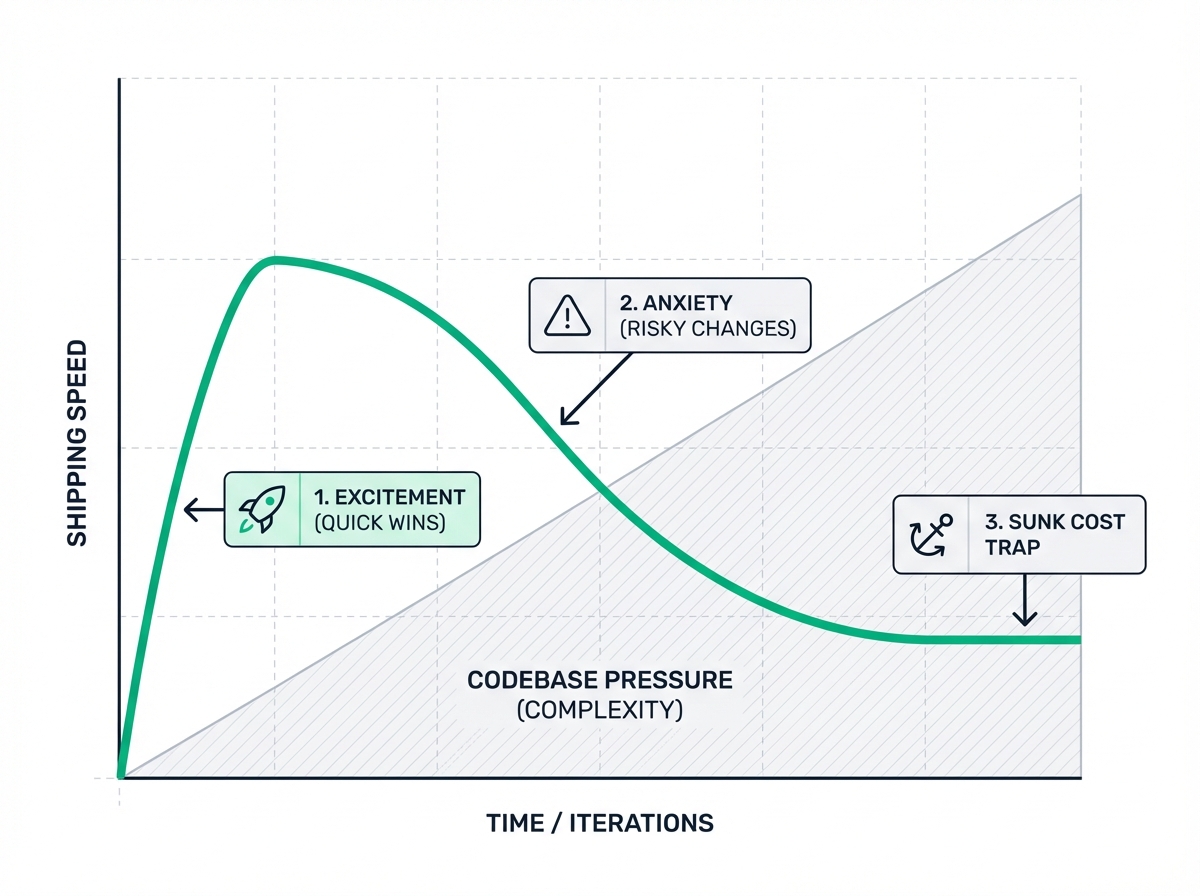
This shift is gradual. The intuitive move is to keep shipping at full speed because quick visible progress keeps feeling rewarding. But the stronger move is to pause just enough to design for continued speed.
Same-day shack vs long-horizon tower
Think in two construction extremes.
A shack can be useful the same day. You improvise, patch in place, and move on. The load is small, the risk is local, and the lifetime is short.
At the other end is a structure like Burj Khalifa. It requires long-horizon planning, deep coordination, and high cost before value appears. Not every team can afford that path, and not every product needs it.
The shack habit and the software environment
Software has the same scale extremes. You can build a quick prototype, or you can build a massive, complex system.
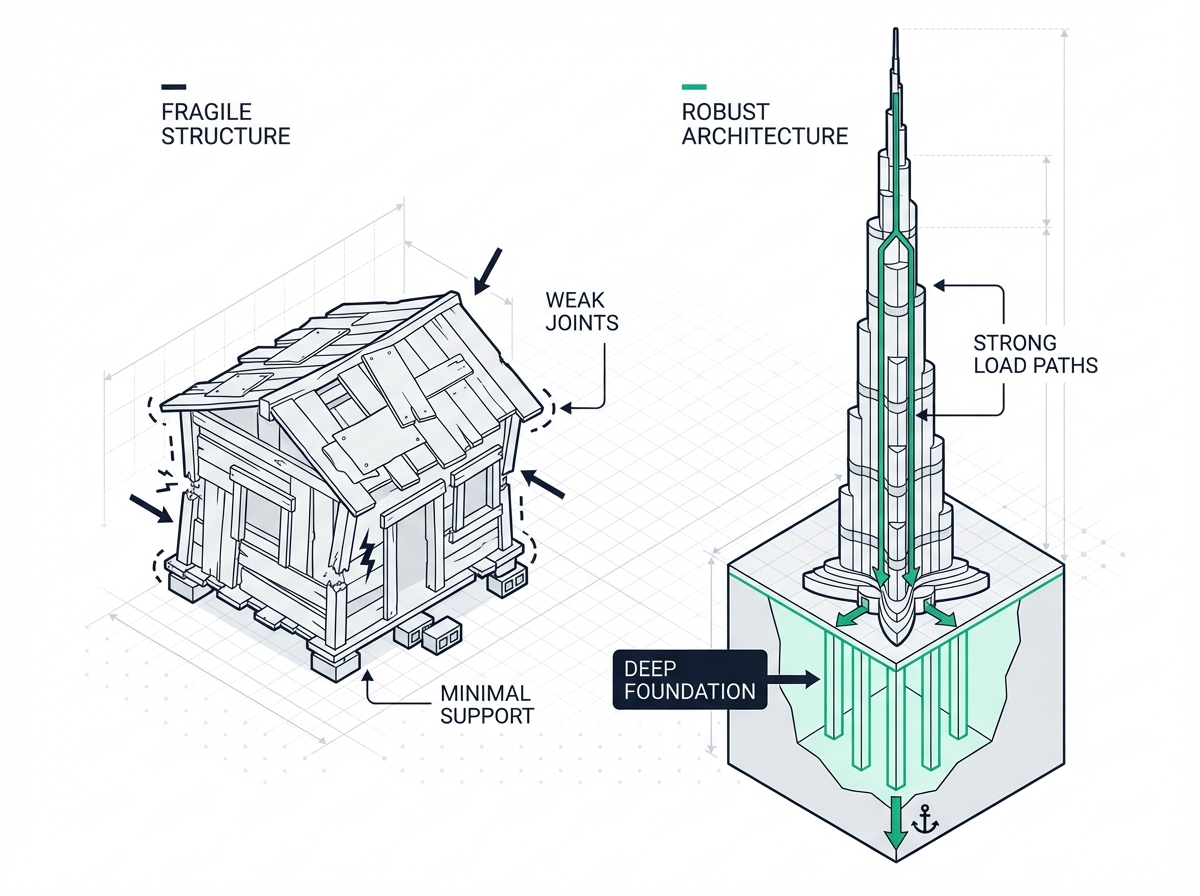
The trap is thinking you can build a skyscraper using shack-building habits. You cannot just keep nailing new boards onto a wooden shack and expect it to hold up. As the system grows, the load becomes too heavy. The approach has to fundamentally change.
But there is a major difference in how these buildings survive. A physical building is designed to stand still and resist the physical environment. Software is different. The "environment" trying to knock your software down is the constant demand for change. Software must withstand informational entropy.
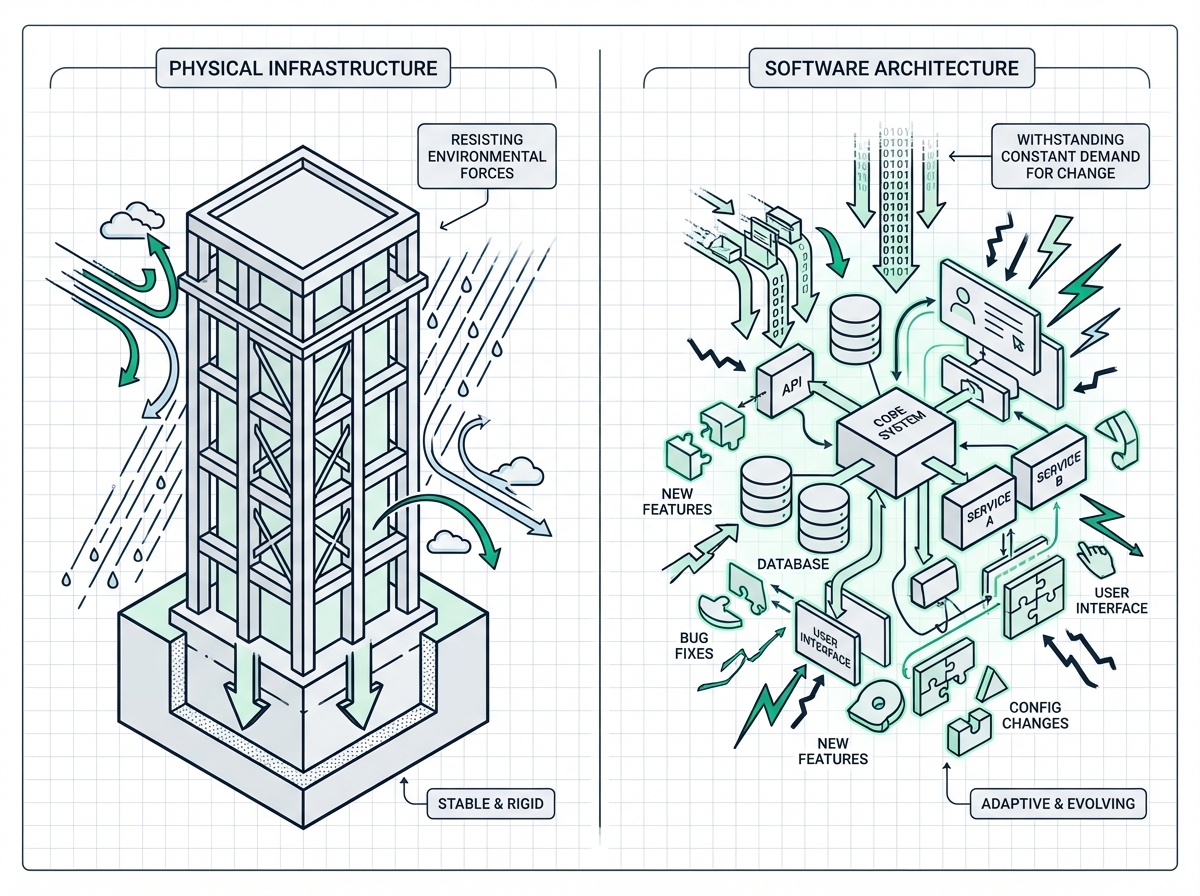
If you use the shack-building approach (improvising and patching in place) against a constant storm of changes, you hit a wall. Parts stop fitting together, and making one small change breaks three unrelated things.
You can ship a "shack" quickly and learn fast, but the growth ceiling arrives early if boundaries are unclear. You can also over-build a "skyscraper" and spend too long designing for loads that never arrive.
So the goal is not to pick one extreme. The goal is to find the sweet spot between instant usefulness and structural endurance.
Plan for change, not just for launch
Imagine planning a house with water pipes and electric wires hidden behind walls. If you need to change them later, can you do it without breaking walls first? If there are no access points, no clear layout, and no shutoff controls, even a small change becomes slow and risky.
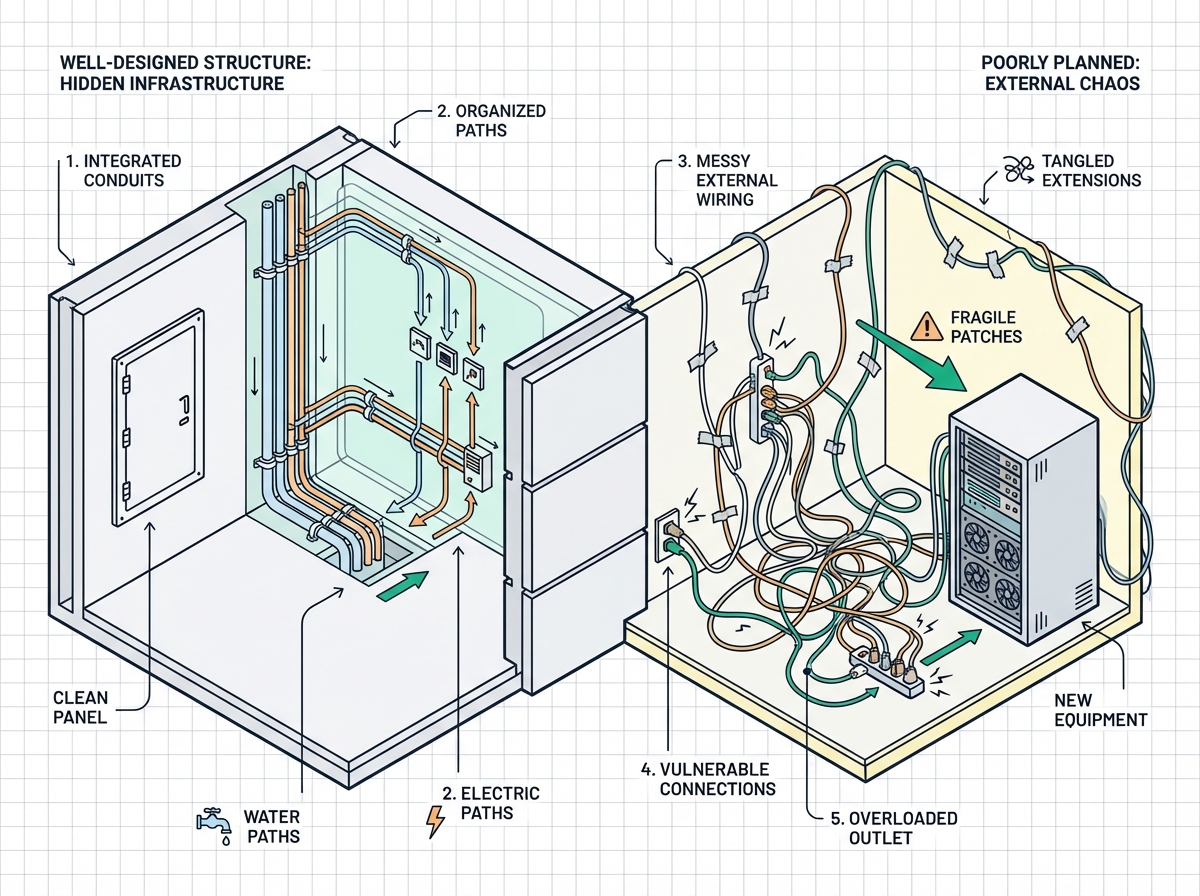
Now think at room level. If one room is well designed, you can change it without touching the whole house. If it is not, even a local change spreads. You move a wall cabinet in one room, then discover pipes and wiring pass through places they should not, and now work spills into other rooms.
Software has the same problem. You can think of rooms as services. Data paths and dependencies are like pipes and wires. Interfaces are your doors and connection points. Logs, tests, and monitoring are your access panels.
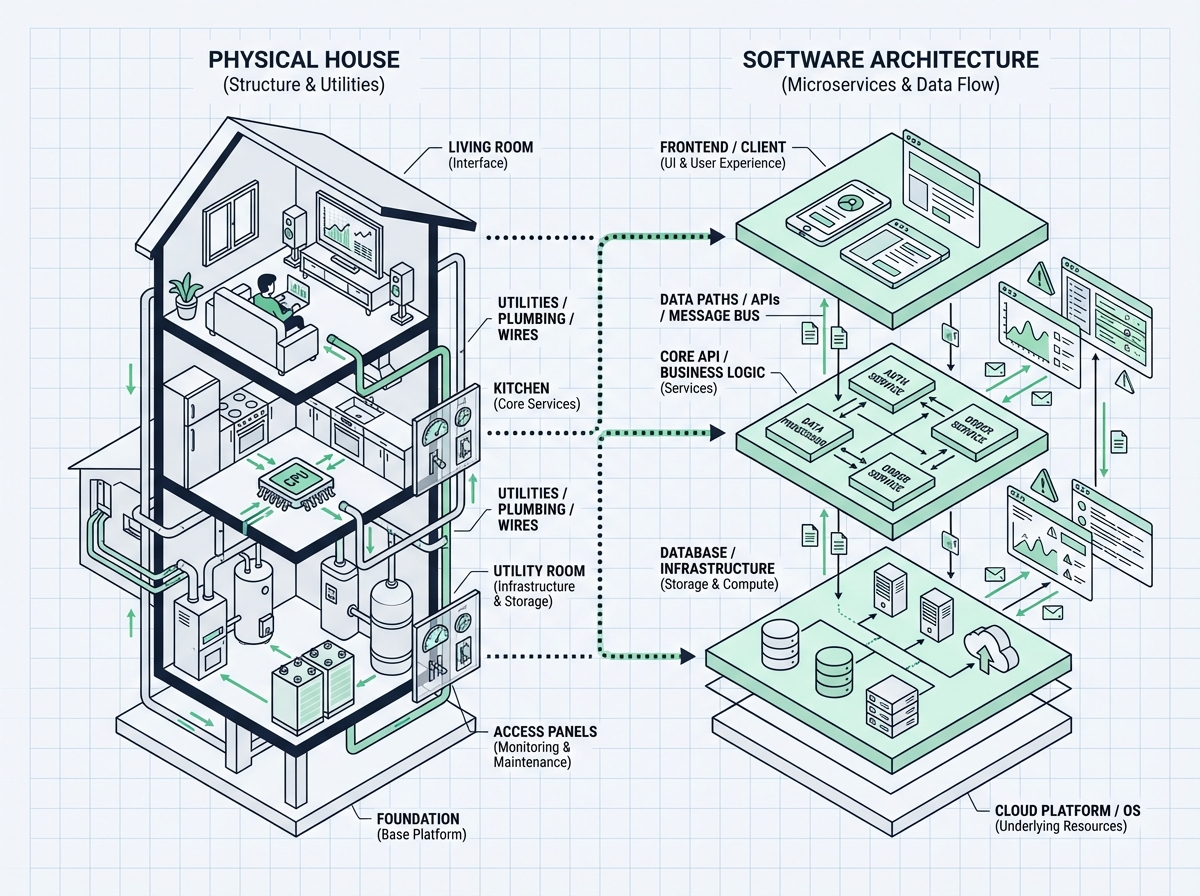
Imagine you need to bring in large furniture later, or install equipment that needs a dedicated power line. If the room wasn't planned for that, you can still make it work with extension cords taped along the walls. It works, but it's ugly, fragile, and dangerous to trip over.
Same in software: a new capability can still be added, but without clean boundaries it often arrives as patches, side paths, and fragile connections that make the whole system harder to change.
That is the core intuition: do not only plan what the system does today; plan how each part can be changed tomorrow without damaging the rest.
Structural debt becomes an invisible tax
The slowdown often starts with an invisible tax. A bug takes multiple prompt loops to explain. A small feature feels heavy before you touch it. You can sense incoming pain when thinking about change. That is usually not a motivation issue. It is structural debt.
When boundaries are weak, control points are missing, and concerns are not isolated, each local patch increases global fragility. The system may still run, but progress saturates.
Agents optimize now, so you must protect later
In a human team, bad technical decisions are resisted early. People have skin in the game. They feel future maintenance pain, and that pain forces them to push back on bad designs.
With agents, this feedback is weaker by default. In a fast loop, an agent mostly optimizes the immediate objective in the prompt. It does not naturally carry long-horizon discomfort about future maintenance. Its "life" does not become harder when the architecture degrades.
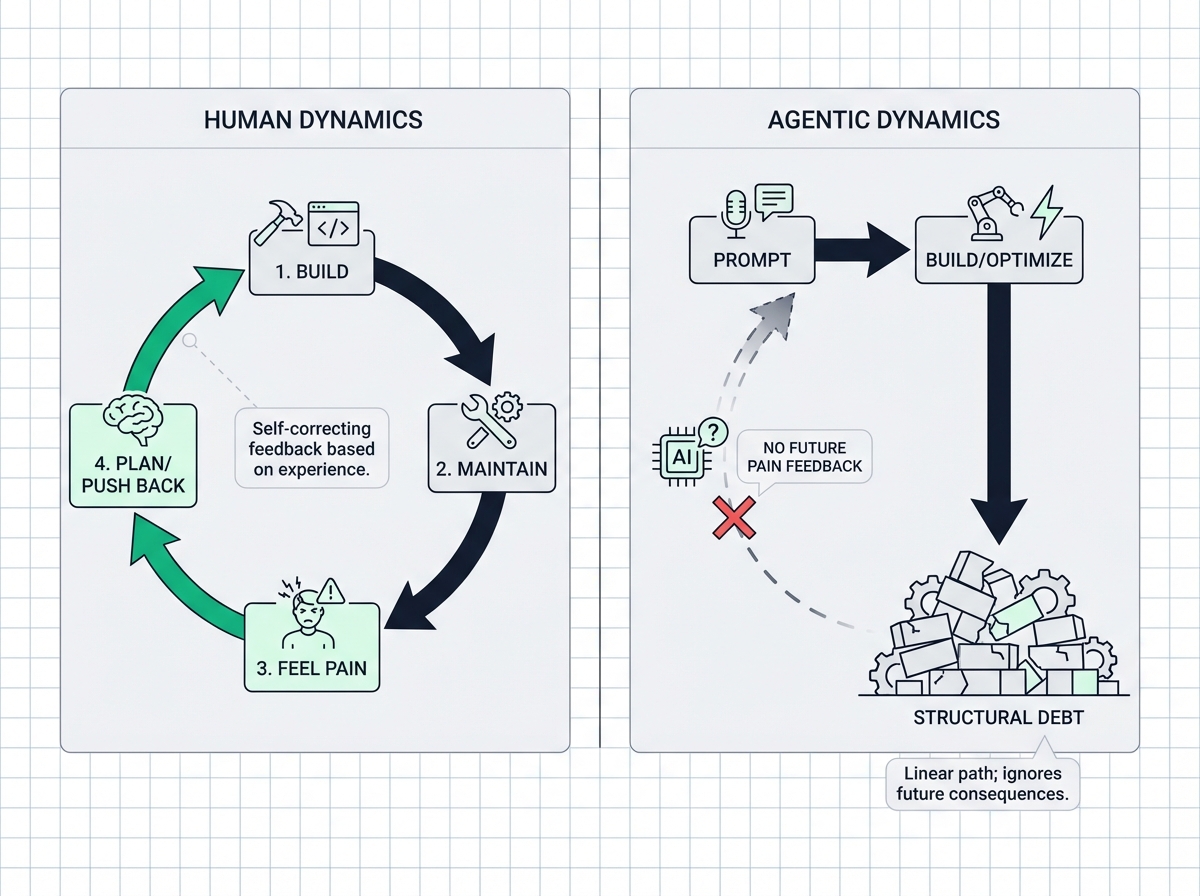
So if you apply the same rapid-iteration mindset without adding design guardrails, you can lose a critical balancing force that human teams often provide.
"Restart later" is usually a mirage
In theory, you can learn fast, restart, and rebuild cleanly. In practice, sunk cost traps people. After enough debugging and patching, dropping the current structure feels impossible. So teams keep paying the tax instead of redesigning the building.
The sweet spot is planned motion
The useful rule is simple: code what is clear now, design what must compose later. Think of this design as a navigation map. Without a map, every next step feels local, but you can still walk into dead ends. With a map, you can move fast and still know where to turn when the landscape changes.
If a slice is clear, build it now. But before building, define how it plugs into the next slice. Define the interface. Define the boundary. Define how you will test it while building, not only at the end. Define how you'll know when the walls are starting to crack under the weight.
That is not over-planning. That is planning for motion.
A building is just a node in a city
This logic scales up. A single building is just part of a larger network. When you build a house, you have to connect it to the street's power grid and water supply. If you build a neighborhood, you need to design the roads between the houses so traffic can flow.
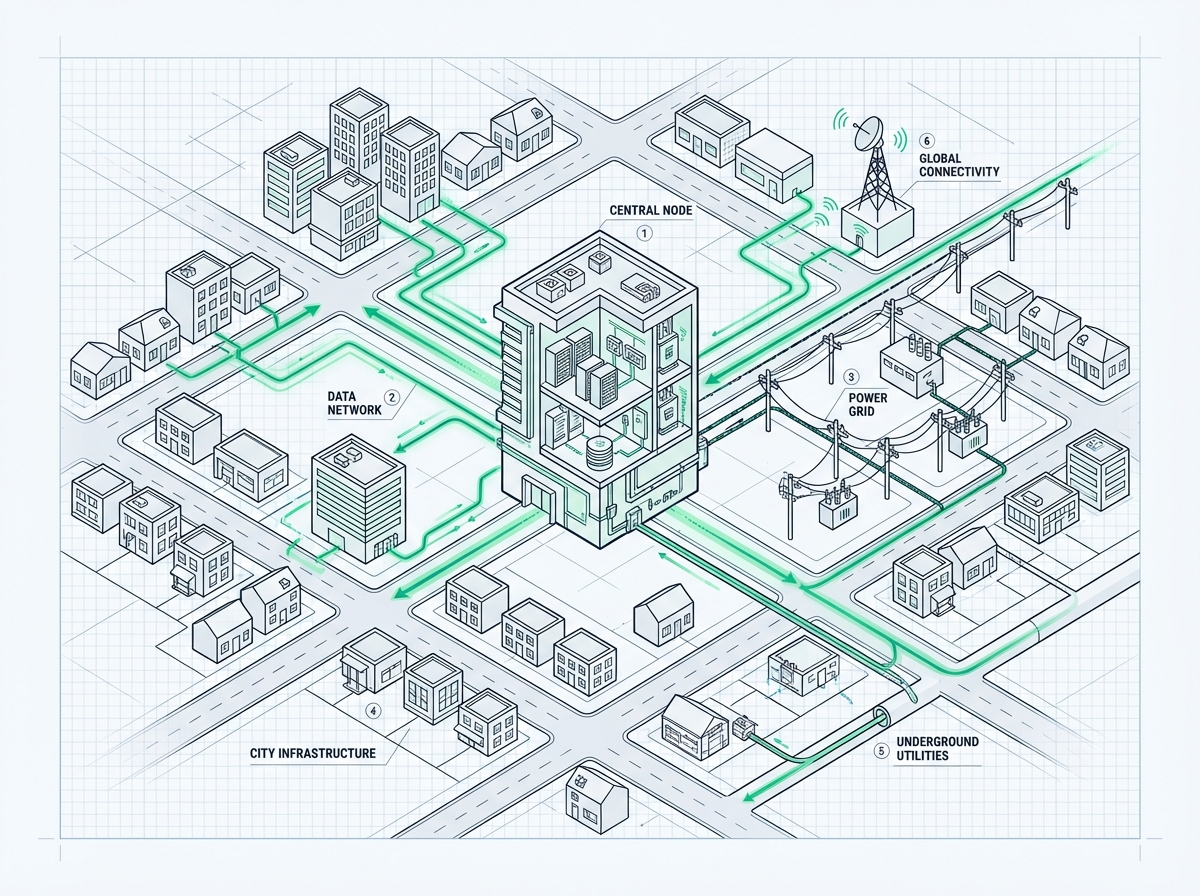
You are rarely designing just one isolated feature. You are designing a system. If you only think about the individual rooms but forget to plan the streets, your city will eventually gridlock.
So the central challenge remains: how much capacity can your software handle before it requires deliberate design?
Move fast, but do not confuse quick output with durable progress. If you want to go far quickly, put enough structure in early so speed stays real.

Join Ivan on Peerlist!
Join amazing folks like Ivan and thousands of other builders on Peerlist.
1
7
0