

The Evolution of AI Hair Simulation
Scaling the Future of Beauty Tech: My Journey from HairFastGAN to Nano Banana
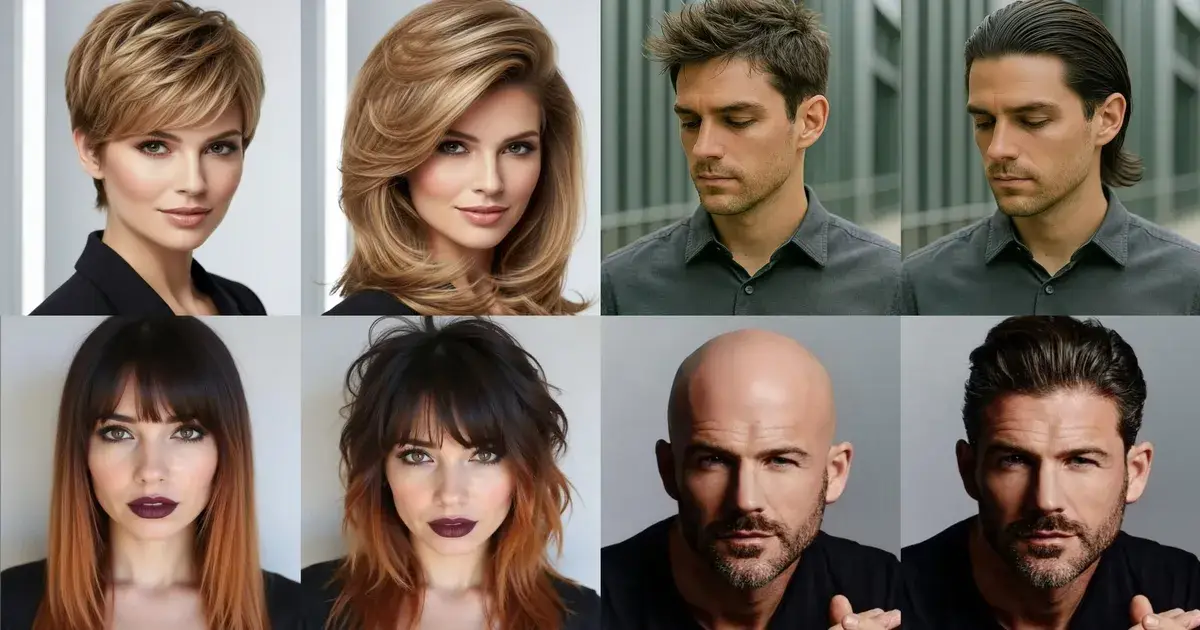
Building an AI-powered hairstyle tool isn't just about pixels—it’s about managing expectations and visual consistency. Nearly two years ago, I started on a mission to democratize professional salon experiences through code. My goal was simple: make "haircut remorse" a thing of the past. But the journey from a local experiment to a production-ready web app (tryhair.ai) has been a rollercoaster of algorithmic trial and error.
The GAN Era: From Barbershop to HairFastGAN
When I started, the open-source landscape was a goldmine, but a challenging one. I spent months stress-testing the industry standards:
Barbershop&CtrlHair: These were pioneering models, but the processing time was brutal. Waiting several minutes for a single image generation isn't just a technical bottleneck; it’s a user experience killer.HairFastGAN: This was my go-to for a long time. It offered a massive leap in performance, generating results in mere seconds with modest hardware requirements. It felt like a breakthrough.
However, HairFastGAN had a "hidden" flaw: the mandatory face-cropping. In a real-world setting, aggressive cropping destroys the immersion and is notoriously unfriendly to long hairstyles. It felt more like a "sticker" applied to a face rather than a "hairstyle" living on a person.
The Turning Point: Enter Nano Banana
While the industry was heavily betting on large text-to-image models, the consistency for "image-to-image" tasks remained shaky. That was until last August. When Nano Banana hit the scene, it was an "aha!" moment. The level of identity preservation and textural consistency it brought to the table was, frankly, astonishing. Integrating it into tryhair.ai felt like upgrading from a sketchpad to a canvas.
Beyond the "Template" Trap
If you’ve used hairstyle tools from major beauty giants, you know the drill: pick a template, slap it on your face, and hope for the best. It’s static, uninspired, and often looks like a bad Photoshop job.
My vision for tryhair.ai is different. It’s about immersive transformation.
We don't just provide "hair templates."
We provide a style-transfer engine that captures the nuance of any reference image—allowing users to upload a photo of a style they admire and see it materialized on their own features.
The goal is to empower users to walk into a barbershop or salon with a visual blueprint they can trust, ensuring that the dream look in their head is exactly what they get in the chair.
The Builder's Takeaway
Building this wasn't just about picking the right model; it was about the infrastructure—deploying on Firebase and Cloud Run, managing GPU costs, and ensuring the UX feels like an app, not a research project.
If you are a fellow builder or a beauty-tech enthusiast, I’d love to hear your thoughts on the balance between GANs and Diffusion models for hair tasks. How are you handling the "identity preservation" challenge in your own projects? Do you think GANs still have a place in 2026 for real-time beauty apps, or is Diffusion the only way forward?
Check out the live transformation engine here: tryhair.ai/aihairstyle

Join Kai on Peerlist!
Join amazing folks like Kai and thousands of other builders on Peerlist.
0
1
0