

Server-Side Analytics vs Client-Side Analytics
Decoupling Data Streams: Understanding the Core Differences and Why the Shift Matters
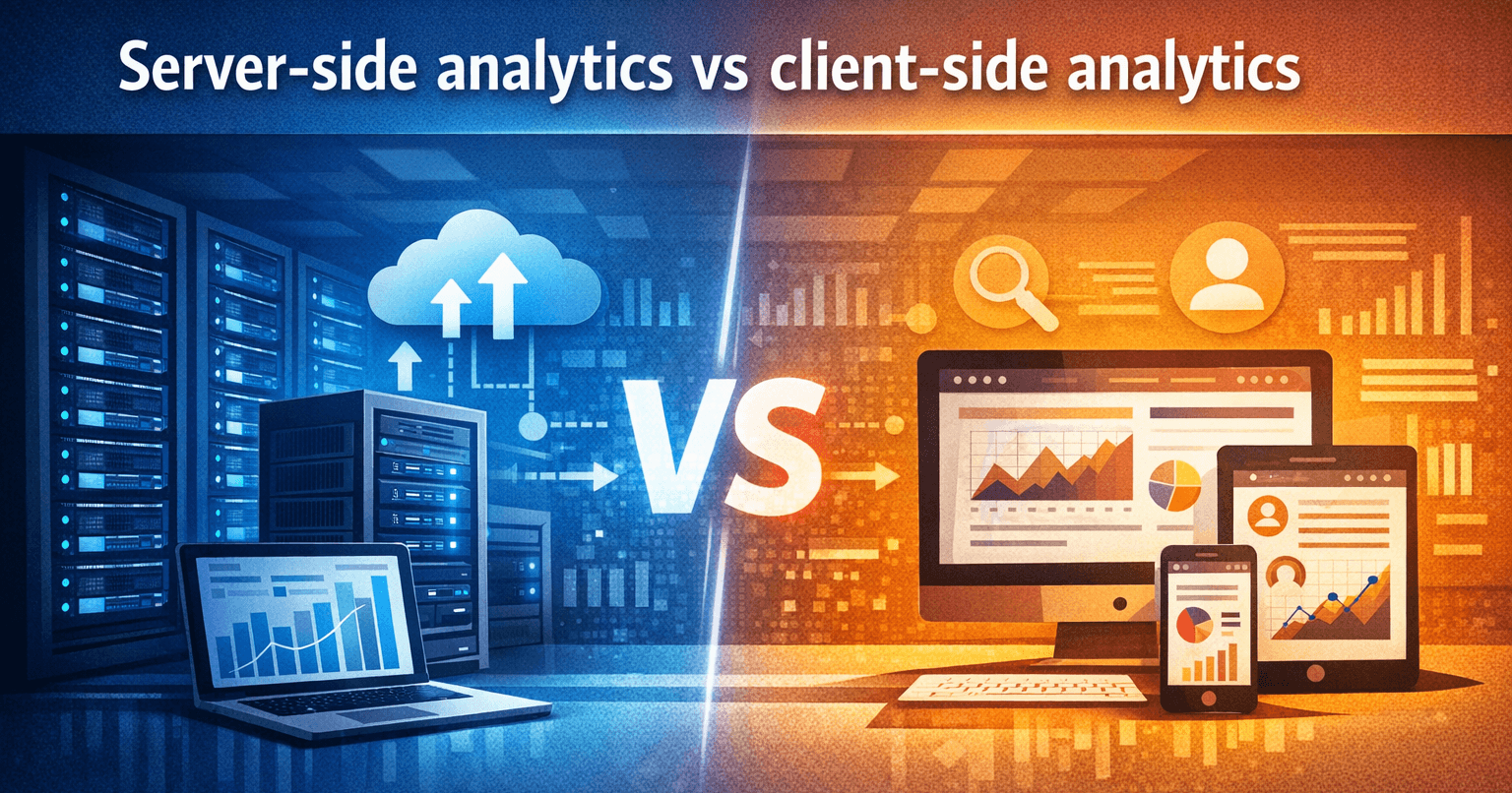
Data collection is the foundation of modern digital strategy. Without accurate measurement, optimizing campaigns, understanding user behavior, or making informed business decisions is impossible. For years, one method dominated the landscape: client-side tracking. This approach, relies on the user's browser (the "client") to execute tracking scripts and send data directly to third-party platforms like Google Analytics or Meta Ads.
However, the digital environment has changed significantly. Privacy regulations have tightened, and technology providers have introduced strict browser-based restrictions on tracking mechanisms. These disruptions create a difficult situation for standard client-side implementations, resulting in significant data loss and reduced visibility into key conversion events. This friction is driving a rapid shift toward an alternative architecture: server-side analytics. This approach moves the data collection process away from the browser and onto a controlled, private server environment.
The choice between client-side and server-side tracking is no longer a minor technical detail; it is a fundamental strategic decision that affects data quality, user privacy, and technical performance. This article will examine both models, compare their strengths, and explain why a server-controlled approach is becoming the new standard for data-driven teams.
The Client-Side Model (The Traditional Approach)
Client-side analytics is the method most marketers are familiar with. It is relatively straightforward to implement: you place a small snippet of JavaScript, often managed via a container like Google Tag Manager, onto your website. When a user loads a page, this script executes within their browser.
This script is responsible for collecting interaction data—such as page views, clicks, or form submissions—and then dispatching that data directly from the user's device to the endpoint of the third-party analytics provider (e.g., google-analytics.com).
Advantages:
Simple Implementation: It is highly accessible for non-technical users. Tools like GTM make it easy to deploy new tags and track events without touching the core website code.
Cost Effective: It requires no additional server infrastructure from the website owner. Data collection relies on the resources of the third-party platforms.
Rich Contextual Data: The browser naturally has access to a wide range of client-side information, such as device type, browser version, screen resolution, and geographic location based on the IP address.
Disadvantages:
The flaws in this model are now primary concerns. Standard client-side tracking is vulnerable to browser interventions like Apple's Intelligent Tracking Prevention (ITP) and Firefox’s Enhanced Tracking Prevention (ETP). These technologies automatically block third-party cookies or restrict their lifespan, meaning a user who visits your site today and returns tomorrow might be incorrectly tracked as two separate unique visitors.
Ad blockers also target standard client-side scripts. When a browser detects a request being sent to a known analytics domain, it often blocks that request entirely. Estimates show that digital businesses can lose up to 30% or more of their conversion data because of these client-side restrictions.
The Server-Side Model (The Modern Shift)
Server-side analytics reconfigures the entire tracking pipeline. Rather than allowing the user’s browser to talk to third-party platforms directly, you introduce an intermediary: your own private server instance.
This setup often uses a server-side container, such as Google Tag Manager for server-side (ssGTM). The user’s browser still performs some minor client-side tracking, but it sends that data to your sub-domain (e.g., metrics.yourwebsite.com). Once the data arrives at your server, it is processed, cleaned, and then forwarded over a secure, server-to-server connection to the final third-party platform (e.g., GA4, Meta CAPI, Google Ads).
Advantages:
The core benefit is control. Because you own the server, you have final say over what data is collected and how it is shared.
Improved Page Speed: By shifting heavy JavaScript execution from the user's device to a powerful server, you reduce the client-side load, which can improve site performance and search engine rankings.
Bypassing Blockers: Since data is sent to your own first-party domain, it is much harder for ad blockers or browser restrictions to identify and interfere with the traffic. This immediately improves the accuracy of conversion tracking.
Enhanced Data Privacy: Server-side tracking allows for a "privacy-first" implementation. You can mask PII (Personally Identifiable Information), anonymize IP addresses, or strip sensitive user identifiers before sending any data to third-party tools.
Disadvantages:
The trade-off for control is complexity and cost. Running your own server infrastructure requires technical knowledge to configure and maintain. It also introduces recurring cloud hosting costs. The initial setup requires a deeper developer skill set than simply pasting a GTM script. To mitigate this complexity, many organizations now choose a dedicated server-side analytics tool to manage the technical overhead of the server instance automatically.
Choosing the Right Setup
The decision of which model to use depends on the specific needs of your organization.
When to Use Client-Side: If you are a small content site, a startup with zero developer resources, or your measurement focus is primarily on basic traffic volume rather than conversion value, client-side is often sufficient for getting started. Its low barrier to entry is a valid reason to choose it initially.
When to Use Server-Side: If your business model relies on accurate data—for example, an e-commerce store optimizing return on ad spend (ROAS), or a lead generation site using automated bidding—server-side tracking is becoming non-negotiable. The cost of data loss from blocked conversions often far exceeds the cost of implementing the server infrastructure. Furthermore, organizations needing high levels of privacy compliance or seeking better website performance should prioritize a server-side approach.
Conclusion
The data environment will continue to move toward stricter privacy controls and more limited browser-level visibility. Client-side tracking is not obsolete, but it is fundamentally limited in its capacity to provide the precise measurement that modern marketing and analytics demand.
A server-controlled approach represents the durable solution for data accuracy and technical performance. By adopting this architecture, you gain complete ownership of your data streams, bypass browser-based restrictions on data collection, and ensure your marketing measurement is resilient for the future. The transition requires effort, but the resulting data quality and control are significant competitive advantages.

Join James on Peerlist!
Join amazing folks like James and thousands of other builders on Peerlist.
0
4
0