

YouTube to MP4: The Tool That Finally Solves Your Offline Video Problem
What Is a YouTube to MP4 Converter — And Why Does It Exist?
Let me paint you a picture. You're on a flight from Los Angeles to Tokyo — 11 hours with patchy Wi-Fi at best. You had every intention of saving that three-part documentary series on urban architecture, but life happened, and now here you are, staring at a YouTube loading spinner that refuses to budge. Sound familiar?
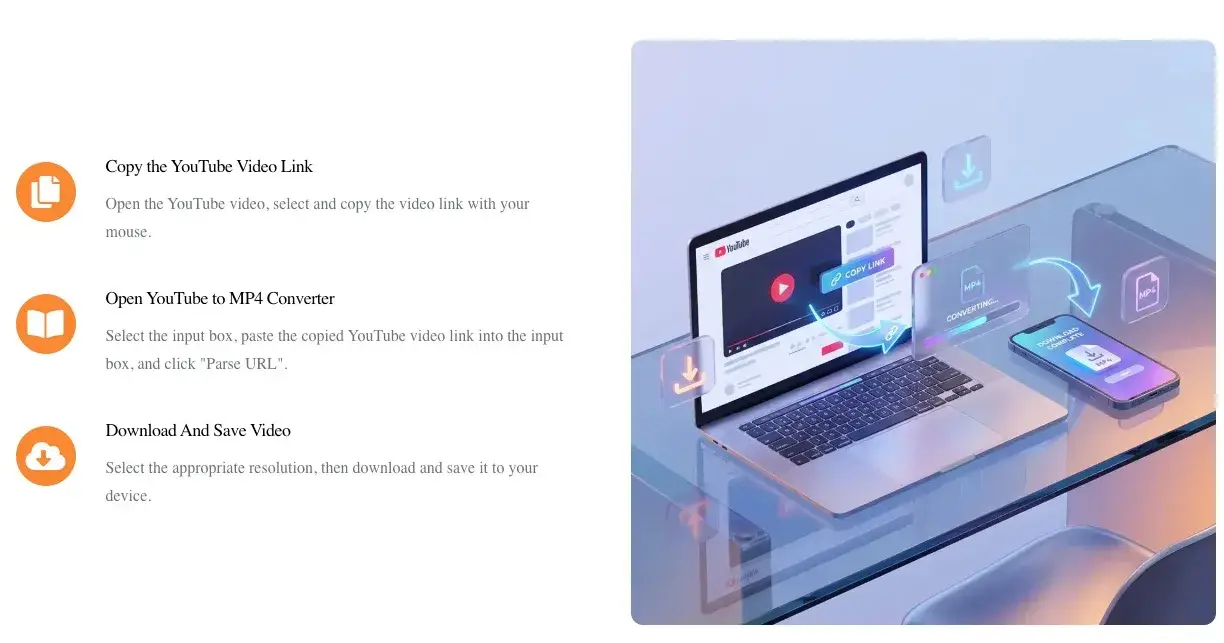
This is precisely the gap that YouTube to MP4 converters were built to fill. In its simplest form, a YouTube to MP4 tool is a software or web-based service that lets you download videos from YouTube — and convert them into the universally playable MP4 format — so you can watch them offline, on any device, at any time.
The demand for these tools didn't appear out of nowhere. With YouTube now hosting over 800 hours of video uploaded every minute, it has become one of the world's most valuable repositories of educational content, music, documentary film, tutorials, and cultural commentary. Yet for all its richness, YouTube's native offline feature (available only to Premium subscribers) is geographically restricted, expires after 30 days, and is locked inside the app. That's a frustrating limitation for educators, researchers, content creators, and frankly, anyone who just wants to watch something on the go without burning through mobile data.
"I found myself re-downloading the same lecture videos three times because the YouTube offline option kept expiring. After switching to a YouTube to MP4 converter, that problem simply disappeared."
The market responded accordingly. Today, YouTube to MP4 converters range from browser extensions and desktop applications to fully online tools that require zero installation. Some are clunky and ad-ridden. Others are surprisingly polished. The best ones have evolved into genuinely useful productivity tools — not just for pirates and downloaders, but for a surprisingly broad and legitimate audience.
5 Technical Highlights Worth Paying Attention To
High-Speed Batch Conversion: Download entire playlists or multiple URLs simultaneously without queuing one at a time.
Resolution & Quality Control: Choose from 360p all the way to 4K output — you pick the quality, not the algorithm.
Audio Extraction Mode: Strip audio to MP3 or AAC in one click. Perfect for podcasts, lectures, or music.
Cross-Device Compatibility: Output files play natively on Windows, macOS, iOS, Android, and smart TVs.
Metadata Preservation: Title, thumbnail, and description metadata are embedded into the file for clean library organization.
Let me expand on these, because the spec sheet only tells half the story. The batch conversion feature, for instance, is something I didn't think I needed until I used it. Imagine you're building a course curriculum and want to archive 40 reference videos. Without batch processing, that's 40 separate copy-paste operations. With it, you paste a playlist URL and walk away. The tool handles everything while you make coffee.
The resolution selector is where I was genuinely impressed. Most free converters default to 720p and call it a day. The better YouTube to MP4 tools let you toggle between options interactively, even showing estimated file sizes before you commit to downloading. That kind of transparency is a small thing, but it's the kind of detail that separates a thoughtfully designed tool from a hastily assembled one.
And the audio extraction mode? Candidly, this has become my most-used feature. I follow several long-form interview channels where the visual element adds almost nothing — the conversation is the content. Being able to pull a clean 192kbps MP3 from a two-hour video and queue it up in my podcast app changed how I consume that content entirely.
What Problems Does It Actually Solve?
Here's where I want to speak directly to the people who are on the fence. You might be thinking: "Do I really need this? Isn't YouTube Premium just easier?" And honestly, for some people, yes. But let me outline the specific situations where a YouTube to MP4 converter earns its place.
For students and educators: Research videos don't stay on YouTube forever. Channels get deleted, videos get taken down, and links rot. I've personally experienced the frustration of building a study guide around a video that disappeared six months later. A downloaded MP4 is yours permanently — it lives on your hard drive, independent of platform decisions you had no part in.
For remote workers and frequent travelers: Data roaming fees are real, and airplane mode is a genuine obstacle. Having a curated offline library of training videos, conference talks, or presentations means your productivity isn't tied to a Wi-Fi signal.
For content creators and editors: Reference footage matters. If you're producing a video essay or documentary-style content, being able to quickly archive source material in a lossless format — and actually import it into Premiere or DaVinci Resolve without format headaches — is a workflow win.
"The moment I stopped thinking of this as a 'downloader' and started thinking of it as a personal media library tool, everything clicked. It's not about piracy — it's about ownership of your own learning."
For caregivers and parents: Downloading educational content for children means controlled, curated viewing without autoplay rabbit holes or inappropriate recommendations intruding mid-session. Parents I know use this to pre-load content for long car rides, and the peace of mind alone is worth it.
Pros & Cons — Let's Be Real
✓ Strengths
Truly offline access — no expiry, no restrictions
MP4 plays on every device without conversion
Batch mode saves enormous amounts of time
Audio extraction is a genuinely useful bonus
Best tools require no account or sign-up
Preserves content that might be deleted later
✗ Weaknesses
Legal gray area — YouTube ToS prohibits downloading
Many free tools are ad-heavy or bundled with junk
4K downloads are slow on standard connections
Some tools stop working after YouTube updates
No legitimate path for copyrighted/premium content
Storage costs stack up with large video libraries
I want to address the legal question directly, because glossing over it would be intellectually dishonest. YouTube's Terms of Service do prohibit downloading content without explicit permission from the rights holder. That said, the practical and legal reality is nuanced — downloading for personal, non-commercial use occupies a genuinely complex space in copyright law, and the tools themselves exist and operate openly in most jurisdictions. Use your judgment, and always respect creators' rights and intentions.
Who Should Use This — And My Final Take
After spending considerable time with multiple YouTube to MP4 solutions, my honest conclusion is this: if you consume educational, informational, or reference content on YouTube with any regularity, a good converter will improve your life in small but meaningful ways. The friction it removes — the waiting, the buffering, the data usage, the link rot — is real and cumulative.
The best YouTube to MP4 tools aren't glamorous. They don't have beautiful onboarding sequences or viral marketing campaigns. What they have is reliability — and in a tool whose entire value proposition is "get the file, keep the file," reliability is everything. I've tested converters that produced corrupted files, others that silently dropped audio, and a few that simply stopped working the week after a YouTube platform update. The good ones are consistently good, and that consistency is worth paying for if a premium version is on the table.
Bottom Line Recommendation
YouTube to MP4 converters are an excellent fit for students, researchers, educators, frequent travelers, parents, and content creators who need reliable offline access to video content. If you fall into any of these categories, I'd encourage you to try one — the workflow improvement is immediate and tangible. Just be deliberate about which tool you choose: prioritize those with clean interfaces, no bundled software, and a track record of consistent updates.

Join Jason on Peerlist!
Join amazing folks like Jason and thousands of other builders on Peerlist.
0
10
0