

The directory playbook I wish I had
A story-driven playbook from my own experiments, what I tried, what flopped, and how my directory will be reshaped into a value-first directory model.
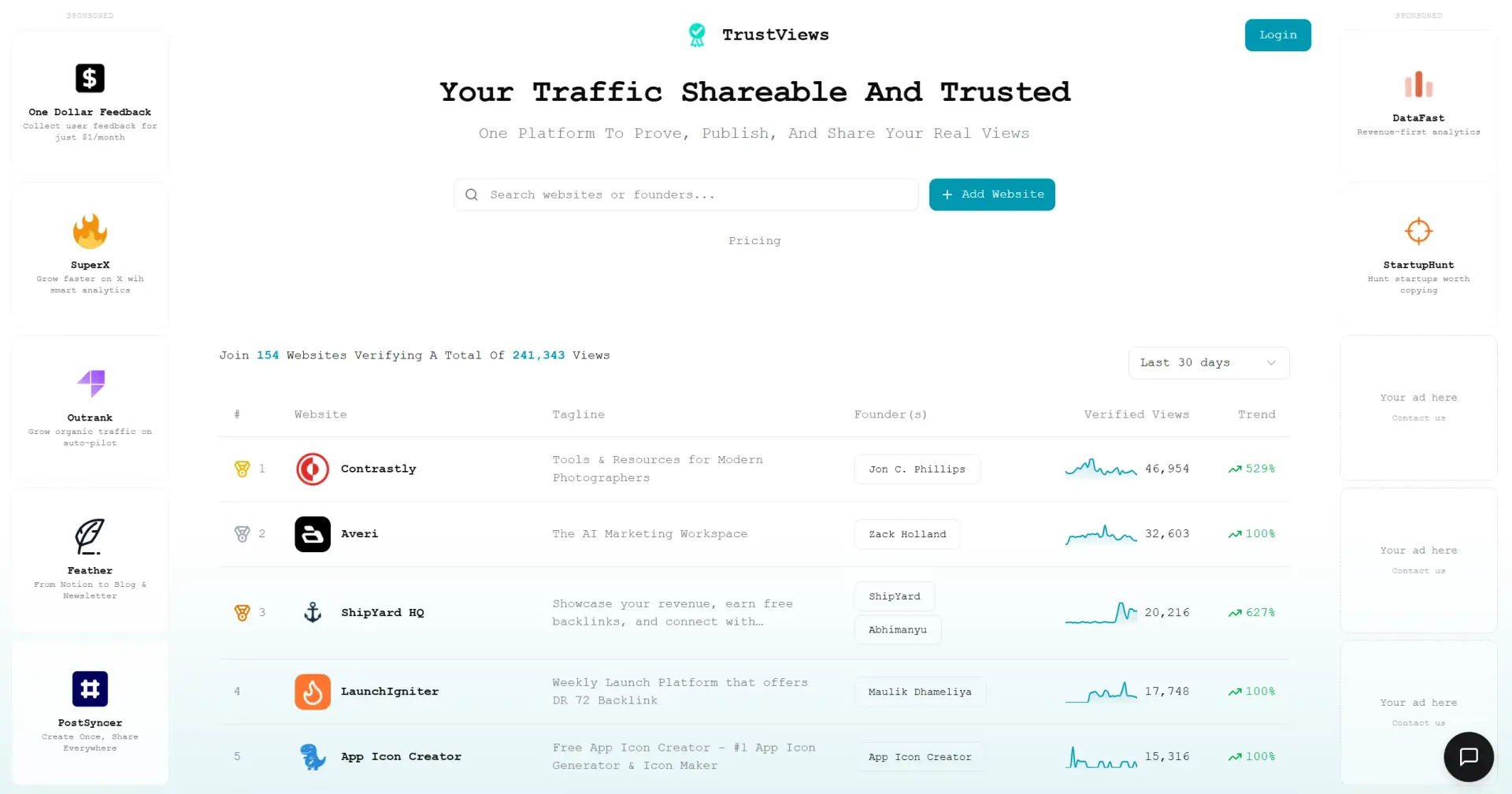
When I launched my directory, I made the classic mistake.
I thought: “If the product is useful, people will just show up.”
They… did at my scale but it paid me $0.
Directories look simple from the outside.
Visibility (Traffic)
Backlinks (SEO)
Social proof via scores and rankings
I started by ranking sites by their monthly views, inspired by trustmrr.com, but about views/traffic : trustviews.io (yes I copied from it)
The first idea: charge for detailed analytics.
On paper, it made sense.
In practice, it failed.
Analytics only get valuable when you you go in details and are cheap. I was cheap but not detailed.
So I shifted.
Instead of selling analytics, I turned Trustviews into a “classical” directory business model with ad slots on the side.
Zero meaningful clicks.
So for now, I’ve filled most of the space with affiliate links, and I’m leaving 3 out of 10 slots open.
Those will be for actual sponsors later, when the traffic justifies it.
Then, I talked to someone running multiple successful directories and making money out of it.
He told me everything I was doing wrong. So I’ll turn my directory into something I did not truly understood at first : paid listing.
To me it’s just slowing down growth, as less people would come in. But here is the trick :
If you want a dofollow backlink, you pay. (= I earn money & you win SEO & visibility)
If you don’t want to pay, you can still get listed, but you install the badge on your landing page to get that dofollow backlink. (= I earn SEO & you get visibility).
That one idea changed how I think about directories. Because indeed it’s all about what everyone get and it’s quite healthy if you ask me.
This is the other lesson:
Most monetization ideas only work once you have real traction.
Until then, they’re just decoration.
To make Trustviews actually unique, I’m leaning into something different.
A weekly newsletter.
Not a “here are 10 tools” list.
More like:
How these projects get consistent views
Why traffic spikes happen
What strategies caused them
Interviews with founders behind the listings
The goal is to make the directory feel alive.
Not just a wall of logos, but a community and a learning engine.
If I do this right, Trustviews becomes more than a place to dump your link.
It becomes a place where:
You understand how people actually got attention
Your project gets ongoing visibility, not a one-time launch
Readers learn distribution by watching real examples
A few lessons from this whole experiment so far:
A directory without a clear edge is just another list.
Monetization has to line up with what founders actually value: backlinks, traffic, and proof they can show.
Turning a directory into a media product newsletter, interviews, insights might be the real moat.
This is all still in motion.
I’m earning nothing, but learning a lot, and adjusting as I go.
None of this is theory.
It’s just what I’ve tried, what failed (no actual fail), and what seems to be working.
If you run a directory, buy listings, or have ideas on better models, I’d love to hear them.
Reply and tell me what you’ve seen work.

Join Jeremy on Peerlist!
Join amazing folks like Jeremy and thousands of other builders on Peerlist.
0
1
1