

WordPress vs Shopify: Which CMS Is Better for You?
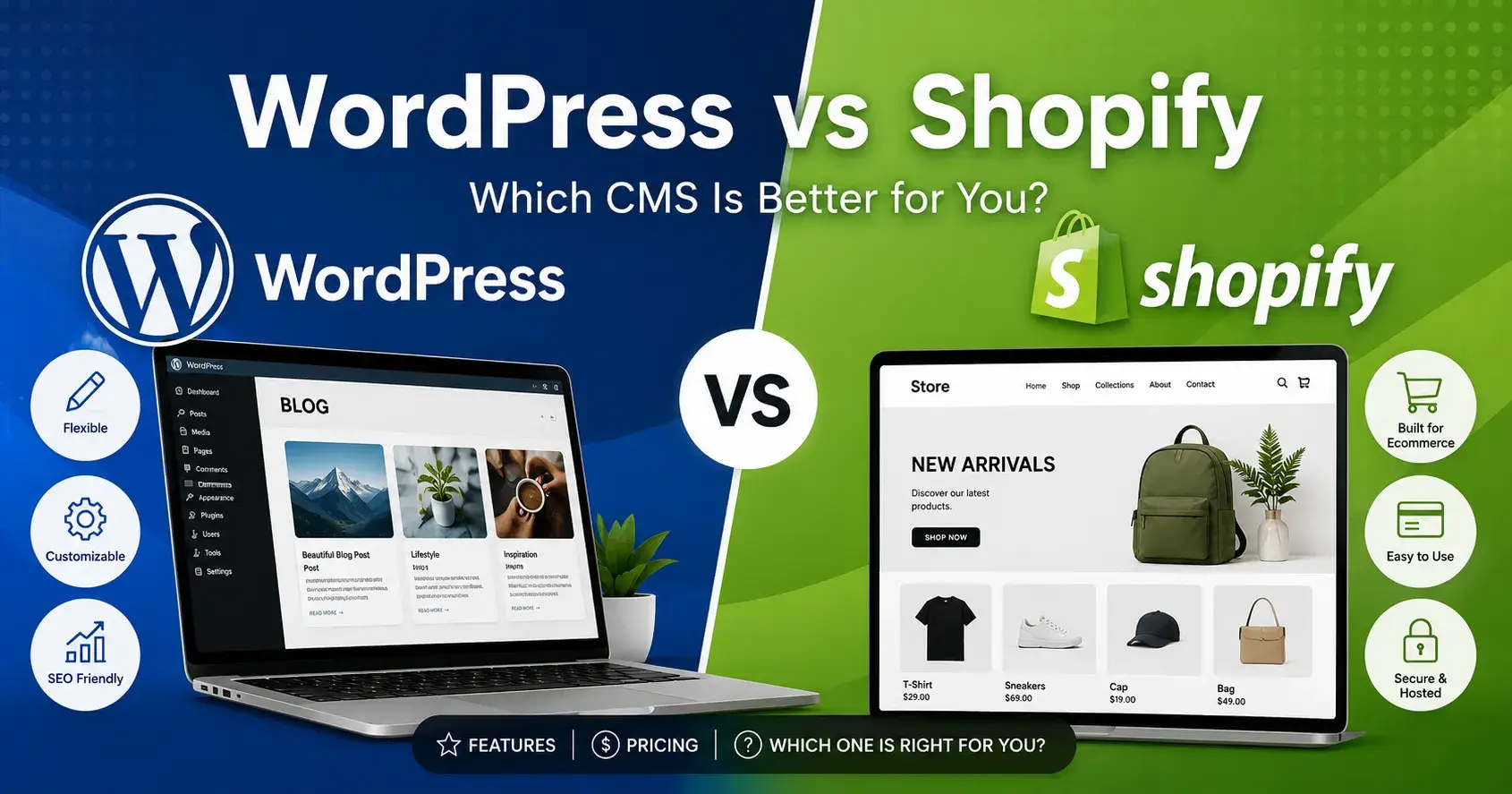
Choosing the right Content Management System (CMS) is one of the most important decisions when building a website or launching an online store. Two of the most popular platforms are WordPress and Shopify, but they serve different purposes. While Shopify is built primarily for eCommerce, WordPress offers unmatched flexibility for almost any type of website.
So, which one is right for you?
What Is WordPress?
WordPress is the world's most widely used CMS, powering millions of websites, from personal blogs to enterprise businesses. It's open-source, meaning you have complete control over your website, design, and functionality. By adding WooCommerce, WordPress can also become a powerful eCommerce platform.
One of WordPress's biggest strengths is its extensive ecosystem of themes and plugins, allowing you to customize nearly every aspect of your site. It's also an excellent choice for businesses that rely on content marketing and SEO to attract organic traffic.
What Is Shopify?
Shopify is a fully hosted platform designed specifically for online stores. It handles hosting, security, updates, and maintenance, allowing users to focus on selling products instead of managing technical tasks.
Its user-friendly interface makes it easy for beginners to launch an online store quickly, and it includes built-in features such as inventory management, payment processing, shipping options, and order tracking.
WordPress vs Shopify: Key Differences
If your priority is ease of use, Shopify has the advantage. You can create a store within hours without worrying about hosting or website maintenance.
However, if you want complete customization, WordPress is the better choice. You have full control over your site's design, functionality, and hosting environment.
When it comes to SEO, WordPress generally offers more flexibility. Popular SEO plugins like Rank Math or Yoast SEO provide advanced optimization features, while WordPress also lets you control URLs, metadata, schema markup, and performance settings. Shopify includes solid SEO features, but some technical aspects are more restricted.
For blogging and content marketing, WordPress clearly stands out. Its publishing tools, plugin ecosystem, and customization options make it ideal for creating SEO-focused content that can drive long-term organic traffic.
Which Platform Costs Less?
WordPress itself is free, but you'll need to pay for hosting, a domain name, and any premium themes or plugins you choose.
Shopify uses a monthly subscription model that includes hosting and security. While it's convenient, additional apps and premium themes can increase the overall cost as your business grows.
Which One Should You Choose?
Choose WordPress if you want complete ownership of your website, advanced SEO capabilities, flexible customization, and a platform that can grow with your business. It's especially suitable for bloggers, agencies, and businesses that rely on content marketing.
Choose Shopify if your primary goal is to launch an online store quickly with minimal technical work. It's a great option for beginners and entrepreneurs who want an all-in-one eCommerce solution.
Final Thoughts
There isn't a one-size-fits-all winner in the WordPress vs Shopify debate. Both platforms are excellent, but the right choice depends on your goals.
If flexibility, customization, and long-term SEO are your priorities, WordPress is the stronger option. If simplicity, convenience, and a hassle-free online store matter most, Shopify is an excellent choice.
Before making your decision, consider where your business will be in the next few years. Choosing a platform that aligns with your long-term vision will save time, money, and effort as your website grows.

Join Jon on Peerlist!
Join amazing folks like Jon and thousands of other builders on Peerlist.
0
1
0