

Best Image Formats for the Web: Optimizing Performance and Quality
A Strategic Guide to Choosing the Right File Type for Modern Web Development
In modern web development, images are often the heaviest elements on a page, directly impacting load times, user experience, and SEO rankings. Choosing the wrong format can result in pixelated visuals or sluggish performance. As web performance experts, it is crucial to understand that there is no single "best" format; the correct choice depends entirely on the use case—whether you are displaying a photograph, a complex illustration, or a dynamic interface icon.
Based on technical benchmarks for approximate weight, compression types, and web support, here is a strategic breakdown of the top image formats for the web.
1. The Modern Leaders: WebP and AVIF
These formats represent the future of web imaging, offering superior compression to traditional formats.
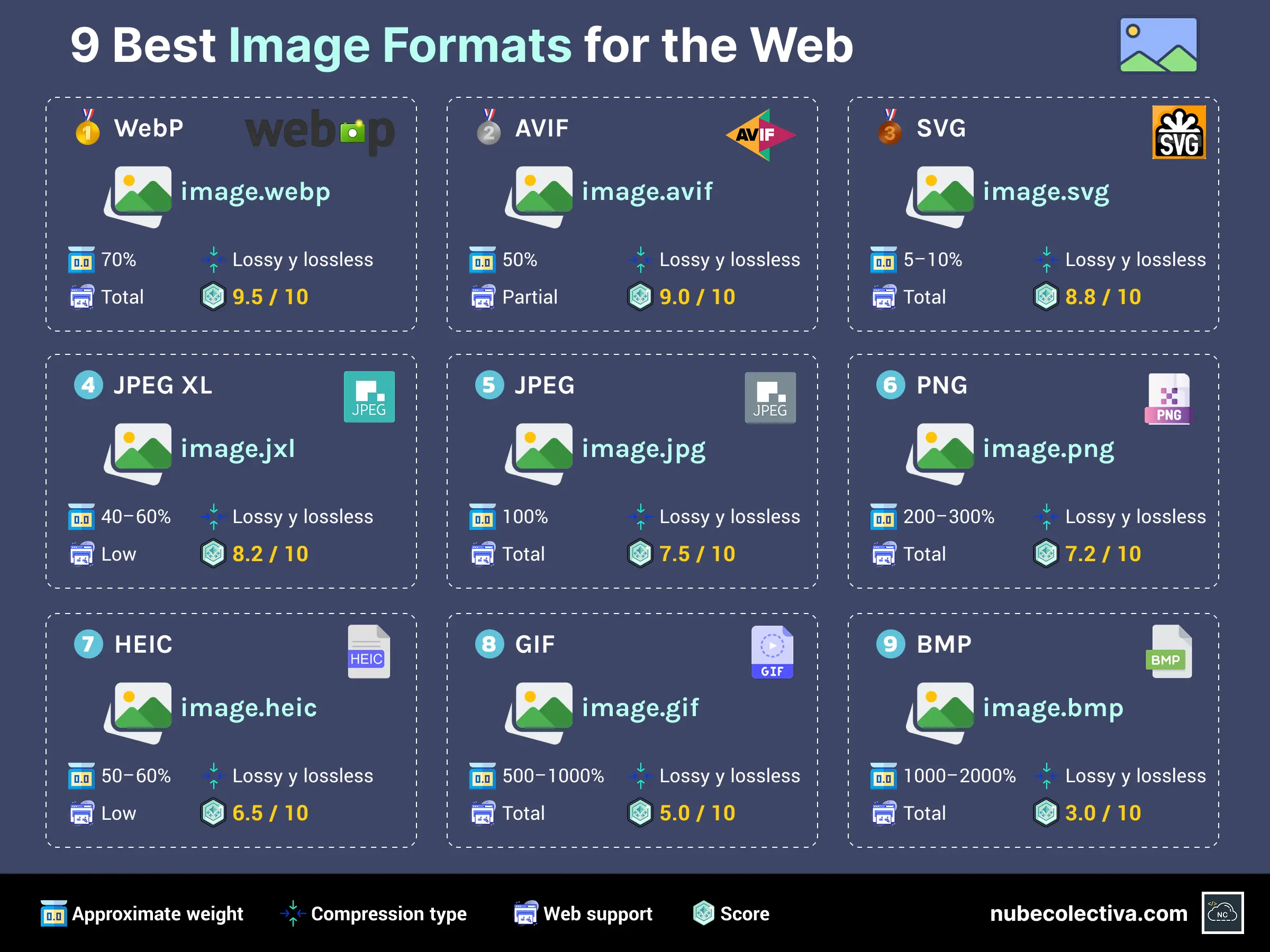
WebP (Score: 9.5/10): WebP is the current industry standard, offering both lossy and lossless compression. With an approximate weight reduction of 70% compared to older formats, it is ideal for general web use.
AVIF (Score: 9.0/10): AVIF offers even better compression ratios than WebP, achieving high quality at 50% of the weight of traditional formats. While its web support is growing, it is not yet universal, making WebP a safer default choice for broader compatibility.
2. The Vector Standard: SVG
SVG (Score: 8.8/10): For logos, icons, and complex illustrations, SVG is unmatched. Because it is a vector format, it scales infinitely without losing quality and has an extremely low approximate weight of 5-10% compared to raster images.
3. Legacy and Niche Formats
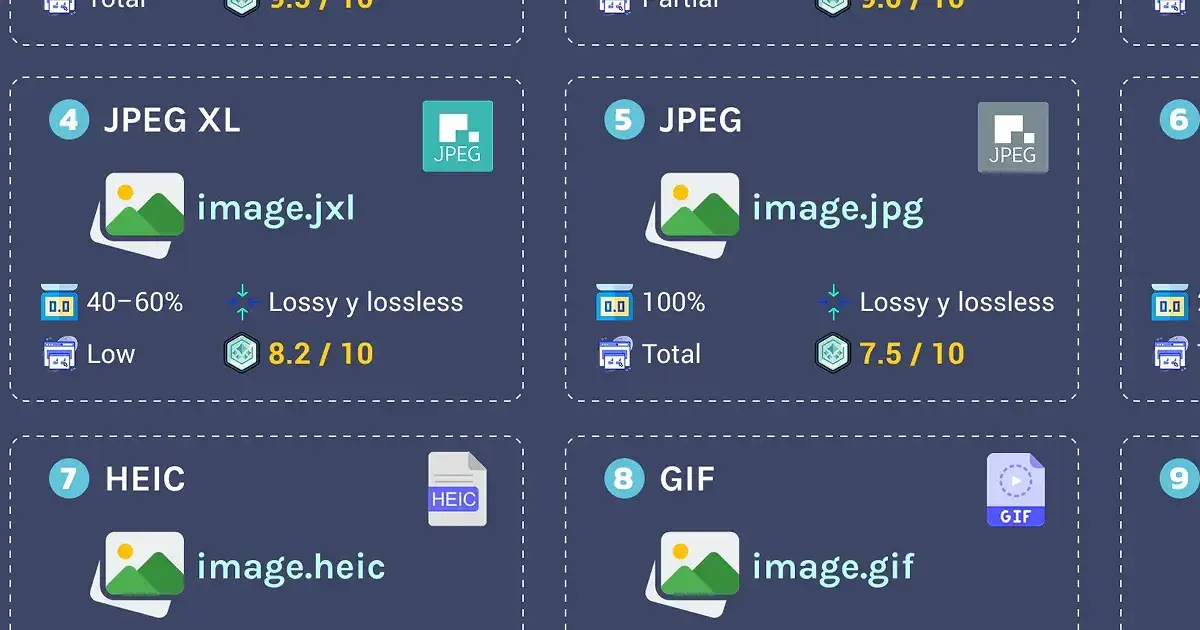
JPEG (Score: 7.5/10): Despite being the traditional choice for photos, JPEG is heavy (100% approximate weight) and lacks modern compression capabilities. It remains useful only for maximum compatibility with very old browsers.
PNG (Score: 7.2/10): PNG is necessary for lossless images that require transparency, but its approximate weight is massive—200-300% compared to modern standards—making it a poor choice for high-traffic pages.
GIF (Score: 5.0/10): GIF should be reserved exclusively for short, simple animations. Its 256-color limit and massive weight (500-1000%) make it unsuitable for static images.
BMP (Score: 3.0/10): BMP is uncompressed and holds no place on the modern web due to its extreme weight (1000-2000%).
Gift
In the following image, I'm sharing the 9 best web formats:
Conclusion
Selecting the appropriate image format requires balancing visual fidelity with performance metrics. WebP currently offers the best all-around balance of compression and compatibility, while AVIF is the rising star for maximum efficiency. For vector graphics, SVG remains the uncontested leader. By strategically utilizing these formats based on the specific needs of your content, you can significantly enhance your website's speed and user experience.

Join Juan on Peerlist!
Join amazing folks like Juan and thousands of other builders on Peerlist.
0
8
0